
How to Choose the Right Real Estate Agent

Facebooktwitterredditpinterestlinkedinmail

How to Choose the Right Real Estate Agent

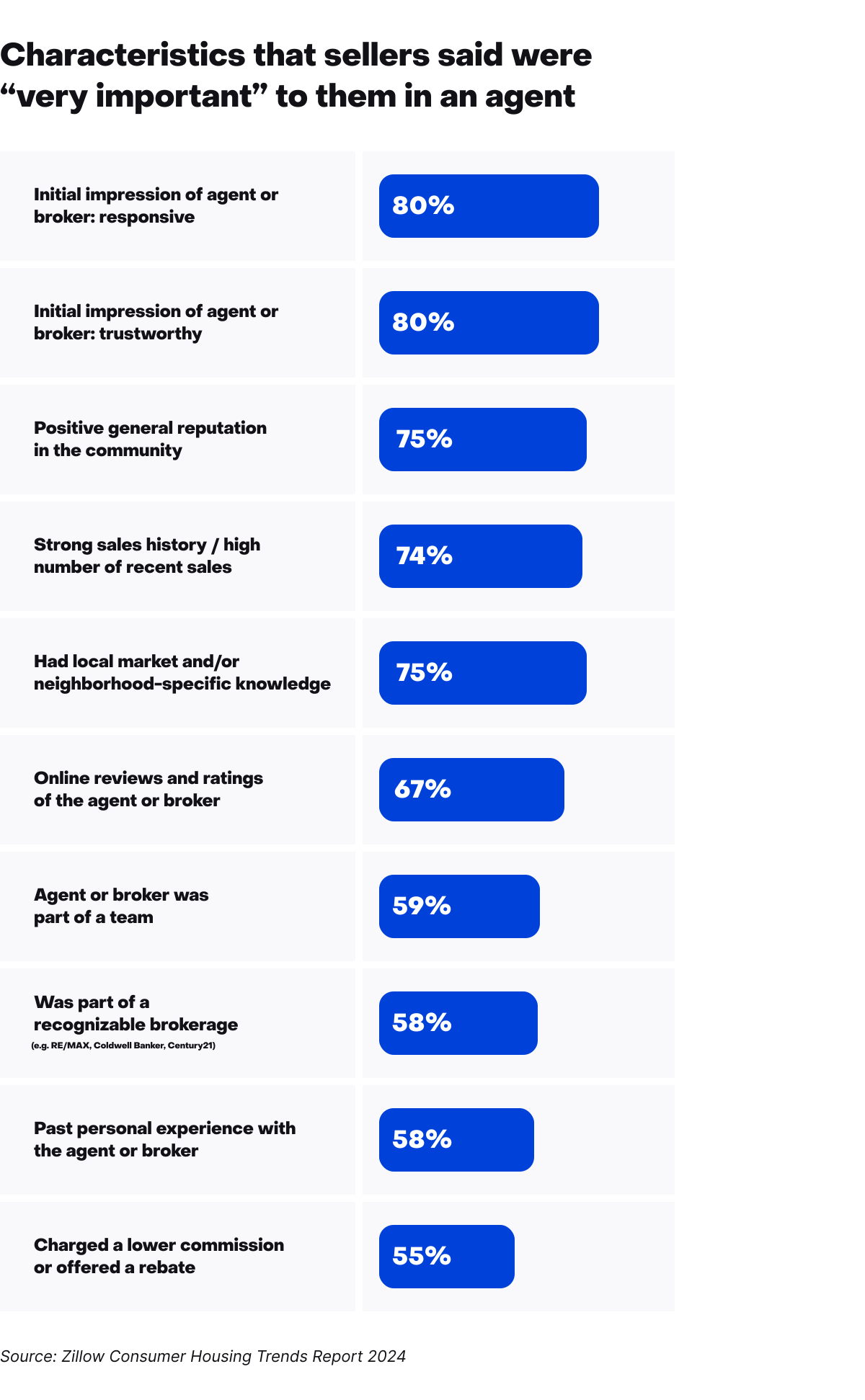
Whether you’re a first-time seller or you’ve done it all before, selling a home can be a complicated and stressful experience. It’s no wonder that 89% of sellers choose to list with a real estate agent, according to the latest Zillow Group Consumer Housing Trends Report.

Sellers surveyed said working with an agent was valuable to them chiefly because their agent helped promote their home and find potential buyers (69%). Read on for tips on how to choose the real estate agent that’s the best fit for you.

1. Compare real estate agents online

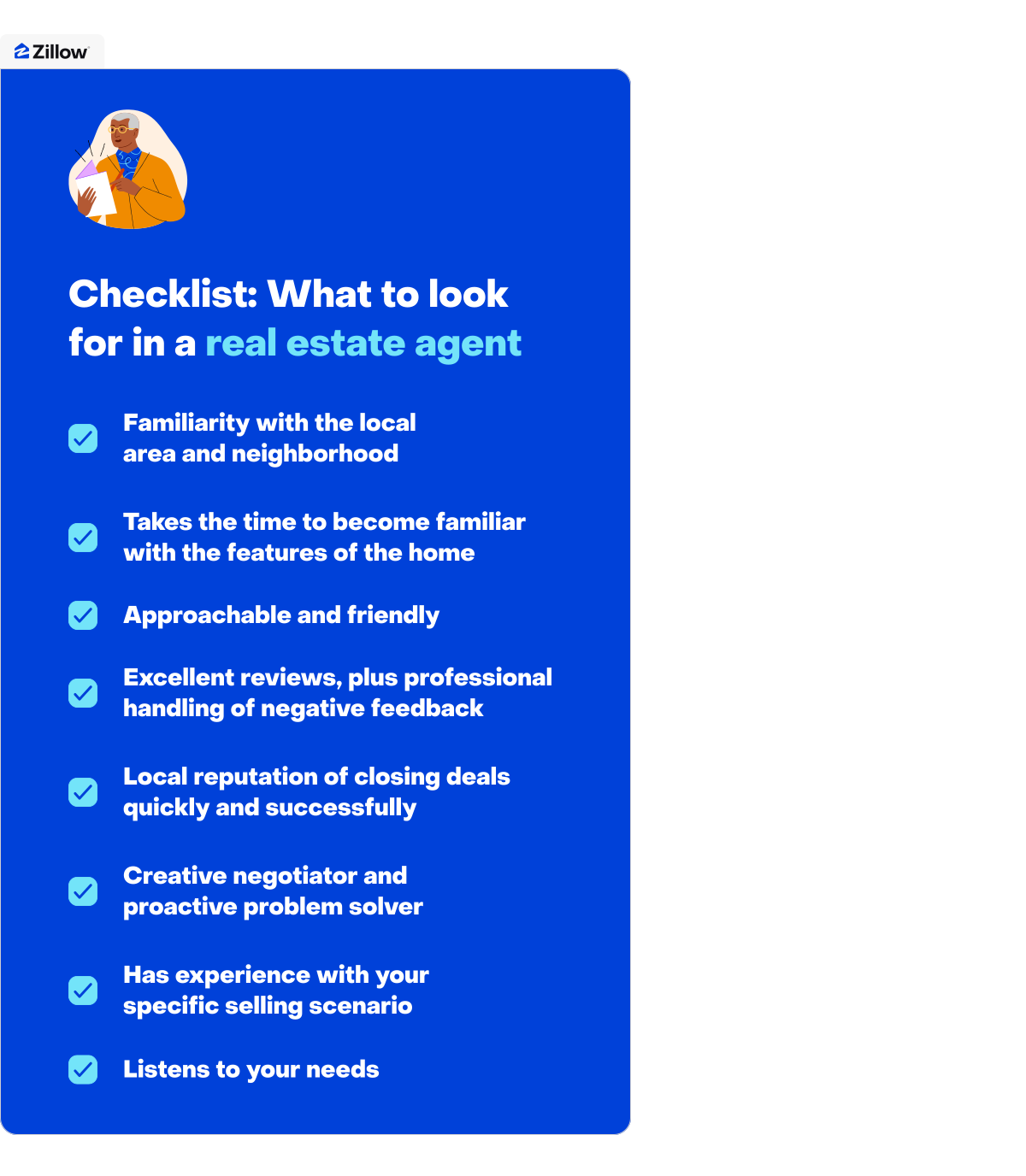
One of the most efficient ways to find agents is to search your local area for vetted agents on Zillow’s Agent Directory and compare reviews, specialties, and numbers of homes sold. You can also use other online search tools to check an agent’s online presence once you’ve narrowed down your top choices.

Pro tip: Note how an agent responds to any potential negative or neutral reviews.

2. Interview multiple agents

When hiring a real estate agent, don’t feel like you need to settle on the first agent you meet. According to Zillow research, 59% of sellers only ever contact one agent, but by talking with multiple agents, you’ll be able to compare and contrast to find someone who will be a good fit. Handle it like a job interview — because it is! While you might have a front-runner, ask each of the three agents the same questions and compare their responses.

3. Ask the right questions

Get a sense for their business style by asking important vetting questions.

“How long have you been working in real estate?”

This can help you get an idea of your agent’s experience. The longer they’ve been in the business, the more knowledgeable they’ll be. Then they can use their know-how to help you make the best choices to sell your home.

A newer agent can still do a good job — the important part is that you are aware that they have less experience before you agree to work with them. That could avoid any surprises as you work together.

“Do you primarily work with buyers, or sellers?”

Sellers typically prefer to work with seller’s agents, and buyers with buyer’s agents. In a seller’s case, this is because an agent who focuses on selling homes will be more familiar with the process, and will know what to expect as you start the process. Plus, they can answer your questions with more expertise behind them.

“How many active clients do you have at a time?”

Do you want an agent who you can call at any time, as often as you need? And would you prefer your agent really focus on you and your home sale? These are things to reflect on before you ask about the amount of clients they usually have at a time.

“Are you part of a team?”

You don’t want to hire an agent only to realize you’re hardly ever going to talk to them. Or maybe you like that your agent has a team, so there are more people available to help you through the home-selling process. Either way, know what to expect.

“What’s your specialty?”

By specialty, we mean the type of properties your agent primarily focuses on. Do they mostly work on selling commercial real estate, or residential? This also applies to price points. Some agents only sell homes that are worth upwards of a million dollars. You’ll want to make sure you’re talking to an agent who can sell your specific type of property.

“Are you equipped to handle my unique situation?

Are you trying to sell your home on a certain timeline? Does your home need repairs that you aren’t able to complete before you sell? Make sure your agent understands your unique needs and can work with you on a selling plan that’s best suited to them.

“How will you market my home?”

There are a number of ways to reach buyers, from having your agent list your home on a local Multiple Listing Service (MLS), a database used by real estate sites like Zillow, to hosting and promoting open houses at your property. Check if your agent plans to list your home privately; private listings get far less attention from buyers, and they make it harder and slower to sell your home. Whatever your potential agent’s strategy will be, make sure it will work for your situation and selling goals.

“Can you put me in contact with some references?”

There aren’t many agents who would admit to their faults. That’s why it can be a good idea to ask your agent to connect you with some of their past clients. Those people would have a different perspective on your potential agent, and they’d probably give you insight from a seller’s viewpoint — i.e. “they made me feel heard,” or “they didn’t answer my questions very well.”

4. Explain your communication preferences

Make sure you’re on the same page from the get-go. Discuss how the agent will keep you informed and how often you expect to hear from them. If you prefer email but the agent is most responsive to phone calls, you may not be a good fit for each other. Or, if you know you’re going to have lots of questions and expect quick responses, but the agent usually just sends bi-weekly updates, you may want to find someone who is a better fit.

5. Clarify your motivation to sell

Make sure you’ve made clear any requirements that are specific to your own home sale. Are you on a strict timeline? Need to reach a specific bottom dollar? Looking to fall within a particular timing window to avoid capital gains taxes? Make sure to share these details from the beginning so your agent knows what to expect.

6. Discuss selling strategy and number of showings

There are various ways to boost the amount of people who see your home. Make sure you and your potential agent are on the same page about your selling strategy.

If your agent uses tools like 3D tours or Zillow’s Showcase feature, it can create a high quality, immersive experience that gives buyers a better feel for the home before even stepping foot inside. Almost half of the buyers Zillow surveyed (49%) were confident enough to make an offer on a home after only taking a virtual tour. How will the property be marketed? In other words, how will you list your property? More than half (52%) of sellers say their agent’s ability to get their home in front of the largest pool of interested buyers is among the most important factors when choosing an agent, according to our research. Make sure you’re on the same page about selling strategies before you move forward.

7. Agree on all the important details

The best agent-seller relationships are those with clearly defined expectations. Make sure that, in your listing agreement, you’ve agreed upon the commission structure, list price, and contract length (i.e., what happens if your home hasn’t sold after a certain amount of time).  Yes, you can negotiate your agent’s commission, and it could even help you decide which agent to choose based on how competitive each agent’s rates are.

Facebooktwitterredditpinterestlinkedinmail

Seller's Guide: A Complete List of Documents You Need to Sell Property in  the Philippines - UpsidePH


[Letter to Lawyer]

Dear Attorney,

I hope this message finds you well. I am writing to seek your legal guidance regarding the requirements for selling real property in the Philippines. I aim to ensure compliance with all applicable laws and regulations and avoid any potential issues during the sale process.

Could you kindly provide a comprehensive explanation of the legal procedures, documentary requirements, and tax implications for selling real property in the country? Additionally, I would appreciate advice on potential pitfalls to watch for and the rights of the seller under Philippine law.

Thank you for your assistance, and I look forward to your expert counsel.

Sincerely,
A Concerned Property Owner


Comprehensive Guide to Selling Real Property in the Philippines

Selling real property in the Philippines involves complying with a series of legal, administrative, and tax requirements. This guide provides an in-depth analysis of the relevant laws, procedures, and best practices for a smooth property sale.


1. Legal Framework

1.1 Ownership and Title

  • Land Ownership Restrictions: Only Filipino citizens and corporations with at least 60% Filipino ownership can own land in the Philippines. Foreigners are prohibited from owning land, though they may own condominium units subject to restrictions under the Condominium Act (RA 4726).
  • Certificate of Title: The seller must possess a clean Certificate of Title (Transfer Certificate of Title for land, Condominium Certificate of Title for units) under their name, issued by the Registry of Deeds.

1.2 Governing Laws

  • Civil Code of the Philippines: Articles 1458–1637 cover contracts of sale.
  • Presidential Decree No. 1529 (Property Registration Decree): Governs land registration and titling.
  • Tax Code of the Philippines (National Internal Revenue Code): Addresses taxes related to real property transactions.

2. Documentary Requirements

A seller must prepare and submit the following documents:

2.1 For Pre-Sale

  1. Certificate of Title (TCT or CCT): Proof of ownership, free from encumbrances or liens.
  2. Deed of Absolute Sale (Draft): A legally binding document outlining the terms of sale.
  3. Tax Declaration: From the local assessor’s office for the land and any improvements.
  4. Real Property Tax Clearance: Certification that all real property taxes have been paid.

2.2 For Transfer of Ownership

  1. Notarized Deed of Absolute Sale: Executed by both parties and notarized.
  2. Tax Identification Numbers (TIN): For both buyer and seller.
  3. BIR Forms 1706 and 2000: For capital gains tax (CGT) and documentary stamp tax (DST), respectively.
  4. Certificate Authorizing Registration (CAR): Issued by the Bureau of Internal Revenue (BIR) upon payment of taxes.
  5. Transfer Tax Receipt: Paid to the local treasurer’s office.
  6. New Tax Declaration: Issued under the buyer’s name after the transfer.

3. Tax Obligations

The seller is responsible for paying the following taxes:

3.1 Capital Gains Tax (CGT)

  • Rate: 6% of the gross selling price or the zonal value, whichever is higher.
  • Deadline: Payment must be made within 30 days from the notarization of the Deed of Sale.

3.2 Documentary Stamp Tax (DST)

  • Rate: 1.5% of the gross selling price or the zonal value, whichever is higher.
  • Deadline: To be paid simultaneously with the CGT.

3.3 Real Property Tax (RPT)

  • Responsibility: Ensure that all annual RPT dues are paid before the sale. Outstanding dues transfer with the property.

3.4 Local Transfer Tax

  • Rate: Varies per city or municipality but typically ranges from 0.5% to 0.75% of the selling price.
  • Deadline: Payable to the local government unit upon submission of transfer documents.

4. Steps in the Sale Process

4.1 Pre-Sale Preparation

  • Verify the property’s title for authenticity and encumbrances.
  • Secure necessary documents (e.g., Tax Declaration, tax clearance).
  • Agree on terms with the buyer and draft the Deed of Sale.

4.2 Execution of the Sale

  • Sign the Deed of Absolute Sale and have it notarized.
  • Pay applicable taxes (CGT and DST) to the BIR.

4.3 Transfer of Ownership

  • Obtain the Certificate Authorizing Registration (CAR) from the BIR.
  • Pay local transfer taxes and submit documents to the Registry of Deeds.
  • Secure a new Certificate of Title in the buyer’s name.
  • Update the Tax Declaration with the local assessor’s office.

5. Common Legal Issues

  1. Discrepancies in Title: Errors in the Certificate of Title may delay the sale.
  2. Unpaid Taxes: Any tax arrears must be settled before the sale.
  3. Third-Party Claims: Ensure no adverse claims or annotations on the title.
  4. Lack of Consent: For co-owned properties, all co-owners must consent to the sale.

6. Rights and Protections of the Seller

  1. Right to Fair Compensation: The seller may negotiate the terms and selling price.
  2. Right to Cancel the Sale: If the buyer fails to comply with the terms, the seller may rescind the agreement under Articles 1191 and 1458 of the Civil Code.
  3. Protection Against Fraud: Ensure all payments are documented and confirmed.

7. Additional Considerations

7.1 Broker’s Assistance

  • Engage a licensed real estate broker to assist with marketing, negotiations, and legal compliance.
  • Brokers are entitled to a commission, typically 3%–5% of the selling price.

7.2 Special Cases

  • Inherited Property: Require an extra-judicial settlement if the property was inherited, along with proof of estate tax payment.
  • Foreign Buyers: Ensure compliance with ownership restrictions.

7.3 Zonal Valuation

  • Always check the BIR’s zonal valuation to ensure accurate tax computations.

Conclusion

Selling real property in the Philippines involves a meticulous process that requires adherence to legal, tax, and administrative procedures. Proper preparation, coupled with the assistance of a lawyer and real estate professional, ensures a smooth transaction and compliance with all regulations. Sellers must be proactive in understanding their obligations and rights to avoid pitfalls and secure a fair sale.

For tailored advice or to address specific circumstances, consulting with a qualified legal professional is essential.

Facebooktwitterredditpinterestlinkedinmail

Down Payments: What Are They and How Do They Work?


Understanding Fair Initial Payment Terms in Property Sales in the Philippines
(A General Legal Overview – Not Intended as Formal Legal Advice)

When purchasing real estate in the Philippines—be it a house-and-lot, condominium unit, or vacant land—one of the most critical stages is the initial payment or down payment. These initial payment terms set the tone for the buyer’s financial obligations and can significantly affect the buyer’s rights and remedies later on. This article aims to provide a comprehensive overview of the legal framework, common practices, and practical considerations surrounding fair initial payment terms in Philippine property sales.


1. Key Concepts and Terminology

  1. Earnest Money (or Reservation Fee):
    • An amount paid by a prospective buyer to the seller to show genuine interest and good faith.
    • In many cases, this fee is credited toward the total purchase price if the sale pushes through. However, if the buyer backs out, this earnest money is typically forfeited (subject to agreement).
  2. Down Payment (or Deposit):
    • A portion of the purchase price paid upfront by the buyer to secure the property.
    • Often used interchangeably with “initial payment” but can sometimes differ from the earnest money.
    • Ranges from as low as 5% to as high as 30% (or more) of the property price, depending on the seller, developer, or bank financing requirements.
  3. Contract to Sell vs. Deed of Absolute Sale:
    • Contract to Sell is common in installment purchases. The buyer only obtains full ownership after completing payments.
    • Deed of Absolute Sale typically transfers ownership immediately (or upon full payment and registration) and is used when the buyer pays the entire price or secures financing that pays the seller in full.
  4. Installment Payment Schemes:
    • Many property sales in the Philippines involve monthly amortizations after an initial down payment.
    • The details of these payment schedules are typically negotiated or set by the developer or bank.

2. Legal Framework: Protecting Buyers and Sellers

2.1. Presidential Decree No. 957 (PD 957)

  • Also known as the Subdivision and Condominium Buyers’ Protective Decree.
  • Governs sales of subdivision lots and condominium units.
  • Key Provisions Affecting Initial Payments:
    • Requires developers to secure licenses to sell, ensure proper documentation, and provide full disclosure to prospective buyers.
    • Mandates a certain standard of fairness in contracts, though it does not specifically cap initial payments.
    • Emphasizes that subdivision and condominium developers must comply with certain guidelines for advertisements, project plans, and the handling of down payments.

2.2. Republic Act No. 6552 (Maceda Law)

  • Also known as the Realty Installment Buyer Act.
  • Protects buyers who make installment payments in case of default or cancellation.
  • Key Points:
    • Applies to the purchase of real estate on installments, excluding industrial lots, commercial buildings, and sales to buyers who have purchased more than one property.
    • A buyer with at least two years of installments paid is entitled to certain rights (e.g., grace periods, refund of a portion of payments).
    • The law does not strictly control the down payment amount but does protect the buyer from total forfeiture if the buyer has already paid a substantial portion of the purchase price over time.

2.3. Other Applicable Laws and Regulations

  • Civil Code of the Philippines: Provisions on obligations and contracts apply to real estate transactions, including earnest money deposits and sales conditions.
  • Local Government Codes and Housing and Land Use Regulatory Board (HLURB) Regulations (Now DHSUD): Govern the licensing, permits, and compliance of developers selling real estate.

3. Typical Industry Practices for Initial Payments

  1. Reservation Fee / Earnest Money:
    • Usually between PHP 20,000 to PHP 100,000 (or more) for average developments, though it varies by property type and price.
    • Often non-refundable if the buyer opts not to proceed, but always verify the terms in writing.
  2. Standard Down Payment:
    • Commonly 20% of the total purchase price for many developers, but can be higher for premium properties or lower if there are special promotions (“No Down Payment” or “Low Down Payment” schemes).
    • The down payment may be payable in a lump sum or staggered over a few months (especially in pre-selling condominium projects).
  3. Financing Arrangements:
    • After the initial payment, buyers typically obtain a bank loan to cover the remaining balance or continue with in-house financing from the developer.
    • Interest rates, payment schedules, and additional fees (like mortgage registration and transfer taxes) should be taken into account early on.
  4. Installment Schedules:
    • For pre-selling projects, developers commonly allow the down payment to be spread over a specific period (e.g., 12, 24, or 36 months) until project completion.
    • The final lumpsum or balance is due upon turnover or upon a specified date.

4. Ensuring Fairness in Initial Payment Terms

4.1. Transparency and Disclosure

  • Developers and Sellers Must Disclose:
    • The total contract price (TCP) and the specific breakdown of payments (reservation fee, down payment, monthly amortizations).
    • Any additional fees (e.g., miscellaneous fees, taxes, association dues).
    • Completion and turnover dates, including penalties for late turnover or late payments.
  • Buyers Should Inquire About:
    • How the reservation fee or earnest money is treated (i.e., whether it is part of the TCP).
    • Whether the down payment is refundable in limited scenarios (e.g., failure to secure a loan).
    • Interest rates if availing of in-house financing, as these rates can sometimes be higher than bank financing.

4.2. Written Agreements

  • Avoid purely verbal assurances; always request a written contract or a formal Reservation Agreement.
  • The contract should explicitly state:
    • The amount of the down payment, due dates, and penalties.
    • The consequences of default on the down payment schedule.
    • Provisions under RA 6552 (Maceda Law) if applicable (for installment purchases).
    • Clear refund or forfeiture conditions.

4.3. Reasonableness of Payment Terms

  • While the law does not strictly limit down payment percentages, fairness typically implies a balance that secures the seller’s interest while not unduly burdening the buyer.
  • Buyers must consider not just the initial cost but also the monthly payments and overall purchase price, ensuring they have the financial capacity to sustain the payment plan.

4.4. Legal Recourse in Case of Disputes

  • If a dispute arises (e.g., a developer insisting on unfair forfeiture or refusing a proper refund), the buyer may:
    • File a complaint with the Department of Human Settlements and Urban Development (DHSUD) if the property is under PD 957 jurisdiction (subdivision or condominium).
    • Invoke RA 6552 (Maceda Law) if they meet the criteria (e.g., more than two years of installments paid).
    • Pursue mediation or arbitration if provided in the contract.
    • Eventually file a court case if necessary, though this can be time-consuming and costly.

5. Practical Tips for Buyers

  1. Check Developer Credentials:
    • Make sure the developer or seller has a valid license to sell and a track record of completed projects.
    • Research online forums, reviews, and DHSUD records for any red flags.
  2. Evaluate Payment Structure:
    • Calculate all costs (down payment, monthly dues, interest, closing fees) to ensure the property is within your budget.
    • Ask about flexible payment schemes or promotional terms if available.
  3. Request a Copy of the Contract Draft Before Paying:
    • Read and understand the clauses related to refunds, cancellations, penalties, and turnover timelines.
    • Seek professional advice from a lawyer if any clause seems unclear or unfair.
  4. Ensure Proper Documentation of Payments:
    • Collect official receipts for every payment (reservation fee, down payment installments, etc.).
    • Maintain a record of all communications with the developer or seller.
  5. Know Your Maceda Law Rights (if applicable):
    • If you are buying on installment and have already paid at least two years of installments, you are entitled to important safeguards such as grace periods and partial refunds.
    • If you have paid less than two years of installments, your rights are fewer but still exist—review your contract for specific terms.
  6. Consult Professionals:
    • A licensed real estate broker can guide you on prevailing market practices.
    • A lawyer can help review contracts, especially for high-value or complicated transactions.

6. Special Situations

  1. Pre-Selling vs. Ready-for-Occupancy (RFO):
    • Pre-Selling: The property (often a condominium) is still under construction. Down payment can be spread out over months or years, but there is a risk of project delay or non-completion.
    • Ready-for-Occupancy: The buyer can move in sooner; however, the developer may require a higher upfront payment.
  2. Bank Financing vs. In-House Financing:
    • Bank Financing: Generally lower interest rates but stricter requirements (credit checks, income documentation, property appraisal).
    • In-House Financing: Easier and faster approvals, but higher interest rates. Down payment and terms are often set by the developer and may be higher or more rigid.
  3. Cash Purchases and Discounts:
    • Some sellers offer discounts for spot cash payments.
    • Always ask if there is a discount for a higher or quicker initial payment, but ensure you have protective clauses in your contract (in case of defects or delays).

7. Conclusion

Fair initial payment terms in Philippine property sales hinge on clear, transparent, and balanced agreements that protect both the buyer and the seller. Laws such as PD 957 and the Maceda Law (RA 6552) provide a framework for buyer protection, especially in installment sales. However, these laws do not strictly dictate how much a buyer should pay upfront; rather, they ensure certain safeguards (like refunds or grace periods) if a buyer has paid substantial installments.

Buyers should exercise due diligence—verify the seller’s credibility, understand the payment schedule, and review all contract provisions thoroughly. Meanwhile, sellers (or developers) have the right to protect their interests via earnest money or down payments but must do so in a manner consistent with the law and fair industry practices.

Whenever possible, consulting a legal professional before finalizing any real estate transaction can help avoid pitfalls, misunderstandings, and disputes. Remember that real estate involves significant financial investment and that a well-structured initial payment plan is crucial to a secure and successful property purchase.


Disclaimer: This article provides general information on real estate law and practices in the Philippines and should not be taken as formal legal advice. For specific legal concerns, consult a licensed attorney familiar with the latest real estate laws and regulations in the Philippines.

Style Selector
Select the layout
Choose the theme
Preset colors
No Preset
Select the pattern