COVID-19 is a contagious disease caused by the coronavirus SARS-CoV-2. In January 2020, the disease spread worldwide, resulting in the COVID-19 pandemic.
The symptoms of COVID‑19 can vary but often include fever,[7] fatigue, cough, breathing difficulties, loss of smell, and loss of taste.[8][9][10] Symptoms may begin one to fourteen days after exposure to the virus. At least a third of people who are infected do not develop noticeable symptoms.[11][12] Of those who develop symptoms noticeable enough to be classified as patients, most (81%) develop mild to moderate symptoms (up to mild pneumonia), while 14% develop severe symptoms (dyspnea, hypoxia, or more than 50% lung involvement on imaging), and 5% develop critical symptoms (respiratory failure, shock, or multiorgan dysfunction).[13] Older people have a higher risk of developing severe symptoms. Some complications result in death. Some people continue to experience a range of effects (long COVID) for months or years after infection, and damage to organs has been observed.[14] Multi-year studies on the long-term effects are ongoing.[15]
COVID‑19 transmission occurs when infectious particles are breathed in or come into contact with the eyes, nose, or mouth. The risk is highest when people are in close proximity, but small airborne particles containing the virus can remain suspended in the air and travel over longer distances, particularly indoors. Transmission can also occur when people touch their eyes, nose, or mouth after touching surfaces or objects that have been contaminated by the virus. People remain contagious for up to 20 days and can spread the virus even if they do not develop symptoms.[16]
Testing methods for COVID-19 to detect the virus’s nucleic acid include real-time reverse transcription polymerase chain reaction (RT‑PCR),[17][18] transcription-mediated amplification,[17][18][19] and reverse transcription loop-mediated isothermal amplification (RT‑LAMP)[17][18] from a nasopharyngeal swab.[20]
Several COVID-19 vaccines have been approved and distributed in various countries, many of which have initiated mass vaccination campaigns. Other preventive measures include physical or social distancing, quarantining, ventilation of indoor spaces, use of face masks or coverings in public, covering coughs and sneezes, hand washing, and keeping unwashed hands away from the face. While drugs have been developed to inhibit the virus, the primary treatment is still symptomatic, managing the disease through supportive care, isolation, and experimental measures.
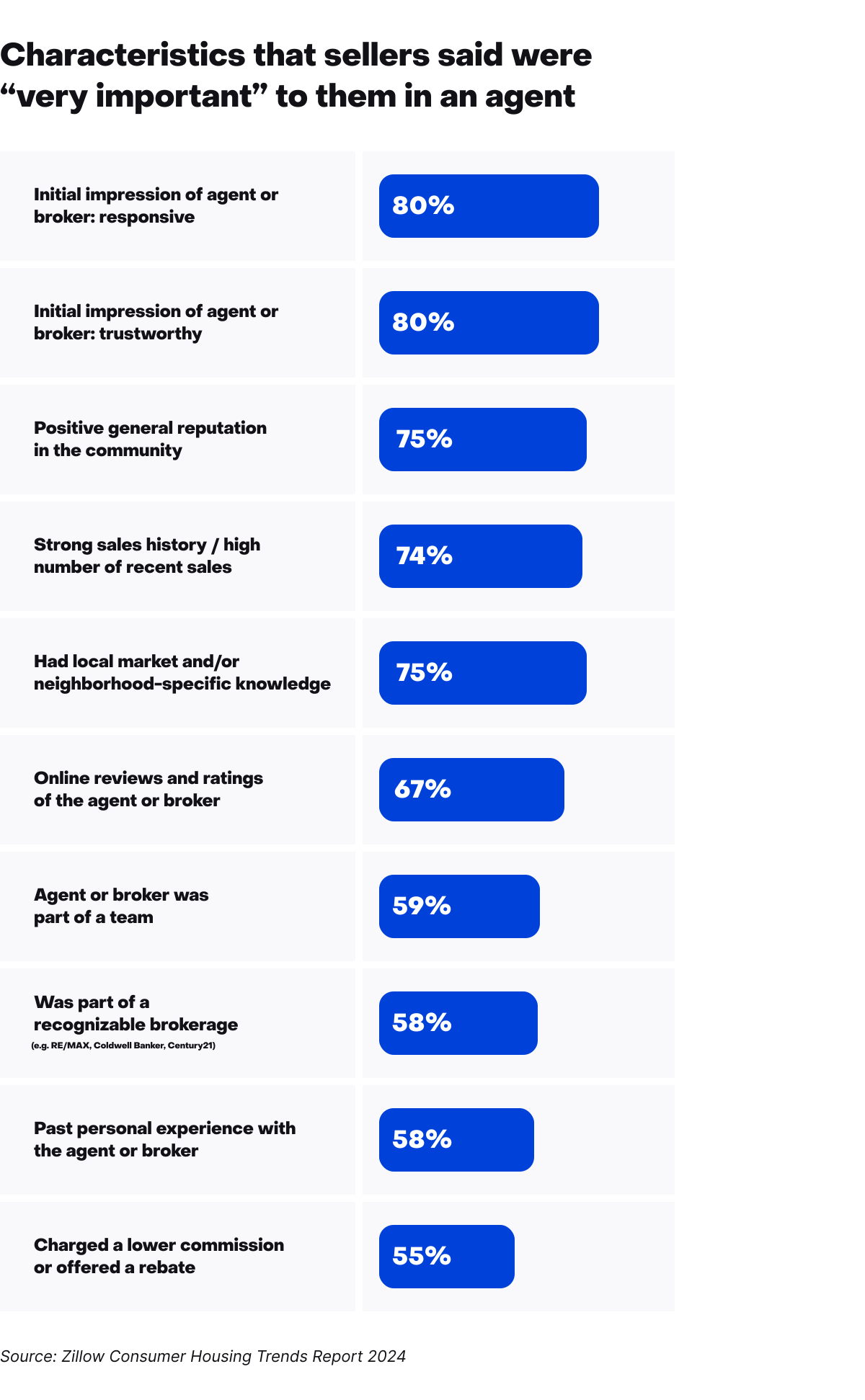
Whether you’re a first-time seller or you’ve done it all before, selling a home can be a complicated and stressful experience. It’s no wonder that 89% of sellers choose to list with a real estate agent, according to the latest Zillow Group Consumer Housing Trends Report.
Sellers surveyed said working with an agent was valuable to them chiefly because their agent helped promote their home and find potential buyers (69%). Read on for tips on how to choose the real estate agent that’s the best fit for you.
1. Compare real estate agents online
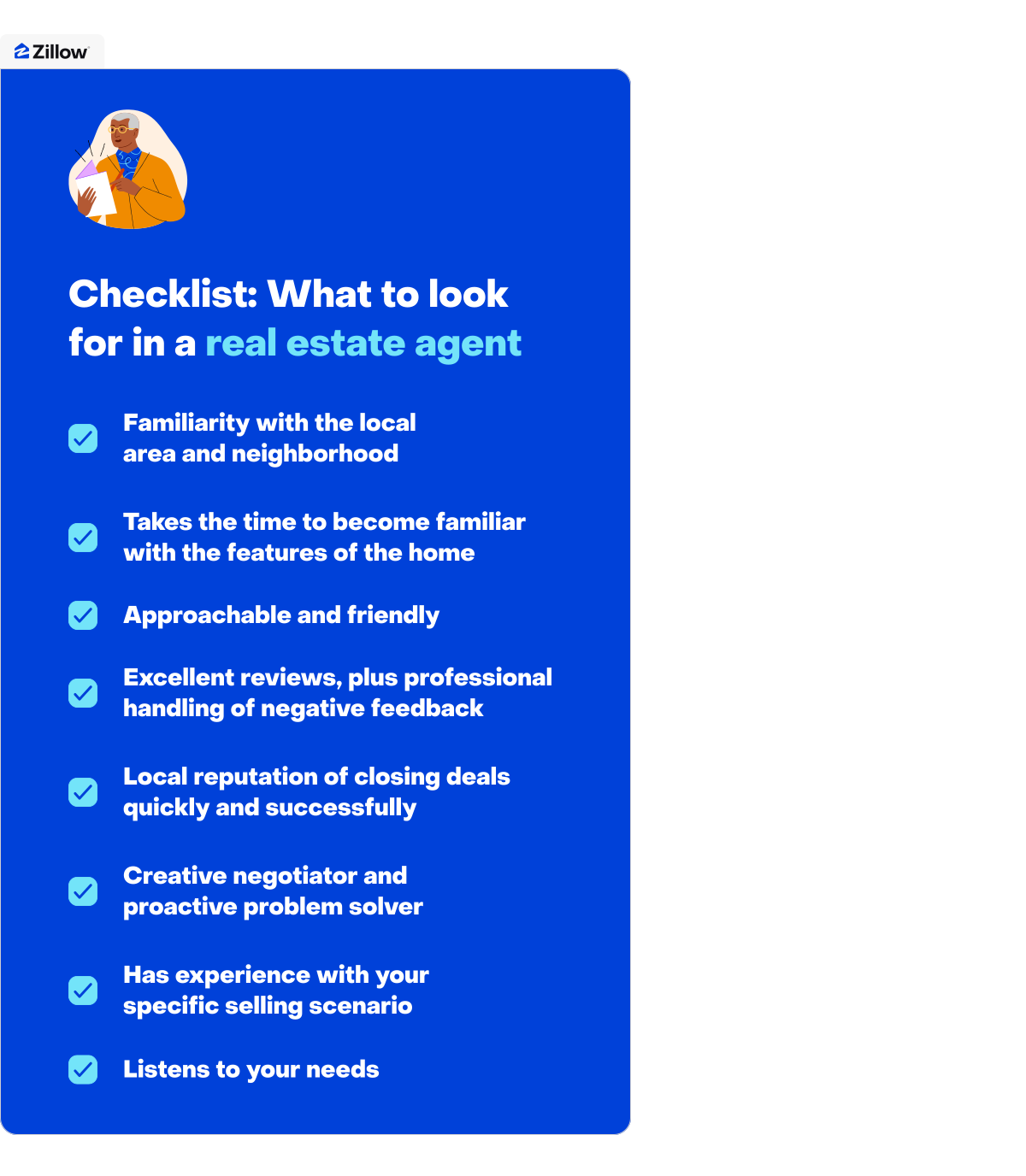
One of the most efficient ways to find agents is to search your local area for vetted agents on Zillow’s Agent Directory and compare reviews, specialties, and numbers of homes sold. You can also use other online search tools to check an agent’s online presence once you’ve narrowed down your top choices.
Pro tip: Note how an agent responds to any potential negative or neutral reviews.
2. Interview multiple agents
When hiring a real estate agent, don’t feel like you need to settle on the first agent you meet. According to Zillow research, 59% of sellers only ever contact one agent, but by talking with multiple agents, you’ll be able to compare and contrast to find someone who will be a good fit. Handle it like a job interview — because it is! While you might have a front-runner, ask each of the three agents the same questions and compare their responses.
This can help you get an idea of your agent’s experience. The longer they’ve been in the business, the more knowledgeable they’ll be. Then they can use their know-how to help you make the best choices to sell your home.
A newer agent can still do a good job — the important part is that you are aware that they have less experience before you agree to work with them. That could avoid any surprises as you work together.
“Do you primarily work with buyers, or sellers?”
Sellers typically prefer to work with seller’s agents, and buyers with buyer’s agents. In a seller’s case, this is because an agent who focuses on selling homes will be more familiar with the process, and will know what to expect as you start the process. Plus, they can answer your questions with more expertise behind them.
“How many active clients do you have at a time?”
Do you want an agent who you can call at any time, as often as you need? And would you prefer your agent really focus on you and your home sale? These are things to reflect on before you ask about the amount of clients they usually have at a time.
“Are you part of a team?”
You don’t want to hire an agent only to realize you’re hardly ever going to talk to them. Or maybe you like that your agent has a team, so there are more people available to help you through the home-selling process. Either way, know what to expect.
“What’s your specialty?”
By specialty, we mean the type of properties your agent primarily focuses on. Do they mostly work on selling commercial real estate, or residential? This also applies to price points. Some agents only sell homes that are worth upwards of a million dollars. You’ll want to make sure you’re talking to an agent who can sell your specific type of property.
“Are you equipped to handle my unique situation?“
Are you trying to sell your home on a certain timeline? Does your home need repairs that you aren’t able to complete before you sell? Make sure your agent understands your unique needs and can work with you on a selling plan that’s best suited to them.
“How will you market my home?”
There are a number of ways to reach buyers, from having your agent list your home on a local Multiple Listing Service (MLS), a database used by real estate sites like Zillow, to hosting and promoting open houses at your property. Check if your agent plans to list your home privately; private listings get far less attention from buyers, and they make it harder and slower to sell your home. Whatever your potential agent’s strategy will be, make sure it will work for your situation and selling goals.
“Can you put me in contact with some references?”
There aren’t many agents who would admit to their faults. That’s why it can be a good idea to ask your agent to connect you with some of their past clients. Those people would have a different perspective on your potential agent, and they’d probably give you insight from a seller’s viewpoint — i.e. “they made me feel heard,” or “they didn’t answer my questions very well.”
4. Explain your communication preferences
Make sure you’re on the same page from the get-go. Discuss how the agent will keep you informed and how often you expect to hear from them. If you prefer email but the agent is most responsive to phone calls, you may not be a good fit for each other. Or, if you know you’re going to have lots of questions and expect quick responses, but the agent usually just sends bi-weekly updates, you may want to find someone who is a better fit.
5. Clarify your motivation to sell
Make sure you’ve made clear any requirements that are specific to your own home sale. Are you on a strict timeline? Need to reach a specific bottom dollar? Looking to fall within a particular timing window to avoid capital gains taxes? Make sure to share these details from the beginning so your agent knows what to expect.
6. Discuss selling strategy and number of showings
There are various ways to boost the amount of people who see your home. Make sure you and your potential agent are on the same page about your selling strategy.
If your agent uses tools like 3D tours or Zillow’s Showcase feature, it can create a high quality, immersive experience that gives buyers a better feel for the home before even stepping foot inside. Almost half of the buyers Zillow surveyed (49%) were confident enough to make an offer on a home after only taking a virtual tour. How will the property be marketed? In other words, how will you list your property? More than half (52%) of sellers say their agent’s ability to get their home in front of the largest pool of interested buyers is among the most important factors when choosing an agent, according to our research. Make sure you’re on the same page about selling strategies before you move forward.
7. Agree on all the important details
The best agent-seller relationships are those with clearly defined expectations. Make sure that, in your listing agreement, you’ve agreed upon the commission structure, list price, and contract length (i.e., what happens if your home hasn’t sold after a certain amount of time). Yes, you can negotiate your agent’s commission, and it could even help you decide which agent to choose based on how competitive each agent’s rates are.
[Letter to Lawyer]
Dear Attorney,
I hope this message finds you well. I am writing to seek your legal guidance regarding the requirements for selling real property in the Philippines. I aim to ensure compliance with all applicable laws and regulations and avoid any potential issues during the sale process.
Could you kindly provide a comprehensive explanation of the legal procedures, documentary requirements, and tax implications for selling real property in the country? Additionally, I would appreciate advice on potential pitfalls to watch for and the rights of the seller under Philippine law.
Thank you for your assistance, and I look forward to your expert counsel.
Sincerely,
A Concerned Property Owner
Comprehensive Guide to Selling Real Property in the Philippines
Selling real property in the Philippines involves complying with a series of legal, administrative, and tax requirements. This guide provides an in-depth analysis of the relevant laws, procedures, and best practices for a smooth property sale.
1. Legal Framework
1.1 Ownership and Title
Land Ownership Restrictions: Only Filipino citizens and corporations with at least 60% Filipino ownership can own land in the Philippines. Foreigners are prohibited from owning land, though they may own condominium units subject to restrictions under the Condominium Act (RA 4726).
Certificate of Title: The seller must possess a clean Certificate of Title (Transfer Certificate of Title for land, Condominium Certificate of Title for units) under their name, issued by the Registry of Deeds.
1.2 Governing Laws
Civil Code of the Philippines: Articles 1458–1637 cover contracts of sale.
Presidential Decree No. 1529 (Property Registration Decree): Governs land registration and titling.
Tax Code of the Philippines (National Internal Revenue Code): Addresses taxes related to real property transactions.
2. Documentary Requirements
A seller must prepare and submit the following documents:
2.1 For Pre-Sale
Certificate of Title (TCT or CCT): Proof of ownership, free from encumbrances or liens.
Deed of Absolute Sale (Draft): A legally binding document outlining the terms of sale.
Tax Declaration: From the local assessor’s office for the land and any improvements.
Real Property Tax Clearance: Certification that all real property taxes have been paid.
2.2 For Transfer of Ownership
Notarized Deed of Absolute Sale: Executed by both parties and notarized.
Tax Identification Numbers (TIN): For both buyer and seller.
BIR Forms 1706 and 2000: For capital gains tax (CGT) and documentary stamp tax (DST), respectively.
Certificate Authorizing Registration (CAR): Issued by the Bureau of Internal Revenue (BIR) upon payment of taxes.
Transfer Tax Receipt: Paid to the local treasurer’s office.
New Tax Declaration: Issued under the buyer’s name after the transfer.
3. Tax Obligations
The seller is responsible for paying the following taxes:
3.1 Capital Gains Tax (CGT)
Rate: 6% of the gross selling price or the zonal value, whichever is higher.
Deadline: Payment must be made within 30 days from the notarization of the Deed of Sale.
3.2 Documentary Stamp Tax (DST)
Rate: 1.5% of the gross selling price or the zonal value, whichever is higher.
Deadline: To be paid simultaneously with the CGT.
3.3 Real Property Tax (RPT)
Responsibility: Ensure that all annual RPT dues are paid before the sale. Outstanding dues transfer with the property.
3.4 Local Transfer Tax
Rate: Varies per city or municipality but typically ranges from 0.5% to 0.75% of the selling price.
Deadline: Payable to the local government unit upon submission of transfer documents.
4. Steps in the Sale Process
4.1 Pre-Sale Preparation
Verify the property’s title for authenticity and encumbrances.
Agree on terms with the buyer and draft the Deed of Sale.
4.2 Execution of the Sale
Sign the Deed of Absolute Sale and have it notarized.
Pay applicable taxes (CGT and DST) to the BIR.
4.3 Transfer of Ownership
Obtain the Certificate Authorizing Registration (CAR) from the BIR.
Pay local transfer taxes and submit documents to the Registry of Deeds.
Secure a new Certificate of Title in the buyer’s name.
Update the Tax Declaration with the local assessor’s office.
5. Common Legal Issues
Discrepancies in Title: Errors in the Certificate of Title may delay the sale.
Unpaid Taxes: Any tax arrears must be settled before the sale.
Third-Party Claims: Ensure no adverse claims or annotations on the title.
Lack of Consent: For co-owned properties, all co-owners must consent to the sale.
6. Rights and Protections of the Seller
Right to Fair Compensation: The seller may negotiate the terms and selling price.
Right to Cancel the Sale: If the buyer fails to comply with the terms, the seller may rescind the agreement under Articles 1191 and 1458 of the Civil Code.
Protection Against Fraud: Ensure all payments are documented and confirmed.
7. Additional Considerations
7.1 Broker’s Assistance
Engage a licensed real estate broker to assist with marketing, negotiations, and legal compliance.
Brokers are entitled to a commission, typically 3%–5% of the selling price.
7.2 Special Cases
Inherited Property: Require an extra-judicial settlement if the property was inherited, along with proof of estate tax payment.
Foreign Buyers: Ensure compliance with ownership restrictions.
7.3 Zonal Valuation
Always check the BIR’s zonal valuation to ensure accurate tax computations.
Conclusion
Selling real property in the Philippines involves a meticulous process that requires adherence to legal, tax, and administrative procedures. Proper preparation, coupled with the assistance of a lawyer and real estate professional, ensures a smooth transaction and compliance with all regulations. Sellers must be proactive in understanding their obligations and rights to avoid pitfalls and secure a fair sale.
For tailored advice or to address specific circumstances, consulting with a qualified legal professional is essential.
Understanding Fair Initial Payment Terms in Property Sales in the Philippines (A General Legal Overview – Not Intended as Formal Legal Advice)
When purchasing real estate in the Philippines—be it a house-and-lot, condominium unit, or vacant land—one of the most critical stages is the initial payment or down payment. These initial payment terms set the tone for the buyer’s financial obligations and can significantly affect the buyer’s rights and remedies later on. This article aims to provide a comprehensive overview of the legal framework, common practices, and practical considerations surrounding fair initial payment terms in Philippine property sales.
1. Key Concepts and Terminology
Earnest Money (or Reservation Fee):
An amount paid by a prospective buyer to the seller to show genuine interest and good faith.
In many cases, this fee is credited toward the total purchase price if the sale pushes through. However, if the buyer backs out, this earnest money is typically forfeited (subject to agreement).
Down Payment (or Deposit):
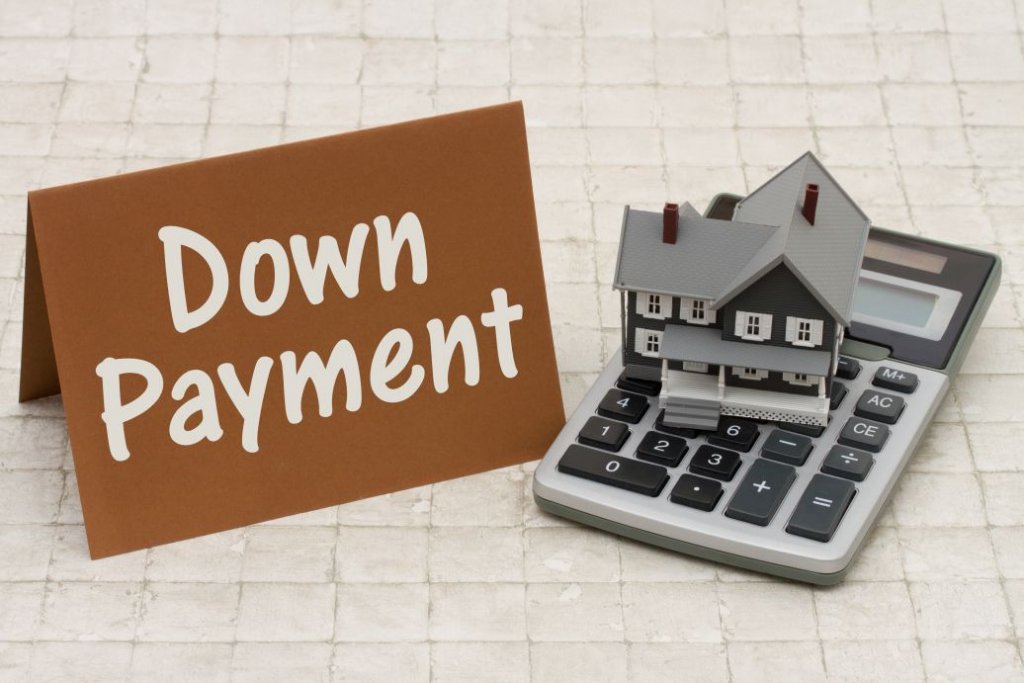
A portion of the purchase price paid upfront by the buyer to secure the property.
Often used interchangeably with “initial payment” but can sometimes differ from the earnest money.
Ranges from as low as 5% to as high as 30% (or more) of the property price, depending on the seller, developer, or bank financing requirements.
Contract to Sell vs. Deed of Absolute Sale:
A Contract to Sell is common in installment purchases. The buyer only obtains full ownership after completing payments.
A Deed of Absolute Sale typically transfers ownership immediately (or upon full payment and registration) and is used when the buyer pays the entire price or secures financing that pays the seller in full.
Installment Payment Schemes:
Many property sales in the Philippines involve monthly amortizations after an initial down payment.
The details of these payment schedules are typically negotiated or set by the developer or bank.
2. Legal Framework: Protecting Buyers and Sellers
2.1. Presidential Decree No. 957 (PD 957)
Also known as the Subdivision and Condominium Buyers’ Protective Decree.
Governs sales of subdivision lots and condominium units.
Key Provisions Affecting Initial Payments:
Requires developers to secure licenses to sell, ensure proper documentation, and provide full disclosure to prospective buyers.
Mandates a certain standard of fairness in contracts, though it does not specifically cap initial payments.
Emphasizes that subdivision and condominium developers must comply with certain guidelines for advertisements, project plans, and the handling of down payments.
2.2. Republic Act No. 6552 (Maceda Law)
Also known as the Realty Installment Buyer Act.
Protects buyers who make installment payments in case of default or cancellation.
Key Points:
Applies to the purchase of real estate on installments, excluding industrial lots, commercial buildings, and sales to buyers who have purchased more than one property.
A buyer with at least two years of installments paid is entitled to certain rights (e.g., grace periods, refund of a portion of payments).
The law does not strictly control the down payment amount but does protect the buyer from total forfeiture if the buyer has already paid a substantial portion of the purchase price over time.
2.3. Other Applicable Laws and Regulations
Civil Code of the Philippines: Provisions on obligations and contracts apply to real estate transactions, including earnest money deposits and sales conditions.
Local Government Codes and Housing and Land Use Regulatory Board (HLURB) Regulations (Now DHSUD): Govern the licensing, permits, and compliance of developers selling real estate.
3. Typical Industry Practices for Initial Payments
Reservation Fee / Earnest Money:
Usually between PHP 20,000 to PHP 100,000 (or more) for average developments, though it varies by property type and price.
Often non-refundable if the buyer opts not to proceed, but always verify the terms in writing.
Standard Down Payment:
Commonly 20% of the total purchase price for many developers, but can be higher for premium properties or lower if there are special promotions (“No Down Payment” or “Low Down Payment” schemes).
The down payment may be payable in a lump sum or staggered over a few months (especially in pre-selling condominium projects).
Financing Arrangements:
After the initial payment, buyers typically obtain a bank loan to cover the remaining balance or continue with in-house financing from the developer.
Interest rates, payment schedules, and additional fees (like mortgage registration and transfer taxes) should be taken into account early on.
Installment Schedules:
For pre-selling projects, developers commonly allow the down payment to be spread over a specific period (e.g., 12, 24, or 36 months) until project completion.
The final lumpsum or balance is due upon turnover or upon a specified date.
4. Ensuring Fairness in Initial Payment Terms
4.1. Transparency and Disclosure
Developers and Sellers Must Disclose:
The total contract price (TCP) and the specific breakdown of payments (reservation fee, down payment, monthly amortizations).
Any additional fees (e.g., miscellaneous fees, taxes, association dues).
Completion and turnover dates, including penalties for late turnover or late payments.
Buyers Should Inquire About:
How the reservation fee or earnest money is treated (i.e., whether it is part of the TCP).
Whether the down payment is refundable in limited scenarios (e.g., failure to secure a loan).
Interest rates if availing of in-house financing, as these rates can sometimes be higher than bank financing.
4.2. Written Agreements
Avoid purely verbal assurances; always request a written contract or a formal Reservation Agreement.
The contract should explicitly state:
The amount of the down payment, due dates, and penalties.
The consequences of default on the down payment schedule.
Provisions under RA 6552 (Maceda Law) if applicable (for installment purchases).
Clear refund or forfeiture conditions.
4.3. Reasonableness of Payment Terms
While the law does not strictly limit down payment percentages, fairness typically implies a balance that secures the seller’s interest while not unduly burdening the buyer.
Buyers must consider not just the initial cost but also the monthly payments and overall purchase price, ensuring they have the financial capacity to sustain the payment plan.
4.4. Legal Recourse in Case of Disputes
If a dispute arises (e.g., a developer insisting on unfair forfeiture or refusing a proper refund), the buyer may:
File a complaint with the Department of Human Settlements and Urban Development (DHSUD) if the property is under PD 957 jurisdiction (subdivision or condominium).
Invoke RA 6552 (Maceda Law) if they meet the criteria (e.g., more than two years of installments paid).
Pursue mediation or arbitration if provided in the contract.
Eventually file a court case if necessary, though this can be time-consuming and costly.
5. Practical Tips for Buyers
Check Developer Credentials:
Make sure the developer or seller has a valid license to sell and a track record of completed projects.
Research online forums, reviews, and DHSUD records for any red flags.
Evaluate Payment Structure:
Calculate all costs (down payment, monthly dues, interest, closing fees) to ensure the property is within your budget.
Ask about flexible payment schemes or promotional terms if available.
Request a Copy of the Contract Draft Before Paying:
Read and understand the clauses related to refunds, cancellations, penalties, and turnover timelines.
Seek professional advice from a lawyer if any clause seems unclear or unfair.
Ensure Proper Documentation of Payments:
Collect official receipts for every payment (reservation fee, down payment installments, etc.).
Maintain a record of all communications with the developer or seller.
Know Your Maceda Law Rights (if applicable):
If you are buying on installment and have already paid at least two years of installments, you are entitled to important safeguards such as grace periods and partial refunds.
If you have paid less than two years of installments, your rights are fewer but still exist—review your contract for specific terms.
Consult Professionals:
A licensed real estate broker can guide you on prevailing market practices.
A lawyer can help review contracts, especially for high-value or complicated transactions.
6. Special Situations
Pre-Selling vs. Ready-for-Occupancy (RFO):
Pre-Selling: The property (often a condominium) is still under construction. Down payment can be spread out over months or years, but there is a risk of project delay or non-completion.
Ready-for-Occupancy: The buyer can move in sooner; however, the developer may require a higher upfront payment.
Bank Financing vs. In-House Financing:
Bank Financing: Generally lower interest rates but stricter requirements (credit checks, income documentation, property appraisal).
In-House Financing: Easier and faster approvals, but higher interest rates. Down payment and terms are often set by the developer and may be higher or more rigid.
Cash Purchases and Discounts:
Some sellers offer discounts for spot cash payments.
Always ask if there is a discount for a higher or quicker initial payment, but ensure you have protective clauses in your contract (in case of defects or delays).
7. Conclusion
Fair initial payment terms in Philippine property sales hinge on clear, transparent, and balanced agreements that protect both the buyer and the seller. Laws such as PD 957 and the Maceda Law (RA 6552) provide a framework for buyer protection, especially in installment sales. However, these laws do not strictly dictate how much a buyer should pay upfront; rather, they ensure certain safeguards (like refunds or grace periods) if a buyer has paid substantial installments.
Buyers should exercise due diligence—verify the seller’s credibility, understand the payment schedule, and review all contract provisions thoroughly. Meanwhile, sellers (or developers) have the right to protect their interests via earnest money or down payments but must do so in a manner consistent with the law and fair industry practices.
Whenever possible, consulting a legal professional before finalizing any real estate transaction can help avoid pitfalls, misunderstandings, and disputes. Remember that real estate involves significant financial investment and that a well-structured initial payment plan is crucial to a secure and successful property purchase.
Disclaimer: This article provides general information on real estate law and practices in the Philippines and should not be taken as formal legal advice. For specific legal concerns, consult a licensed attorney familiar with the latest real estate laws and regulations in the Philippines.
Property management is the operation, control, maintenance, and oversight of real estate and physical property. This can include residential, commercial, industrial, public capital, and land real estate.[1] Management indicates the need for real estate to be cared for and monitored, with accountability for and attention to its useful life and condition.[2][3] This is much akin to the role of management in any business.
Property management is the administration of personal property, equipment, tooling, and physical capital assets acquired and used to build, repair, and maintain end-item deliverables. Property management involves the processes, systems, and workforce required to manage the life cycle of all acquired property as defined above, including acquisition, control, accountability, responsibility, maintenance, utilization, and disposition.
An owner of a single-family home, condominium, or multi-family building may engage the services of a professional property management company. The company will then advertise the rental property, handle tenant inquiries, screen applicants, select suitable candidates, draw up a lease agreement, conduct a move-in inspection, move the tenant(s) into the property and collect rental income. The company will then coordinate any maintenance issues, supply the owner(s) with financial statements and any relevant information regarding the property, etc.
Roles and Responsibilities
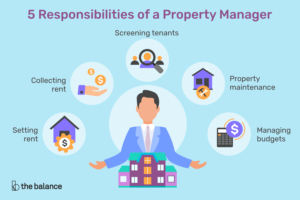
Property management involves a wide range of tasks and responsibilities carried out by property managers, management companies, or individual landlords. Property managers serve as the operational backbone of real estate ownership, balancing the financial interests of the owner with the comfort and satisfaction of tenants while maintaining the property’s long-term value.[2][3]
The specific roles depend on the type of property[1]—residential, commercial, or industrial—but generally include:
Tenant Relations
Property managers act as intermediaries between property owners and tenants. They handle tenant inquiries, process applications, conduct screenings, negotiate lease agreements, and coordinate move-in and move-out procedures. In most settings, property management companies also operate the mailroom of the buildings in which they lease to tenants or manage on behalf of the landlord client; Mailroom Operations is a component of property management.
Rent Collection and Financial Management
Managers are responsible for collecting rent, enforcing payment terms, issuing late notices, and managing security deposits. Many also prepare financial statements, budgets, and reports for property owners, ensuring compliance with local and national regulations.
Maintenance and Repairs
A key role of property management is the maintenance of the property. This includes scheduling regular inspections, coordinating repairs, overseeing contractors, and ensuring that the property meets safety and habitability standards.[4]
Facilities management (or facility management) is a professional discipline within property management, focused on coordinating the use of space, infrastructure, people, and organizational resources to ensure that physical assets and environments are managed effectively to meet the needs of their users.[5][4]
Property managers must ensure that the property adheres to housing laws, landlord-tenant regulations, fair housing rules, and zoning ordinances. They may also handle evictions and represent owners in legal proceedings related to tenancy issues.
Marketing and Leasing
In residential and commercial contexts, managers are often responsible for advertising vacancies, setting rental rates based on market conditions, and maintaining high occupancy levels through effective marketing strategies.
Administrative Duties
Administrative responsibilities may include record-keeping, contract management, insurance coordination, and maintaining communication with property owners and vendors.
Property Management Business Pricing Models
Percentage of rent
The percentage of rent model is the most common property management model, typically used by companies managing multi-unit residential buildings and single-family homes. In this arrangement, the property owner enters into a management agreement granting the company the authority to lease the house or property to new tenants and collect rent on the owner’s behalf. Property owners are generally not directly involved with tenants and may not even know their identities. The management company usually retains between 8% and 12% of the rental income as a management fee, remitting the remainder to the property owner.[6][7][8]
Flat-fee / Fixed-fee
A fixed-fee property management model, also known as a flat-fee model, is an alternative to the traditional percentage-based structure. In this arrangement, the property management company charges a predetermined monthly or annual fee for its services, regardless of the property’s rental income. This model is often preferred by property owners seeking predictable management costs, especially for higher-rent properties where a percentage-based fee could result in higher expenses.
Under a fixed-fee agreement, the scope of services—such as tenant placement, rent collection, maintenance coordination, and property inspections—is typically defined in advance. Some companies offer tiered or customizable service packages to accommodate different owner needs. The fixed-fee model has gained popularity in recent years due to its transparency, cost stability, and appeal to investors managing multiple rental units.
The flat-fee model is also popular among vacation property owners who do not wish to rent out their properties but want a management company to oversee maintenance, inspections, and general upkeep.[9]
Hybrid Pricing Model
A growing trend in property management, is the hybrid pricing model, which combines elements of both percentage-based and fixed-fee structures. Under this approach, property management companies charge a reduced percentage of the monthly rent along with a flat administrative fee. This model aims to balance affordability and service flexibility, providing property owners with predictable costs while ensuring management companies maintain sustainable revenue for operational expenses.[10]
Guaranteed rent
This model is also used in the residential space, but mostly for small units in high-demand locations. Here, the company signs a rental agreement with the owner and pays them a fixed rent. As per the agreement, the company is given the right to sublet the property for a higher rent. The company’s income is the difference between the two rents. As is evident, in this case, the company minimizes the rent paid to the owner, which is usually lower than market rates.[11]
Revenue share / Percentage Lease
A percentage lease is a type of commercial lease commonly used in retail environments, particularly in shopping centers and other high-traffic locations. Under this arrangement, the tenant pays a fixed base rent in addition to a percentage of their gross sales that exceed a specified amount, known as the breakpoint. This structure aligns the interests of the landlord and tenant by allowing rent to fluctuate based on the tenant’s sales performance.[12]
Software & Property Technology Solutions
The property management services market has increasingly emphasized technological innovation, largely driven by the adoption of software such as property management systems, hotel operating systems (HOS), and property technology (PropTech) solutions. The global property management software market was valued at approximately USD 5.51 billion in 2023 and is expected to grow to around USD 9.68 billion by 2030.[13]
Many property management firms now utilize artificial intelligence (AI), Internet of Things (IoT)–enabled maintenance systems, mobile applications, and cloud-based platforms to improve operational efficiency and tenant engagement. These technologies facilitate functions such as predictive maintenance, automated rent collection, digital leasing processes, and data analytics for real-time decision-making. As tenant expectations continue to evolve, PropTech has become an integral component of contemporary property management practices.[14][15]
Property Management Licensing
Licensing requirements for property managers vary widely depending on the jurisdiction and type of property but generally aim to ensure professional standards, consumer protection, and ethical business practices within the real estate industry. As a result, Property management is a regulated profession in many countries with licensing requirements designed to protect property owners and tenants alike. The specific requirements vary by country, region, state, etc but in many cases, property managers must hold a real estate broker’s license or a specialized property management license to legally manage rental properties on behalf of others.[16]
To obtain a license, applicants are typically required to complete pre-licensing education, pass a state examination, and undergo a background check. Once licensed, property managers must follow state and/or local laws that govern leasing practices, trust accounting, fair housing compliance, and tenant-landlord relations.
In some places, unlicensed individuals may manage properties they personally own, but cannot legally collect rent, negotiate leases, or represent other property owners without proper licensure. Some places offer exceptions or separate licensing paths for managing community associations, vacation rentals, or commercial properties.
Even in areas without strict licensing laws, many professional property managers voluntarily pursue certification through national organizations such as the Institute of Real Estate Management (IREM) or the National Association of Residential Property Managers (NARPM). These credentials help demonstrate knowledge, professionalism, and a commitment to ethical standards in the industry.
Rent Control Act in the Philippines
Republic Act 9653[1], better known as the Rent Control Act of 2009, is the law that protects housing tenants (especially in the lower-income class) against unreasonable rent increases. It also provides the eviction rules that both landlords and tenants must observe.
This rental law in the Philippines covers housing units with a monthly rent of up to PHP 10,000 in Metro Manila and other highly urbanized cities nationwide.
Particularly, the following rental properties are covered by the Rent Control Act:
Apartments
Boarding houses, bedspaces, dormitories, and rooms for rent
Houses and/or land
Landlords and renters who violate any provision of the rental law face penalties—a fine of PHP 25,000 to PHP 50,000, imprisonment of one month and one day to six months, or both.
Civil Code of the Philippines
The Civil Code[2] has lease provisions that cover rentals above PHP 10,000 and those not covered by the Rent Control Act of 2009, including commercial spaces and rent-to-own units.
The lease provisions in the Civil Code are rather lengthy and too technical for common people to understand. If you’re covered by this rental law in the Philippines and you think your landlord has violated your tenant rights, it’s best to consult a lawyer who specializes in this field.
What are the Rights of a Tenant in the Philippines?
Tenants are entitled to protection as mandated by rental laws in the Philippines. Based on data from the Philippine Statistical Research and Training Institute[3], the majority or 97% of renters in the country are paying monthly rent at PHP 10,000 and below. Thus, in this article, we’ll focus on the tenant rights provisions under the Rent Control Act.
Here are the basic rights you should know if you’re renting a home.
1. Limit on Rent Increases
Landlords cannot increase the rent by more than what the law allows. The Housing and Urban Development Coordinating Council (HUDCC), a government agency that regulates residential leases in the Philippines, has set the rental increase limits[4] based on the Rent Control Act.
Until how much can landlords increase their rent?
Monthly Rent
Maximum Rent Increase
PHP 4,999 and below
2% (only once per year)
PHP 5,000 to PHP 8,999
7% (as long as the unit is occupied by the same tenant)
PHP 9,000 to PHP 10,000
11% (as long as the unit is occupied by the same tenant)
Before you sign a lease agreement, check if it has any provision on rent increase. If it does, it should be within the legal limit.
Also, the Rent Control Act allows landlords to increase rents only once a year for bedspaces, boarding houses, dorms, and rooms leased to students. In this case, no rent increase can be charged twice or more per year even if a new tenant moves into the unit within the same year.
2. No Charging of Excessive Deposit and Advance Rent
Under the Rent Control Act, landlords can only collect not more than two-month deposit and not more than one-month advance rent.
The rental law also requires them to keep the deposit payment in a bank account under the landlord’s name throughout the duration of the lease agreement. When the contract expires, the deposit and the interest it earned, plus any remaining balance from the advance rent, should be returned to the tenant.
However, landlords can use the deposit and advance rent to compensate for losses they incur when tenants fail to pay the rent, settle utility bills, and/or causes damage to any part of the property.
3. No Eviction Without Legal Ground
If your landlord tells you to vacate the house, ask for the specific reason for the eviction. You cannot be evicted for unjust reasons.
When Can a Tenant be Evicted in the Philippines?
The decision to evict a tenant must be based on grounds specified by the rental law in the Philippines. The Rent Control Act allows eviction only for any of the following reasons:
Subleasing – The tenant rents out a portion or all of the unit to another person without the property owner’s written consent.
Overdue rental payments – The tenant has not paid the rent for three months or more.
Owner’s legitimate need to use the property – The landlord or his/her family needs to occupy the unit. In such a case, the tenant can be evicted only after the lease contract expires. The renter should also be given a formal notice to vacate three months in advance.
Necessary house repairs – The landlord has to do necessary repairs on the leased unit to make it safe and suitable to live in. When the repair is finished, the evicted tenant should be the priority in leasing the unit.
Lease contract expiration – The landlord has the option not to renew the rental agreement once it expires. This usually happens when the landlord wants to get rid of unruly or delinquent tenants.
When is Eviction Illegal?
Renters in the Philippines cannot be asked to leave the leased property for any of the following reasons:
1. Sale or mortgage of the property
Under the Rent Control Act, if the landlord has sold or mortgaged the leased unit to a third party, the landlord or the new owner cannot evict the tenant.
2. If you’re a COVID-19 patient or frontliner
If you’re renting in a city with an anti-COVID-19 discrimination ordinance (such as Makati, Manila, Muntinlupa, Pasig, and Quezon City), you shouldn’t be forced to leave your rented unit or be denied of leasing if you’re suspected or infected with COVID-19 or any infectious disease. The same goes for healthcare and emergency workers.
3. Failure to pay rent and other reasons during the quarantine period and grace period
Property owners cannot evict tenants in ECQ, MECQ, and GCQ areas from the start of the quarantine until the end of the mandatory 30-day grace period (which starts from the last due date of rent or from the lifting of the quarantine, whichever is longer).
This rule, which is based on a Department of Trade and Industry (DTI) memorandum circular[5] under the Bayanihan to Heal as One Act, applies to residential tenants and commercial tenants in the MSME (micro, small, and medium enterprise) industry that were banned from operating during the ECQ.
Under the DTI memo, no eviction is allowed even for tenants who fail to settle their rent during the community quarantine. Landlords who refuse to comply with the grace period could be fined at least PHP 10,000, jailed for at least two months, or both.
All unpaid rents during the quarantine period can be settled in six monthly installments—without any penalties, interests, fees, and other charges—after the end of the grace period. According to the DTI, tenants who opt to do that should give their landlord a promissory note or any letter stating their intention to pay the overdue rents in installments.
What Should I Do If My Tenant Rights are Violated?
Rental laws are not clear about what you can do in case your rights as a renter are violated. You can first try to negotiate with your landlord for a settlement. If you don’t reach an agreement, seek the assistance of your barangay chairman or lupon[6], which has the authority to protect landlord and tenant rights.
If your landlord evicts you during the quarantine period, it’s a clear violation of the DTI guidelines on residential and commercial rents[7]. You can file a complaint with the DTI through email or in person. The DTI will then issue a notice of violation to the landlord and require a written reply. Once the violation is confirmed, an appropriate criminal case will be filed with the Department of Justice against the erring landlord.
Final Thoughts
Especially during a crisis, the law gives special consideration to renters struggling to settle their rent. Knowing your tenant rights under the rental laws in the Philippines certainly helps you avoid unfair and stressful situations like illegal eviction.
A condominium offers individuals ownership of their residential unit while providing communal sharing of facilities and maintenance through association agreements.
What Is a Condominium?
A condominium is an individually owned unit within a larger residential complex composed of similar units.
A condo owner typically has shared ownership of community property, such as floors and stairwells, which is managed by the condominium association.
Condos involve ownership, as opposed to rental, like in apartments. Another difference is the monthly fees that condo owners usually pay to a condominium association for property upkeep and common area maintenance.
A condo association or management is usually made up of a board of unit owners who oversee daily operation of the complex, such as lawn maintenance, snow removal, and building updates.
Understanding Condominium Ownership and Management
Condo owners actually own the “air space” within their unit in a multi-unit development. This means that the condo owner’s title to the property does not include the four walls that divide their unit from other units or common areas in the property. The floor, ceiling, sidewalks, stairwells, and exterior areas are all part of the common ownership of the condo—known as limited common elements.
One common type of condominium is a residential high-rise that provides housing for several different families. However, the concept is not limited to high-rise buildings or residential properties. Residential townhouses are sometimes developed as condominiums. Commercial properties, like office buildings, can also be structured as condos.
Important
Condos, like apartments, suit those who prefer shared community living without the hassle of maintenance tasks such as lawn care and property management.
Key Considerations for Condominium Buyers
Developers offer parking spaces and garages to unit owners in different ways. In some developments, these spaces are reserved as limited common areas, and the condo association maintains ownership but gives exclusive rights for the unit owner to use the space or garage.
In other developments, the unit owner buys the garage or parking space and has ownership. However, the covenants, conditions, and restrictions may still limit the owner’s ability to sell or rent the space independent of the unit itself.
Comparing Condominiums and Apartments
The big difference between a condo and an apartment is that you generally own a condo, while you rent an apartment. Apartment buildings are usually owned by a single owner (such as a property management company), and the buildings are used solely for rental purposes. However, condos that are rented out to tenants are sometimes referred to as apartments.1
Thus, the only notable difference between a condominium and an apartment is ownership. A condo is generally something you own, while an apartment is something you rent.
Essential Condominium Ownership Requirements
The declaration of covenants, conditions, and restrictions is a legal document outlining rules for condo unit owners.
This document defines the acceptable use of the unit. It describes the owner’s use of limited common areas and general common areas. The declaration includes rules for selecting the board for the homeowners association. This board manages the development, directs repairs and maintenance of the common areas, and assesses fees.
Unit owners pay condo fees for insurance, shared utilities, and future maintenance reserves.
Condos may also include the fees the association pays to a management company for the daily operation of the development. Condo fees can rise, and major maintenance costs not covered by reserve funds may be charged to owners.
Weighing the Pros and Cons of Condo Living
Buying a home is usually a major investment, so it’s vital to know the pros and cons, especially for condos, due to financial, legal, and tax implications.
Pros
Shared amenities
Security services
Common area maintenance
Cons
Fees and special assessments
Less privacy
Additional restrictions from condo associations
Pros Explained
Shared amenities: Condo living affords its owners several benefits, such as access to amenities that are ordinarily only accessible at a cost. Owners can enjoy the exclusive use of swimming pools, tennis courts, and fitness facilities at no extra cost. Some high-end condos even provide access to spas, rooftop entertainment spaces, and gardens.
Security services: Many condo associations employ security services to safeguard their community and protect their residents. This may be as simple as a gate and a doorman in the front lobby. It can also be more complex, such as camera surveillance or patrols by security personnel. Either way, the community benefits from extra eyes warding off would-be intruders and additional peace of mind as a result.
Common area maintenance: Condo associations are responsible for maintaining common areas such as the amenities. Owners can enjoy the facilities without worrying about cleaning them.
Cons Explained
Fees and special assessments: Condo owners must pay association fees for community upkeep, covering common areas, exteriors, and some interior maintenance. Fees can vary according to what they support. For major repairs, condo owners may be assessed a special fee to cover the costs. These special assessments can be thousands or tens of thousands of dollars.
Less privacy: Much like apartments, condos often share common walls, as well as common spaces. Living in proximity and sharing walls and spaces limits the amount of privacy one can enjoy. In contrast to single-family detached houses, residents must tolerate neighborly nuisances.
Additional restrictions from condo associations: Condos are managed by condo associations that impose certain rules and restrictions on owners. The condo association governs how common spaces can be used, to what extent condo owners can make improvements or changes to their units, and sometimes who can enjoy those spaces with them.
What Does Condo Mean?
A condo, short for condominium, is an individually owned residential unit in a building or complex composed of other residential units. Condo owners share a common space and often pay association fees to maintain the common space, amenities, and other shared resources.
What Is the Difference Between an Apartment and a Condo?
Apartments are individual residential units within a building or complex that are rented by their occupants. The entire building is usually owned by a property management company. In contrast, condos are residential units within a building or complex that are separately owned.
Are Condos Cheaper Than Houses?
Condos are generally less expensive than single-family houses in the same area. Condo owners pay an association fee that covers maintenance costs, amenities, and other resources. These fees are generally less than the costs to maintain a house. However, some condos, especially luxury condos in affluent areas, can command much more than the average house.
Are Condos Cheaper Than Apartments?
The direct cost to reside in the unit can be more expensive than owning a condo since the owner will charge more than the cost of a mortgage to make a profit. However, on average, renting an apartment is less expensive than owning a condo, as apartment renters do not pay association fees. Condo owners must also pay for maintenance and repairs, while apartment renters do not.
What Is a Condo Assessment?
An assessment is a fee billed to condo owners for major repairs or enhancements not covered by the regular condo fees. The assessment fee is generally based on the size of the unit. If all units are the same size, each owner will pay an equal assessment amount.
The Bottom Line
Condominiums are individually owned residential units within a larger complex. Condo owners own their units but share common areas, amenities, and other resources.
Monthly condominium fees are necessary for amenities, maintenance, upkeep of community property, and possible special assessments for major repairs. While condos have these added fees, they are generally less expensive than single-family houses.
Pros of condo living include shared amenities and security, while cons include less privacy and restrictions from condo associations.
It’s important to understand the declaration of covenants, conditions, and restrictions involved in condominium ownership. Consider all the implications and carefully weigh the pros and cons before deciding whether to buy a condo.
Sponsored
Take a Position
Interactive Brokers offers access to exchange-listed Forecast and Event Contracts on ForecastTrader. In addition to trading stocks and ETFs, traders can seamlessly trade on yes-or-no contracts across categories like elections, sports, climate, and more. Plus, real-time pricing and data, extended trading hours, and incentive coupons for eligible account users. Enjoy $0 commissions and low execution fees. Open a ForecastTrader account today.
The New Civil Code of the Philippinesdefines a contract of sale as a contract whereby one of the contracting parties obligates himself to transfer the ownership of and to deliver a determinate thing, and the other to pay therefor a price certain in money or its equivalent. In view of the said definition, Contract of Sale, by its very nature, is a consensual contract because it is perfected by mere consent. The essential elements of a contract of sale are the following:
Consent or meeting of the minds, that is, consent to transfer ownership in exchange for the price;
Determinate subject matter; and
Price certain in money or its equivalent.
Under this definition, a contract to sell may not be considered as a contract of salebecause the first essential element is lacking. In a contract to sell, the prospective seller explicitly reserves the transfer of title to the prospective buyer, meaning, the prospective seller does not as yet agree or consent to transfer ownership of the property subject of the contract to sell until the happening of an event, which for present purposes we shall take as the full payment of the purchase price. What the seller agrees or obliges himself to do is to fulfill his promise to sell the subject property when the entire amount of the purchase price is delivered to him. In other words, the full payment of the purchase price partakes of a suspensive condition, the non-fulfillment of which prevents the obligation to sell from arising and thus, ownership is retained by the prospective seller without further remedies by the prospective buyer (Coronel vs. Court of Appeals 263 SCRA 15, October 07, 1996).
In Roque vs. Lapuz (96 SCRA 741 [1980]), the Supreme Court had occasion to rule that the contract between the parties was a contract to sell where the ownership or title is retained by the seller and is not to pass until the full payment of the price, such payment being a positive suspensive condition and failure of which is not a breach, casual or serious, but simply an event that prevented the obligation of the vendor to convey title from acquiring binding force. Stated positively, upon the fulfillment of the suspensive condition which is the full payment of the purchase price, the prospective seller’s obligation to sell the subject property by entering into a contract of sale with the prospective buyer becomes demandable as provided in Article 1479 of the Civil Code which states:
Art. 1479. A promise to buy and sell a determinate thing for a price certain is reciprocally demandable.
An accepted unilateral promise to buy or to sell a determinate thing for a price certain is binding upon the promisor if the promise is supported by a consideration distinct from the price.
Thus, a contract to sell may be defined as a bilateral contract whereby the prospective seller, while expressly reserving the ownership of the subject property despite delivery thereof to the prospective buyer, binds himself to sell the said property exclusively to the prospective buyer upon fulfillment of the condition agreed upon, that is, full payment of the purchase price.
A contract to sell as defined hereinabove, may not even be considered as a conditional contract of sale where the seller may likewise reserve title to the property subject of the sale until the fulfillment of a suspensive condition, because in a conditional contract of sale, the first element of consent is present, although it is conditioned upon the happening of a contingent event which may or may not occur. If the suspensive condition is not fulfilled, the perfection of the contract of sale is completely abated (Homesite and housing Corp. vs. Court of Appeals, 133 SCRA 777 [1984]). However, if the suspensive condition is fulfilled, the contract of sale is thereby perfected, such that if there had already been previous delivery of the property subject of the sale to the buyer, ownership thereto automatically transfers to the buyer by operation of law without any further act having to be performed by the seller.
In a contract to sell, upon the fulfillment of the suspensive condition which is the full payment of the purchase price, ownership will not automatically transfer to the buyer although the property may have been previously delivered to him. The prospective seller still has to convey title to the prospective buyer by entering into a contract of absolute sale.
Importance of Knowing the Difference between Contract to Sell and Contract of Sale
It is essential to distinguish between a contract to sell and a conditional contract of sale specially in cases where the subject property is sold by the owner not to the party the seller contracted with, but to a third person, as in the case at bench. In a contract to sell, there being no previous sale of the property, a third person buying such property despite the fulfillment of the suspensive condition such as the full payment of the purchase price, for instance, cannot be deemed a buyer in bad faith and the prospective buyer cannot seek the relief of reconveyance of the property. There is no double sale in such case. Title to the property will transfer to the buyer after registration because there is no defect in the owner-seller’s title per se, but the latter, of course, may be used for damages by the intending buyer (Coronel vs. Court of Appeals).
In a conditional contract of sale, however, upon the fulfillment of the suspensive condition, the sale becomes absolute and this will definitely affect the seller’s title thereto. In fact, if there had been previous delivery of the subject property, the seller’s ownership or title to the property is automatically transferred to the buyer such that, the seller will no longer have any title to transfer to any third person. Applying Article 1544 of the Civil Code, such second buyer of the property who may have had actual or constructive knowledge of such defect in the seller’s title, or at least was charged with the obligation to discover such defect, cannot be a registrant in good faith. Such second buyer cannot defeat the first buyer’s title. In case a title is issued to the second buyer, the first buyer may seek reconveyance of the property subject of the sale (Ibid).
With the above postulates as guidelines, contracting parties may now proceed to the task of deciphering the real nature of the contract they entered into.
What Is Commercial Real Estate (CRE)?
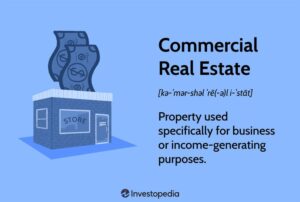
Commercial real estate (CRE) encompasses properties used for business activities rather than residential purposes. It includes a diverse range of properties, from single retail stores to expansive industrial complexes, often leased to tenants for income through rent or business operations. Leasing terms in CRE can significantly differ from residential agreements, offering unique investment opportunities and challenges.
The business of commercial real estate involves the construction, marketing, management, and leasing of property for business use.
There are many categories of commercial real estate such as retail and office space, hotels and resorts, strip malls, restaurants, and healthcare facilities.
Distinguishing Commercial From Residential Real Estate
Real estate is mainly categorized as commercial or residential.
Residential properties are structures reserved for human habitation rather than commercial or industrial use. As its name implies, commercial real estate is used in commerce, and multiunit rental properties that serve as residences for tenants are classified as commercial activity for the landlord.
Commercial real estate is typically categorized into four classes, depending on function:
Individual categories may also be further classified. There are, for instance, different types of retail real estate:
Hotels and resorts
Strip malls
Restaurants
Healthcare facilities
Similarly, office space has several subtypes. Office structures are often characterized as class A, class B, or class C:
Class A represents the best buildings in terms of aesthetics, age, quality of infrastructure, and location.
Class B buildings are older and not as competitive—price-wise—as class A buildings. Investors often target these buildings for restoration.
Class C buildings are the oldest, usually more than 20 years of age, and may be located in less attractive areas and in need of maintenance.
Some zoning and licensing authorities further break out industrial properties, which are sites used for the manufacture and production of goods, especially heavy goods. Most consider industrial properties to be a subset of commercial real estate.
Navigating Commercial Lease Agreements
Some businesses own the buildings that they occupy. More commonly, commercial property is leased. An investor or a group of investors owns the building and collects rent from each business that operates there.
Commercial lease rates—the price to occupy a space over a stated period—are customarily quoted in annual rental dollars per square foot. (Residential real estate rates are quoted as an annual sum or a monthly rent.)
Commercial leases typically run from one year to 10 years or more, with office and retail space typically averaging five- to 10-year leases. This, too, is different from residential real estate, where yearly or month-to-month leases are common.
The Roles of a Property Manager: Keeping Real Estate Investments Profitable and Well-Maintained
Real estate ownership can be a rewarding investment, but managing properties effectively requires time, expertise, and attention to detail. This is where property managers play a crucial role. Whether handling residential, commercial, or mixed-use developments, property managers ensure that properties operate efficiently, tenants remain satisfied, and owners achieve their investment goals.
What is a Property Manager?
A property manager is a professional responsible for overseeing the daily operations, maintenance, and administration of a property on behalf of the owner. They act as the bridge between property owners and tenants, ensuring that the property remains profitable, compliant, and well-maintained.
Property managers are commonly employed for condominiums, apartment buildings, office spaces, retail centers, and residential subdivisions.
Key Roles and Responsibilities of a Property Manager
1. Tenant Management
One of the primary responsibilities of a property manager is handling tenant-related concerns. This includes:
Marketing vacant units
Screening prospective tenants
Processing lease agreements
Handling tenant inquiries and complaints
Managing lease renewals and terminations
Effective tenant management helps maintain high occupancy rates and positive tenant relationships.
2. Property Maintenance and Repairs
Property managers ensure that buildings, facilities, and common areas remain in excellent condition. Their responsibilities include:
Conducting regular property inspections
Coordinating preventive maintenance programs
Scheduling repairs and renovations
Supervising contractors and service providers
Ensuring safety and cleanliness standards
Well-maintained properties retain their value and attract quality tenants.
3. Financial Management
Property managers are responsible for overseeing the financial performance of a property. Key tasks include:
Collecting rent and association dues
Monitoring operating expenses
Preparing budgets and financial reports
Managing vendor payments
Recommending strategies to improve profitability
Proper financial management helps maximize returns for property owners.
4. Lease Administration
Managing lease agreements is a critical part of property management. Property managers:
Prepare and review lease contracts
Ensure compliance with lease terms
Monitor rental escalations
Handle renewals and amendments
Address lease violations when necessary
Effective lease administration protects both owners and tenants.
5. Legal and Regulatory Compliance
Property managers help ensure compliance with applicable laws, regulations, and local ordinances. This includes:
Building and safety regulations
Fire safety requirements
Environmental standards
Local government permits
Property tax and documentation requirements
Compliance reduces legal risks and protects the property’s reputation.
6. Risk Management and Security
Property managers identify potential risks and implement measures to protect the property and its occupants. Their responsibilities may include:
Monitoring security systems
Coordinating emergency response procedures
Managing insurance requirements
Conducting safety inspections
Addressing potential hazards
A proactive approach to risk management helps prevent costly incidents.
7. Vendor and Contractor Coordination
Property managers work with various service providers, including:
Maintenance personnel
Security agencies
Landscaping contractors
Cleaning services
Utility providers
They ensure that services are delivered efficiently and within budget.
Benefits of Hiring a Property Manager
Improved Property Performance
Professional management helps maintain property value and operational efficiency.
Higher Tenant Satisfaction
Prompt responses to tenant concerns lead to better tenant retention and occupancy rates.
Time Savings for Owners
Property owners can focus on investment growth while managers handle day-to-day operations.
Better Financial Control
Property managers monitor expenses, collect payments, and provide accurate financial reporting.
Legal Protection
Experienced property managers help ensure compliance with laws and regulations, reducing potential liabilities.
Skills of an Effective Property Manager
Successful property managers typically possess:
Strong communication skills
Leadership and organizational abilities
Financial management expertise
Problem-solving capabilities
Knowledge of real estate laws and regulations
Customer service orientation
These skills allow them to effectively manage properties while balancing the needs of owners and tenants.