
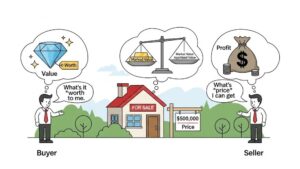
Understanding the Basis of Value in Real Estate
In the real estate industry, determining the value of a property is one of the most important aspects of buying, selling, investing, and financing. However, many people do not realize that a property can have different values depending on the purpose of the valuation. This is where the concept of basis of value comes in.
The basis of value serves as the foundation used by appraisers and real estate professionals to estimate how much a property is worth. Understanding this concept helps property owners, buyers, investors, and even government agencies make better and more informed decisions.
What is Basis of Value?
A basis of value refers to the standard or type of value applied in determining the worth of a real estate property. It answers the question:
“Value for what purpose?”
A property may have one value in the open market, another value for taxation, and a different value for insurance or investment purposes.
Because of this, it is important to identify the correct basis of value before conducting a property appraisal.
Why is Basis of Value Important?
The basis of value is important because it ensures that the property valuation is:
- Accurate
- Fair and objective
- Consistent with market conditions
- Suitable for its intended use
Without a proper basis of value, property assessments may become misleading or unreliable.
For example, a bank evaluating a property for a housing loan may focus on market value, while a local government office may use assessed value for taxation purposes.
Common Types of Basis of Value in Real Estate
1. Market Value
Market value is the most commonly used basis of value in real estate.
It refers to the estimated amount a property would sell for between a willing buyer and willing seller under normal market conditions.
This value is influenced by:
- Location
- Demand and supply
- Accessibility
- Property condition
- Nearby developments
Example:
A house and lot located in Pasig City may command a higher market value because of its accessibility to business districts and commercial establishments.
Common Uses:
- Buying and selling properties
- Bank financing
- Property listings
- Investment analysis
2. Assessed Value
Assessed value is the value assigned by the government for taxation purposes.
In the Philippines, local government units use assessed value to calculate the Real Property Tax (RPT).
This value is usually lower than market value because it is based on assessment levels determined by the local assessor’s office.
Common Uses:
- Property taxation
- Government records
- Tax declarations
3. Fair Value
Fair value refers to the estimated price agreed upon by knowledgeable and willing parties under normal conditions.
This basis is commonly used in:
- Accounting
- Financial reporting
- Corporate asset valuation
Fair value helps businesses reflect the true worth of their real estate assets in financial statements.
4. Investment Value
Investment value is the value of a property to a specific investor based on expected returns and investment objectives.
Unlike market value, investment value can vary from one investor to another.
Example:
An investor may value a commercial property higher because of its strong rental income potential and long-term appreciation.
5. Insurance Value
Insurance value refers to the cost of rebuilding or replacing the improvements on a property in case of damage or destruction.
This usually excludes the land value since land itself is not destroyed.
Common Uses:
- Property insurance
- Risk management
- Building replacement estimation
6. Liquidation Value
Liquidation value is the estimated amount a property may sell for under a forced or rushed sale.
This value is commonly seen in:
- Foreclosure cases
- Bankruptcy
- Distressed property sales
Because the property must be sold quickly, liquidation value is often lower than market value.
Factors That Affect Property Value
Several factors influence the value of real estate properties, including:
- Location
- Accessibility
- Market demand
- Economic conditions
- Property size and condition
- Infrastructure developments
- Zoning regulations
Properties located in high-demand areas such as Tagaytay City often experience stronger property appreciation due to tourism, commercial growth, and lifestyle appeal.
Leave a Reply