
All posts by jennica javier

What Is Land Management?

Facebooktwitterredditpinterestlinkedinmail

What is Land Management

Are you curious about land management? Wondering what exactly it entails and why it’s so important? Look no further. In this article, we’ll provide an in-depth overview of land management and its significance in various contexts. Land management refers to the active process of controlling and overseeing the use, development, and conservation of land and its natural resources. This practice encompasses a range of activities, including land use planning, environmental planning, forestry, agriculture, and more. It aims to strike a balance between economic development and environmental sustainability, ensuring that land resources are utilized responsibly and efficiently. Effective land management is crucial for maintaining biodiversity, combating climate change, and promoting sustainable development. From preserving natural habitats to facilitating urban growth, land management plays a vital role in shaping our landscapes and ensuring their long-term viability. Whether you’re an environmental enthusiast or simply curious about how land is managed, this article will provide valuable insights into the world of land management. So, let’s dive in and explore this fascinating topic further.

Importance of Land Management

Land management is the bedrock upon which societies build their futures. It is a critical element of how we coexist with the natural world and how we shape the environment in which future generations will live. From the food we eat to the spaces where our children play, the principles of land management affect every aspect of our lives.

The importance of land management cannot be overstressed. It is the means by which we can reconcile the often competing demands of agriculture, housing, industry, and conservation. Without effective land management, these areas could easily fall into conflict, resulting in the depletion of natural resources, loss of biodiversity, and irreversible environmental damage.

Moreover, land management is pivotal for disaster risk reduction. It helps in the planning of settlements away from vulnerable areas, the conservation of water catchments, and the management of land use to reduce the incidence and impact of floods, landslides, and other natural disasters. It is a critical component in safeguarding human life and property against the unpredictable forces of nature.

The Role of Land Management in Sustainable Development

The United Nations’ Sustainable Development Goals (SDGs) have put a spotlight on the significance of managing our land resources sustainably. Land management practices are central to achieving many of these goals, particularly those related to ending poverty, ensuring food security, and fostering resilience to climate change.

Sustainable land management is about integrating land, water, biodiversity, and environmental management to meet human needs while ensuring the long-term sustainability of ecosystem services. It is about finding a middle ground where economic development can proceed without stripping the Earth of its ability to support us in the future.

Effective land management contributes to sustainable development by promoting land use that supports productive activities, such as agriculture and forestry, while conserving soil and water resources. It helps to maintain the health of ecosystems, which in turn supports the livelihoods of billions of people worldwide, especially those living in rural areas.

Key Principles of Land Management

The principles of land management serve as a compass guiding the multitude of decisions that must be made about how land is used and conserved. These principles are shaped by a combination of scientific knowledge, policy frameworks, and societal values.

One fundamental principle is the idea of stewardship – that we are caretakers of the land, responsible not only for its health today but for its vitality for future generations. This long-term perspective is essential in ensuring that land management practices do not sacrifice the future for short-term gains.

Another principle is the concept of integrated management, which recognises that land is part of a larger ecosystem. Land management decisions must consider the interaction between land, water, and living resources to promote a holistic approach to sustainability.

Additionally, the principle of participation is crucial. Inclusive land management that involves local communities, indigenous peoples, and a range of stakeholders leads to more effective and equitable outcomes. It ensures that the needs and rights of all are considered in the decision-making process.

ypes of Land Management Practices

Land management practices vary widely, depending on the objectives and the context. However, they can generally be grouped into several categories, each with its own set of techniques and approaches.

In agriculture, sustainable land management practices include crop rotation, contour farming, agroforestry, and the use of organic fertilisers. These practices are aimed at improving soil fertility and water retention, reducing erosion, and enhancing crop yields.

In urban areas, land management practices involve careful planning of land use to accommodate residential, commercial, and industrial needs while preserving green spaces and public amenities. This includes zoning laws, urban design, and the creation of parks and conservation areas within cities.

Forestry practices include sustainable logging, reforestation, and the management of forests for multiple uses, such as recreation, wildlife habitat, and water protection. These practices aim to ensure that forest resources can be used without compromising their health and diversity.

Challenges in Land Management

Land management is fraught with challenges that stem from a variety of sources. One major challenge is the conflict between different land uses and the interests of various stakeholders. Balancing the needs of agriculture, industry, conservation, and residential development requires careful negotiation and often leads to difficult compromises.

Another challenge is the issue of land degradation, which is exacerbated by practices such as overgrazing, deforestation, and the overuse of chemical fertilisers and pesticides. These practices can lead to soil erosion, loss of fertility, and pollution, making it harder to use the land sustainably in the future.

Climate change presents an additional layer of difficulty for land managers. As weather patterns become more unpredictable and extreme events more common, managing land resources in a way that promotes resilience and adaptation becomes increasingly complex.

Tools and Technologies for Effective Land Management

To meet the challenges of land management, professionals are turning to a range of tools and technologies. Geographic Information Systems (GIS) have become indispensable, allowing land managers to map and analyse land use patterns, environmental data, and other critical information.

Remote sensing technology, including satellite imagery and drones, provides detailed and up-to-date information about land cover, vegetation health, and changes in land use over time. This technology is crucial for monitoring deforestation, urban expansion, and the effects of natural disasters.

Computer modelling is another tool that is used extensively in land management. Models can simulate the impacts of different land use scenarios, helping decision-makers to predict the outcomes of their choices and plan more effectively for sustainable development.

Land Management Strategies for Different Ecosystems

Each ecosystem requires a tailored approach to land management, reflecting its unique characteristics and the needs of the people who rely on it. In arid and semi-arid regions, land management strategies focus on water conservation and the prevention of desertification.

In tropical rainforests, strategies aim to balance the economic benefits of logging with the need to preserve biodiversity and protect the rights of indigenous communities. This often involves sustainable forestry practices and the establishment of protected areas.

In wetlands, land management strategies are centred around water quality and flood control. Wetlands are critical for the health of watersheds, and their management often involves restoring degraded areas and creating buffer zones to protect them from pollution and development.

Land Management and Climate Change

Climate change is both a challenge to and a focus of contemporary land management. Land managers must now consider the carbon sequestration capacity of forests, peatlands, and other ecosystems in their planning. This is because these land types play a crucial role in mitigating the effects of climate change by absorbing carbon dioxide from the atmosphere.

Adaptive land management strategies are also being developed to cope with the impacts of climate change. These strategies include the creation of wildlife corridors to allow species to migrate in response to shifting habitats and the implementation of more resilient agricultural practices.

Furthermore, land managers are increasingly involved in climate change mitigation efforts. This involves promoting land use practices that reduce greenhouse gas emissions, such as the protection of existing forests and the restoration of degraded lands.

Leave a comment

Forms of Ownership

Facebooktwitterredditpinterestlinkedinmail

Learning Objectives

  1. Be familiar with the various kinds of interest in real property.
  2. Know the ways that two or more people can own property together.
  3. Understand the effect of marriage, divorce, and death on various forms of property ownership.

Overview

The transfer of property begins with the buyer’s selection of a form of ownership. Our emphasis here is not on what is being acquired (the type of property interest) but on how the property is owned.

One form of ownership of real property is legally quite simple, although lawyers refer to it with a complicated-sounding name. This is ownership by one individual, known as ownership in severalty. In purchasing real estate, however, buyers frequently complicate matters by grouping together—because of marriage, close friendship, or simply in order to finance the purchase more easily

When purchasers group together for investment purposes, they often use various forms of organization—corporations, partnerships, limited partnerships, joint ventures, and business trusts. The most popular of these forms of organization for owning real estate is the limited partnership. A real estate limited partnership is designed to allow investors to take substantial deductions that offset current income from the partnership and other similar investments, while at the same time protecting the investor from personal liability if the venture fails.

But you do not have to form a limited partnership or other type of business in order to acquire property with others; many other forms are available for personal or investment purposes. To these we now turn.

Joint Tenancy

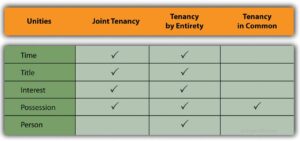
Joint tenancy is an estate in land owned by two or more persons. It is distinguished chiefly by the right of survivorship. If two people own land as joint tenants, then either becomes the sole owner when the other dies. For land to be owned jointly, four unities must coexist:

  1. Unity of time. The interests of the joint owners must begin at the same time.
  2. Unity of title. The joint tenants must acquire their title in the same conveyance—that is, the same will or deed.
  3. Unity of interest. Each owner must have the same interest in the property; for example, one may not hold a life estate and the other the remainder interest.
  4. Unity of possession. All parties must have an equal right to possession of the property (see Figure 12.1 “Forms of Ownership and Unities”).

Figure 12.1 Forms of Ownership and Unities

Suppose a woman owns some property and upon marriage wishes to own it jointly with her husband. She deeds it to herself and her husband “as joint tenants and not tenants in common.” Strictly speaking, the common law would deny that the resulting form of ownership was joint because the unities of title and time were missing. The wife owned the property first and originally acquired title under a different conveyance. But the modern view in most states is that an owner may convey directly to herself and another in order to create a joint estate.

When one or more of the unities is destroyed, however, the joint tenancy lapses. Fritz and Gary own a farm as joint tenants. Fritz decides to sell his interest to Jesse (or, because Fritz has gone bankrupt, the sheriff auctions off his interest at a foreclosure sale). Jesse and Gary would hold as tenants in common and not as joint tenants. Suppose Fritz had made out his will, leaving his interest in the farm to Reuben. On Fritz’s death, would the unities be destroyed, leaving Gary and Reuben as tenants in common? No, because Gary, as joint tenant, would own the entire farm on Fritz’s death, leaving nothing behind for Reuben to inherit.

Tenancy by the Entirety

About half the states permit husbands and wives to hold property as tenants by the entirety. This form of ownership is similar to joint tenancy, except that it is restricted to husbands and wives. This is sometimes described as the unity of person. In most of the states permitting tenancy by the entirety, acquisition by husband and wife of property as joint tenants automatically becomes a tenancy by the entirety. The fundamental importance of tenancy by the entirety is that neither spouse individually can terminate it; only a joint decision to do so will be effective. One spouse alone cannot sell or lease an interest in such property without consent of the other, and in many states a creditor of one spouse cannot seize the individual’s separate interest in the property, because the interest is indivisible.

Tenancy in Common

Two or more people can hold property as tenants in common when the unity of possession is present, that is, when each is entitled to occupy the property. None of the other unities—of time, title, or interest—is necessary, though their existence does not impair the common ownership. Note that the tenants in common do not own a specific portion of the real estate; each has an undivided share in the whole, and each is entitled to occupy the whole estate. One tenant in common may sell, lease, or mortgage his undivided interest. When a tenant in common dies, his interest in the property passes to his heirs, not to the surviving tenants in common.

Because tenancy in common does not require a unity of interest, it has become a popular form of “mingling,” by which unrelated people pool their resources to purchase a home. If they were joint tenants, each would be entitled to an equal share in the home, regardless of how much each contributed, and the survivor would become sole owner when the other owner dies. But with a tenancy-in-common arrangement, each can own a share in proportion to the amount invested.

Community Property

In ten states—Alaska, Arizona, California, Idaho, Louisiana, Nevada, New Mexico, Texas, Washington, and Wisconsin—property acquired during a marriage is said to be community property. There are differences among these states, but the general theory is that with certain exceptions, each spouse has an undivided equal interest in property acquired while the husband and wife are married to each other. The major exception is for property acquired by gift or inheritance during the marriage. (By definition, property owned by either spouse before the marriage is not community property.) Property acquired by gift of inheritance or owned before the marriage is known as separate property. Community property states recognize other forms of ownership; specifically, husbands and wives may hold property as joint tenants, permitting the survivor to own the whole.

The consequence of community property laws is that either the husband or the wife may manage the community property, borrow against it, and dispose of community personal property. Community real estate may only be sold or encumbered by both jointly. Each spouse may bequeath only half the community property in his or her will. In the absence of a will, the one-half property interest will pass in accordance with the laws of intestate succession. If the couple divorces, the states generally provide for an equal or near-equal division of the community property, although a few permit the court in its discretion to divide in a different proportion.

Condominiums

In popular parlance, a condominium is a kind of apartment building, but that is not its technical legal meaning. Condominium is a form of ownership, not a form of structure, and it can even apply to space—for example, to parking spaces in a garage. The word condominium means joint ownership or control, and it has long been used whenever land has been particularly scarce or expensive. Condominiums were popular in ancient Rome (especially near the Forum) and in the walled cities of medieval Europe.

In its modern usage, condominium refers to a form of housing involving two elements of ownership. The first is the living space itself, which may be held in common, in joint tenancy, or in any other form of ownership. The second is the common space in the building, including the roof, land under the structure, hallways, swimming pool, and the like. The common space is held by all purchasers as tenants in common. The living space may not be sold apart from the interest in the common space.

Two documents are necessary in a condominium sale—the master deed and the bylaws. The master deed (1) describes the condominium units, the common areas, and any restrictions that apply to them; (2) establishes the unit owner’s interest in the common area, his number of votes at owners’ association meetings, and his share of maintenance and operating expenses (sometimes unit owners have equal shares, and sometimes their share is determined by computing the ratio of living area or market price or original price of a single unit to the whole); and (3) creates a board of directors to administer the affairs of the whole condominium. The bylaws usually establish the owners’ association, set out voting procedures, list the powers and duties of the officers, and state the obligations of the owners for the use of the units and the common areas.

Cooperatives

Another popular form of owning living quarters with common areas is the cooperative. Unlike the person who lives in a condominium, the tenant of a cooperative does not own a particular unit. Instead, he owns a share of the entire building. Since the building is usually owned by a corporation (a cooperative corporation, hence the name), this means that the tenant owns stock in the corporation. A tenant occupies a unit under a lease from the corporation. Together, the lease and stock in the building corporation are considered personal, not real, property.

In a condominium, an owner of a unit who defaults in paying monthly mortgage bills can face foreclosure on the unit, but neighbors in the building suffer no direct financial impact, except that the defaulter probably has not paid monthly maintenance charges either. In a cooperative, however, a tenant who fails to pay monthly charges can jeopardize the entire building, because the mortgage is on the building as a whole; consequently, the others will be required to make good the payments or face foreclosure.

Time-Shares

A time-share is an arrangement by which several people can own the same property while being entitled to occupy the premises exclusively at different times on a recurring basis. In the typical vacation property, each owner has the exclusive right to use the apartment unit or cottage for a specified period of time each year—for example, Mr. and Mrs. Smith may have possession from December 15 through December 22, Mr. and Mrs. Jones from December 23 through December 30, and so on. The property is usually owned as a condominium but need not be. The sharers may own the property in fee simple, hold a joint lease, or even belong to a vacation club that sells time in the unit.

Time-share resorts have become popular in recent years. But the lure of big money has brought unscrupulous contractors and salespersons into the market. Sales practices can be unusually coercive, and as a result, most states have sets of laws specifically to regulate time-share sales. Almost all states provide a cooling-off period, or rescission period; these periods vary from state to state and provide a window where buyers can change their minds without forfeiting payments or deposits already made.

                                Key Takeaway

Property is sometimes owned by one person or one entity, but more often two or more persons will share in the ownership. Various forms of joint ownership are possible, including joint tenancies, tenancy by the entirety, and tenancy in common. Married persons should be aware of whether the state they live in is a community property state; if it is, the spouse will take some interest in any property acquired during the marriage. Beyond traditional landholdings, modern real estate ownership may include interests in condominiums, cooperatives, or time-shares.

                                     Exercises

  1. Miguel and Maria Ramirez own property in Albuquerque, New Mexico, as tenants by the entirety. Miguel is a named defendant in a lawsuit that alleges defamation, and an award is made for $245,000 against Miguel. The property he owns with Maria is worth $320,000 and is owned free of any mortgage interest. To what extent can the successful plaintiff recover damages by forcing a sale of the property?
  2. Miguel and Maria Ramirez own property in Albuquerque, New Mexico, as tenants by the entirety. They divorce. At the time of the divorce, there are no new deeds signed or recorded. Are they now tenants in common or joint tenants?
Leave a comment

Understanding the Rent Control Act in the Philippines

Facebooktwitterredditpinterestlinkedinmail

For anyone renting or planning to rent a property in the Philippines, understanding the Rent Control Act is crucial. This law aims to protect tenants from unreasonable rent increases while ensuring landlords can still fairly profit from their properties. Let’s break down the key aspects of this act to help both tenants and landlords navigate their rights and responsibilities.


What is the Rent Control Act? 
The Rent Control Act of the Philippines refers to Republic Act No. 9653, also known as the “Rent Control Act of 2009”, as extended by subsequent regulations. It governs rental pricing, increases, and disputes for residential units within specific rent ranges, particularly in urban areas.

The law primarily covers: 

– Residential units with a monthly rent of up to ₱10,000 in Metro Manila. 

– Units with a monthly rent of up to ₱5,000 in other cities and municipalities. 

 Key Provisions 

1. Limit on Rent Increases 

Landlords cannot increase rent by more than 7% annually for covered properties, provided the same tenant occupies the unit.

2. Protection Against Eviction 

  Tenants cannot be evicted except under specific circumstances, such as:

   -Non-payment of rent for three consecutive months. 

   -Subleasing without the landlord’s consent. 

   – The landlord needing the property for personal use or renovations. 

3. Advance Payments and Deposits 

   – Landlords are allowed to collect up to one-month advance rent and two months’ deposit. 

   – Deposits must be returned to the tenant upon moving out, minus any deductions for damages. 

4. Rental Contracts  Both tenants and landlords are encouraged to have a written rental agreement specifying the terms and conditions of the lease, including rent, duration, and responsibilities.

Who Benefits from the Rent Control Act? 

The act primarily benefits low- to middle-income families, students, and employees who rent affordable housing. It ensures they are not priced out of their homes due to sudden, excessive rent increases. 

What the Rent Control Act Doesn’t Cover 

The Rent Control Act does not apply to: 

– Commercial properties. 

– Residential units rented out for over ₱10,000 per month in Metro Manila and ₱5,000 per month in other areas. 

– New leases not covered by existing agreements.

Recent Updates 

While RA 9653 officially expired, the Philippine government often extends similar provisions to address housing affordability. As of today, tenants and landlords should stay updated with the latest housing and rental policies implemented by the Housing and Land Use Regulatory Board (HLURB) or other government bodies. 

 Tips for Tenants 

– Always sign a written agreement and understand its terms before moving in. 

– Keep records of your payments and communications with your landlord. 

– Report any violations of the Rent Control Act to local housing authorities or barangay offices. 

 Tips for Landlords 

– Familiarize yourself with the Rent Control Act to avoid legal disputes. 

– Clearly communicate rental terms and increases with tenants in writing. 

– Maintain the property to ensure tenants receive value for their rent. 

Final Thoughts 

The Rent Control Act is a critical safeguard for renters and a guide for landlords in managing rental properties. Whether you’re a tenant or landlord, understanding this law can foster a fair and harmonious rental relationship. 

Stay informed about changes to rental policies and consult legal or housing experts for specific concerns. After all, a well-informed rental community benefits everyone.

Leave a comment

Condo vs. House

Facebooktwitterredditpinterestlinkedinmail

Condo vs. House: Which is the Better Investment in the Philippines?

1.) Cost and Affordability

✅ Condo

• Generally more affordable than houses, especially in urban areas.

• Lower initial cash outlay and down payment.

• Comes with monthly condo dues for maintenance and amenities.

✅ House and Lot

• Higher upfront cost but offers full ownership of land.

• Maintenance costs are shouldered by the owner.

• Long-term appreciation potential due to land value.

2.) Location and Accessibility

✅ Condo

• Found in prime locations near business districts, malls, and schools.

• Ideal for professionals, students, and investors targeting rental income.

• High demand in Metro Manila, Cebu, and Davao.

✅ House and Lot

• Typically located in suburban or provincial areas.

• More peaceful environment, ideal for families.

• Can require longer travel time to city centers.

3.) Rental Income Potential

✅ Condo

• Easier to rent out due to location and amenities.

• Short-term rental options (Airbnb) can yield higher returns.

• Smaller units (studio, 1BR) have higher rental demand.

✅ House and Lot

• Better for long-term rentals, especially in family-friendly communities.

• Can accommodate multiple tenants if converted into a boarding house.

• More stable rental market compared to short-term rentals.

4.) Appreciation and Resale Value

✅ Condo

• Slower appreciation compared to land.

• Depreciation over time, especially for older buildings.

• Can be harder to resell due to market saturation.

✅ House and Lot

• Land value appreciates over time, making it a stronger long-term investment.

•More flexibility to renovate, expand, or rebuild for                                                                                                                       better resale value.

• Lower depreciation risk compared to condos.

5.) Ownership and Restrictions

✅ Condo

• Ownership is limited to the unit; the land belongs to the developer.

• Monthly condo dues and association rules apply.

• Leasehold terms apply (up to 50 years for foreign investors).

✅ House and Lot

• Full ownership of both land and structure.

• No association fees unless in a subdivision.

• More freedom to customize and modify the property.

6.) Maintenance and Expenses

✅ Condo

• Requires minimal upkeep since the condo management handles maintenance.

• Monthly association dues for amenities and security.

• Higher costs for repairs and renovations due to strict rules.

✅ House and Lot

• Owner is responsible for all repairs and maintenance.

• No mandatory monthly fees unless in a gated community.

• More freedom to renovate, expand, or rebuild.

Leave a comment

Understanding the Maceda Law (RA 6552): Your Rights When Buying Real Estate on Installment

Facebooktwitterredditpinterestlinkedinmail

A simple, complete guide to Republic Act No. 6552 (Realty Installment Buyer Protection Act)

Buying a home or condominium through installment is one of the most common ways Filipinos acquire real estate. But what happens if a buyer can no longer continue payments? Do they automatically lose everything?

This is where the Maceda Law comes in.

Passed as Republic Act No. 6552, the Maceda Law—also known as the Realty Installment Buyer Protection Act—was created to protect buyers of real estate sold on installment. It outlines the rights of buyers, grace periods, refunds, and the correct legal process when a buyer defaults.

If you are purchasing a house, lot, townhouse, or condominium through installment (except rent-to-own or mortgage loans), this law applies to you.

Here’s a clear, simple breakdown of what the Maceda Law provides.

1. What Is the Maceda Law?

Republic Act 6552 (Maceda Law) protects buyers of real property sold on installment, specifically:

  • House and lot
  • Lots
  • Townhouses
  • Condominiums
  • Any real estate (except industrial lots, commercial buildings, and agricultural land)

It applies when the sale is directly from the developer or seller and paid through installments—not through bank loans, Pag-IBIG financing, or mortgage contracts.

2. Who Is Protected Under the Maceda Law?

You are protected if:

  • You bought real property through installment
  • You have made at least two years of installment payments
  • The property is for residential use

The law is buyer-friendly and ensures that if you can no longer pay, you still get certain rights.

3. If You Have Paid at Least 2 Years of Installments:

You Are Entitled to a Refund

Under Section 3 of RA 6552, if a buyer has paid at least 2 years of installments, the developer must grant:

1. A 60-day grace period

You are given a minimum of 60 days to settle overdue payments without losing your rights.

2. A refund of 50% of total payments made

If the contract is canceled after the grace period, you are entitled to a refund:

  • 50% of total payments made, and
  • After 5 years of installments, an additional 5% per year, capped at 90% total refund

This refund must be paid before the developer can formally cancel the contract.

This protects buyers from losing everything they paid.

4. If You Have Paid Less Than 2 Years of Installments: You Still Get Rights

Even if you paid less than 2 years, RA 6552 still grants:

A 60-day grace period

You cannot be evicted or canceled immediately.

You must first be given written notice, and then the 60-day grace period starts.

If you fail to pay within 60 days, only then can the seller cancel the contract through the proper legal process.

No refund is required for buyers who paid less than 2 years.

5. Contract Cancellation Must Follow Legal Procedure

A developer or seller cannot just lock you out, change the door, cancel verbally, or take back the property without due process.

Under the Maceda Law:

✔ The cancellation must be in writing
✔ Delivered through a notarial act of cancellation
✔ Refund (if applicable) must be issued before cancellation
✔ Only after these steps can the seller resell the property

6. You Can Sell or Assign Your Rights Before Cancellation

RA 6552 allows buyers to:

  • Sell their rights to another buyer
  • Assign the property
  • Transfer the contract
  • Change ownership

…before cancellation or default.

This gives flexibility to buyers who want to avoid losing their investment.

7. Why the Maceda Law Exists

The law was created to:

✔ Protect hardworking Filipinos buying homes through installment

✔ Prevent developers from abusing buyers

✔ Ensure fairness in contract cancellation

✔ Provide reasonable grace periods

✔ Allow refunds for long-term payers

It is considered one of the strongest buyer-protection laws in Philippine real estate.

8. Maceda Law vs. Rent-to-Own vs. Mortgage Financing

The Maceda Law applies only to installment sales.

It does not apply to:

  • Bank-financed home loans
  • Pag-IBIG housing loans
  • In-house financing already converted to mortgage
  • Rent-to-own lease agreements
  • Commercial or industrial property

Each of these has different rules and protections.

9. Common Misconceptions — Clarified

❌ “If I miss one payment, the developer can evict me.”

✔ False. You have a legal 60-day grace period.

❌ “I lose everything if I can’t continue payments.”

✔ False. If you’ve paid at least 2 years, you get a refund.

❌ “Cancellation can be verbal or through text.”

✔ False. Cancellation must be through a notarial act.

❌ “The developer can refund anytime.”

✔ False. Refund must be paid before cancellation.

10. Why Understanding the Maceda Law Helps Buyers and Investors

Knowing your rights allows you to:

  • Protect your investment
  • Avoid abusive practices
  • Make informed decisions
  • Plan financing more clearly
  • Safeguard your hard-earned money
  • Negotiate better with developers

Final Thoughts: The Maceda Law Protects Your Real Estate Investment

Buying real estate is one of the biggest financial decisions you will ever make.

The Maceda Law (RA 6552) ensures that:

  • You get protection
  • Your payments are valued
  • You are treated fairly
  • Your rights are respected

Whether you are buying a pre-selling condo, a house and lot, or a subdivision property, knowing this law empowers you as a buyer.

Leave a comment

Redemption of Foreclosed Property Philippines

Facebooktwitterredditpinterestlinkedinmail

Redemption of Foreclosed Property in the Philippines

The redemption of foreclosed property is an essential aspect of Philippine property law, designed to provide relief to property owners facing foreclosure. Foreclosure is a legal process through which a lender (usually a bank or a financial institution) seeks to recover the amount owed on a defaulted loan by forcing the sale of the collateral property. However, under Philippine law, the property owner or mortgagor is given the opportunity to redeem or repurchase the property even after it has been sold at a public auction.

This right to redeem is enshrined in both civil law and specific provisions of the Republic Act No. 3135, which governs foreclosure proceedings. Below is a comprehensive guide to the redemption process, its legal basis, and important considerations.

1. Foreclosure and the Right to Redeem

When a borrower defaults on their mortgage, the lender can initiate a judicial or extrajudicial foreclosure process, depending on the terms of the mortgage agreement.

  • Judicial Foreclosure: The lender files a case in court, and the foreclosure is handled through a legal procedure. This type of foreclosure is more time-consuming but provides a higher level of due process.
  • Extrajudicial Foreclosure: This is a quicker process where the lender forecloses the property without needing court intervention. It typically occurs when the mortgagor signs a power of attorney allowing for a non-judicial foreclosure.

Once a foreclosure sale is conducted, the property may be auctioned off. The person who wins the auction becomes the new owner of the property, but the original owner (the mortgagor) retains the right to redeem the property within a certain period.

2. Legal Basis of Redemption

Under Republic Act No. 3135 (An Act to Regulate the Sale of Property Under Special Powers Inserted in or Attached to Real Estate Mortgages), a mortgagor is granted the right to redeem the foreclosed property. Specifically:

  • Section 6 of RA 3135 provides that the mortgagor may redeem the foreclosed property within one (1) year from the date of the foreclosure sale. This redemption period is critical, as the mortgagor loses the right to redeem the property once the period expires.
  • Civil Code of the Philippines, Articles 1616 to 1620 also recognize the right of a mortgagor to redeem property after foreclosure, reinforcing the provisions of RA 3135.

The redemption period applies to both judicial and extrajudicial foreclosure proceedings.

3. Conditions for Redemption

To redeem the property, the mortgagor (or any person acting in their behalf) must fulfill the following conditions:

a. Payment of the Redemption Price

The mortgagor must pay the redemption price, which is generally the total amount of the following:

  • The amount paid by the purchaser at the foreclosure sale
  • Interest on the amount paid, at a rate specified in the mortgage
  • Costs of foreclosure (including legal fees, sheriff’s fees, etc.)
  • Any taxes or penalties that have accumulated on the property since the auction
  • Other expenses that the new owner might have paid to keep the property in good condition

b. Time Period

The redemption must occur within one (1) year from the date of the public auction sale. This period begins on the day the sale is conducted and is typically recorded in the public records. If the mortgagor does not exercise their right to redeem the property within this one-year period, the right is forfeited, and the purchaser at the auction becomes the absolute owner of the property.

c. Filing the Redemption

The mortgagor or their representative must file the redemption with the proper office. In the case of judicial foreclosures, this would typically be the court handling the case, while for extrajudicial foreclosures, it would be the office of the sheriff who conducted the auction.

4. Effect of Redemption

The redemption of the foreclosed property restores the mortgagor’s ownership. Once the redemption price is paid in full, the following occurs:

  • Cancellation of the Sale: The sale of the property at the foreclosure auction is canceled, and the original title of the property is reinstated in the name of the mortgagor.
  • Refund to the Purchaser: The purchaser at the foreclosure sale is refunded the price they paid at the auction along with any interest accrued. The purchaser’s rights are extinguished, and the property reverts to the mortgagor.
  • Transfer of Title: Upon payment of the redemption price, the title is reverted back to the original owner, and the mortgagor’s ownership rights are restored.

The mortgagor must ensure the payment of all related costs, such as the legal fees or taxes, in full to successfully redeem the property.

5. Who Can Redeem the Property?

While the mortgagor typically redeems the property, other parties with an interest in the property can also redeem it. This includes:

  • Co-mortgagors: In case of joint mortgagors, any of the co-mortgagors can redeem the property.
  • Other lienholders: Any party who holds a lien on the property, such as a second mortgagee, can redeem the property before the redemption period expires. However, their redemption right must be exercised in accordance with their specific rights and priorities under the law.
  • Heirs or Successors: If the mortgagor dies before the foreclosure sale, the heirs may exercise the right to redeem the property on behalf of the deceased.

6. Consequences of Failing to Redeem

If the mortgagor fails to redeem the property within the one-year redemption period, the foreclosure sale becomes final. The new owner (purchaser at the auction) receives absolute ownership of the property, and the mortgagor loses all rights to it.

  • The new owner may now take full possession of the property and have it registered in their name.
  • The mortgagor may no longer contest the foreclosure sale or the ownership of the property after the expiration of the redemption period.

However, it is important to note that if the mortgagor fails to redeem the property, they are still liable for any deficiencies (unpaid loan amounts) under the mortgage agreement, though the property is no longer in their possession.

7. Practical Considerations

  • Notification: It is essential that the mortgagor be notified of the foreclosure sale. Proper notice ensures that the mortgagor’s right to redeem is respected. Failure to provide notice could potentially affect the validity of the foreclosure.
  • Redemption Price Disputes: In some cases, the mortgagor and the purchaser at the auction might dispute the exact amount of the redemption price. In these cases, the court may be called to resolve the issue.
  • Alternative Solutions: Mortgagors facing foreclosure may also seek alternative means to address the foreclosure, such as loan restructuring, refinancing, or other legal remedies before the foreclosure sale.


Leave a comment

Legitimate vs Illegitimate Child Inheritance Rights Philippines

Facebooktwitterredditpinterestlinkedinmail


Below is a comprehensive overview of the inheritance rights of legitimate and illegitimate children under Philippine law. This article covers legal definitions, the statutory framework, distinctions in entitlements, and related legal procedures. Note, however, that this discussion is intended for informational purposes only and does not constitute legal advice. If you need specific guidance, please consult a qualified Philippine attorney.

 Governing Laws

  1. Civil Code of the Philippines (Republic Act No. 386)
    • Originally contained provisions on family and succession law.
    • Articles 887 onward define the legitimes (the portions reserved by law for compulsory heirs) and establish rules on how estates are distributed.
  2. Family Code of the Philippines (Executive Order No. 209, as amended)
    • Revised and supplanted many provisions in the Civil Code regarding marriage and family relations.
    • Defines legitimacy, acknowledges the concept of illegitimacy, and provides for how filiation (parent-child relationships) is established.
  3. Related Supreme Court Decisions
    • Clarify the application of statutes to specific circumstances, particularly on proof of filiation, inheritance disputes, and recognition of illegitimate children.

Definition of Terms

  1. Legitimate Child
    • A child born during a valid marriage or within 300 days after its dissolution if the mother has not remarried.
    • A child conceived and born of parents who are legally married to each other.
    • Also includes children legitimated by subsequent marriage of the parents when allowed by law (i.e., the parents were free to marry at the time of conception).
  2. Illegitimate Child
    • A child born to parents who are not legally married (or to a legally married couple if the marriage is void).
    • Under Philippine law, illegitimate children have recognized rights, but these rights are not always equal to those of legitimate children.
    • Common legal sources refer to them as “illegitimate,” though more recent jurisprudence and laws emphasize the concept of protecting their rights against undue discrimination.
  3. Filiation
    • Refers to the legal relationship between a parent and a child.
    • Can be established through:
      • The record of birth (e.g., the birth certificate),
      • An admission in a public or private document,
      • Open and continuous possession of status of a child (e.g., the parent treating the child openly as his or her own),
      • Legal recognition in court.

Successional Rights Under Philippine Law

3.1. Hierarchy of Heirs

Generally, under Philippine law, legitimate and illegitimate children are considered compulsory heirs. This means they are entitled to a certain portion of the decedent’s estate called the legitime, which cannot be defeated by a will or gift inter vivos (during the decedent’s lifetime) that prejudices these reserved shares.

  1. Primary Compulsory Heirs
    • Legitimate children (and their descendants if the legitimate child has predeceased the parent).
    • Surviving spouse.
    • Illegitimate children (and their descendants if the illegitimate child has predeceased the parent).
  2. Secondary Compulsory Heirs
    • Legitimate parents or ascendants, but only in the absence of primary compulsory heirs.

3.2. Legitime Shares

  1. Legitime of Legitimate Children
    • Under the Civil Code, legitimate children collectively share in one-half of the estate when there is a surviving spouse. If there is no surviving spouse, they can share more, depending on other heirs.
    • Each legitimate child is generally entitled to an equal share in that portion allocated to legitimate children.
  2. Legitime of Illegitimate Children
    • Illegitimate children are also entitled to a legitime, but it is typically one-half the share of a legitimate child.
    • The Family Code confirmed that while illegitimate children cannot be deprived of their legitime, it remains proportionally smaller

 3.3. Inheritance by Will (Testamentary Succession)

  • Testator’s Discretion vs. Compulsory Shares
    • While a Filipino testator can dispose of his/her free portion (i.e., the portion not reserved by law for compulsory heirs), he/she cannot prejudice the legitime of compulsory heirs, whether legitimate or illegitimate.
    • If the will reduces the legitime, the law will effect a “reduction” or “collation” so that the compulsory heirs’ legitimate shares are restored.

Recognition and Proof of Filiation

  1. Importance of Recognition
    • Illegitimate children must be able to establish filiation in order to claim inheritance rights. Without proof, they cannot be recognized as compulsory heirs.
    • Methods:
      • Birth Certificate (particularly if signed by the father or if the father’s name appears with his consent).
      • Public/Private Document (e.g., affidavit of recognition, or other written acknowledgment).
      • Court Action to prove open and continuous recognition (through testimonies, documents, etc.).
  2. DNA Testing
    • Philippine courts have increasingly allowed DNA evidence in paternity disputes or filiation cases. While it is not strictly required in all cases, it can be a powerful tool to confirm or deny biological relationships.
  3. Time Limits
    • Illegitimate children may file an action for recognition during the lifetime of the alleged parent or even after the parent’s death. However, certain procedural rules and prescriptive periods (deadlines) may apply, so timely legal action is crucial.

 Distinctions Between Legitimate

and Illegitimate Children

Despite both being considered compulsory heirs, there remain important distinctions:

  1. Share in the Estate
    • As noted, an illegitimate child’s share of the legitime is one-half of that of a legitimate child.
  2. Right to Use the Surname
    • Legitimate children generally use the father’s surname as a matter of course.
    • Illegitimate children customarily use the mother’s surname unless the father expressly recognizes and consents to the use of his surname, under the rules laid down by Philippine law (e.g., R.A. 9255, also known as the “Revilla Law”).
  3. Succession to Illegitimate Parents
    • The law on illegitimate children’s inheritance from their parents applies in the same half-share ratio.
    • Conversely, parents inherit from illegitimate children in a smaller ratio as well (the ascendants of an illegitimate child, if they are considered, do not necessarily share in the same manner as ascendants of a legitimate child).
  4. Other Benefits
    • Certain laws and benefits (like Social Security claims, dependent benefits, etc.) may require proof of legitimacy or recognition of the illegitimate child. However, government agencies increasingly allow recognized illegitimate children to claim benefits of their deceased parent, subject to legal documentation.

Common Misconceptions

  1. “Illegitimate Children Have No Rights”
    • This is incorrect. Philippine law explicitly designates illegitimate children as compulsory heirs, ensuring they cannot be completely cut off from inheritance.
    • The only difference is the amount of inheritance they receive compared to legitimate children.
  2. “Children Born Out of Wedlock Must Be Acknowledged in a Will to Inherit”
    • Also incorrect. Even without a will, once filiation is established, illegitimate children have inheritance rights (under intestate succession).
    • The existence of a will does not diminish these rights; the will cannot ignore or disinherit a compulsory heir without a valid legal ground (e.g., legally recognized causes for disinheritance, which are very specific and must be proven).
  3. “Having the Father’s Surname Automatically Means Full Rights”
    • Simply using the father’s surname in some instances indicates recognition, but the proper legal acknowledgment process or an admission in a public or private document is critical to firmly establish inheritance rights. A name on a birth certificate alone can sometimes be contested if the father did not consent to its inclusion.

Effects of Subsequent Marriage and Legitimation

  1. Legitimation
    • Children conceived and born outside of wedlock who would have been legitimate had their parents subsequently and validly married can be “legitimated” if no legal impediment existed at the time of the child’s conception.
    • Legitimation places the child in the same status as one born within a valid marriage, effectively granting the child the inheritance rights of a legitimate child.
  2. Subsequent Marriage of Parents
    • If at the time the child was conceived, a parent was not legally free to marry (e.g., a married father not yet legally separated or annulled from a prior spouse), the child cannot be legitimated by the parents’ later marriage because of the legal impediment that existed at conception.

Procedure for Enforcement of Rights

  1. Extrajudicial Settlement
    • If the heirs agree, they may settle the estate amicably and allocate the shares to legitimate and illegitimate children according to law.
    • Requires the execution of a public instrument (Extrajudicial Settlement of Estate) and publication in a newspaper of general circulation.
  2. Judicial Settlement of Estate
    • If heirs do not agree, or if there is a dispute over the shares or filiation, the matter must be resolved in court through a special proceeding.
    • The court will determine the rightful heirs, verify filiation, and order distribution of the estate based on existing laws.
  3. Action for Declaration of Nullity of Document
    • If an illegitimate child has been excluded in a will or if the decedent has made inter vivos donations that effectively deprive the compulsory heirs of their legitime, the aggrieved heir may file an action for nullity or reduction of the donated property to restore the legitime.

Practical Considerations

  1. Documentation
    • For illegitimate children, having complete documentation (e.g., birth certificates, written acknowledgments, DNA test results if necessary) is crucial to establish inheritance rights without undue delay.
    • For legitimate children, birth certificates listing both parents under a valid marriage are typically sufficient.
  2. Timing
    • Legal actions to prove filiation should be undertaken promptly, especially if there is controversy or if the parent is elderly or unwell.
    • Once an estate settlement is concluded, belated claims can be more difficult to assert.
  3. Legal Counsel
    • Consultation with a lawyer who specializes in family and succession law in the Philippines is highly advisable for estate planning, drafting of wills, and when any questions arise concerning rights of legitimate and illegitimate children.
    • . Key Takeaways

      1. Illegitimate Children Are Compulsory Heirs
        • They are entitled to a legitime, but generally half that of legitimate children.
        • They must be legally recognized to enforce these rights.
      2. Legitimate Children Have Larger Reserved Shares
        • They share equally among themselves and cannot have their legitime prejudiced by any will or donation that violates compulsory heir rules.
      3. Importance of Filiation
        • Without legal proof of filiation, claims to inheritance cannot succeed.
        • Recognition may be established through birth records, affidavits, open and continuous recognition, or judicial action.
      4. Rights Cannot Be Waived in Advance
        • Even if a parent attempts to disclaim or disinherit a compulsory heir outside the valid grounds enumerated in the Civil Code, it will not stand up in court.
      5. Seek Legal Assistance
        • Succession laws can be complex, and mistakes in estate planning or claims can be costly. Proper documentation and professional advice are indispensable
Leave a comment

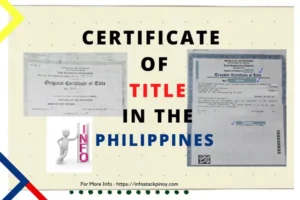
What is a Certificate of Title in the Philippines.

What is a Certificate of Title in the Philippines.

A certificate of Title is an official document issued by the government, evidencing a right of ownership to a property which attests the fact that the person named is the owner of the property described therein subject to liens and encumbrances noted on it.

Upon its issuance all claims to the land are quieted thus making the Certificate of title incontestable and imprescriptible. A certificate of title provides documentary evidence of the right of ownership.

The Register of Deeds of the municipality, city, or province where the land is located is the office responsible for the recording  and the Land Registration Authority (LRA) is the general system that determines  and have control on ownership over particular pieces of land.

In the Philippines Certificate of Titles has two types

1. Original Certificate of Title [OCT] – First Issuance or what we called the mother title.  It’s the very first registered title of the property. It traces the origin of the property and sometimes called the ancestral lot.

Original Certificate of Title

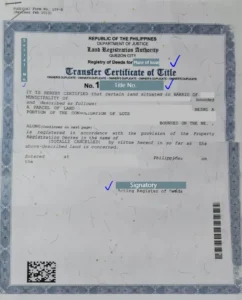
2. Transfer Certificate of Title [TCT]– is the Subsequent Issuance or Issuances and thus cancelling the Original Certificate of Title of the first issuances. This usually happen when the said title is being sold to another person.

       PARTS OF THE TITLE

  1. Title Form Information
    • Type of form – Whether it is Original Certificate of Title (OCT), Transfer Certificate of Title (TCT), Condominium Certificate of title
    • Place of Issue – The municipality or City wherein the property is located.
    • Serial Number – The assigned control number of the Land Registration authority
    • Title Number  – The number assigned to your property
  2. Survey Information
    • Parcel identity
    • Location of the Property
    • Adjoining Properties – The properties that surround the titled property
  3. Ownership Information – Names of all owners of the land, their citizenship, civil status, and postal address.
  4. Registration Information
    • Place, time, and date of registration
    • Name and signature of Registrar
    • Other related information – information of the previous property that is being cancelled upon issuance of the title
Leave a comment

Understanding Land Titles and Ownership Rights in the Philippines

Facebooktwitterredditpinterestlinkedinmail

Land ownership and titles are critically important in the Philippines, impacting everything from family wealth to agricultural advancements and urban development schemes. This article gives a thorough look at land titles and ownership rights in the Philippines. It examines the legal structures, kinds of land titles, procedures for getting and transferring land, and how these rights impact Filipino people and residents.

Historical Background

To truly understand the current legal system, you must explore the historical background of land ownership in the Philippines. Colonial rule by Spain and the United States really shook things up when it came to who owned what. During the American colonial period, the Land Registration Act of 1902 was passed. Its designed to establish a system for registering land titles, ensuring secure land tenure, and streamlining land ownership transfers.


Types of Land Titles

1. Torrens Title

The Torrens Title System is the main method used for land registration in the Philippines. It’s like a government guarantee for your land title. This system, which got its start with the Land Registration Act of 1902, is all about making land transfers easier and cutting down on disagreements about who owns what. Once your land title is registered under this system, it’s considered pretty solid—meaning it can’t be easily canceled or taken away unless specific circumstances come up.

2. Original Certificate of Title (OCT)

The Original Certificate of Title is the very first registration you get for a property under the Torrens system. Think of it as the official birth certificate for your land. It proves that your property is officially on the books with the Land Registration Authority (LRA) and that you are the rightful owner.

3. Transfer Certificate of Title (TCT)

Okay, so you have an OCT. Now, anytime you sell or transfer the property, a Transfer Certificate of Title needs to be issued. This TCT is your proof that the new owner is legally entitled to the property. And just like the OCT, it has to be registered with the LRA to make the transfer official.

4. Condominium Certificate of Title (CCT)

This one’s special for condo owners! When a developer splits a building into individual condo units, each unit gets a Condominium Certificate of Title. This shows that you own that specific unit, plus a share of all the common areas, like hallways and the lobby.

5. Other Types of Titles

There are also other types of titles out there. You might see Certificates of Title for government lands or titles granted through special laws like the Comprehensive Agrarian Reform Law. Each of these titles comes with its own set of rules and limitations under Philippine law.

Ownership Rights

In the Philippines, the Civil Code is what mainly governs ownership rights. These rights usually include:

  • Right to Possess: As the owner, you have the right to be on your property and use it.
  • Right to Use: You can use your property however you want, as long as it’s within the bounds of the law.
  • Right to Dispose: This means you can sell, rent out, or otherwise get rid of your property if you choose to.
  • Right to Exclude: You have the power to keep others off your property if you don’t want them there.

Remember, these rights aren’t set in stone. There are often restrictions and obligations that come with them, like environmental rules and zoning laws.

To extend on the “Right to Use,” it’s important to understand that this right isn’t a free-for-all. For example, you can’t just decide to build a factory in a residential area, even if you own the land. Zoning laws dictate what types of activities are allowed in certain areas, ensuring that your use of the property doesn’t negatively impact your neighbors or the community.

Similarly, with the “Right to Dispose,” while you can sell your property, you need to ensure you’re following all legal procedures, including paying the appropriate taxes and transferring the title correctly. Failing to do so could lead to legal complications down the road, especially for the buyer.

Now, let’s say you own a piece of land that’s been in your family for generations. You have the right to use that land for farming, building a house, or even starting a business, as long as you comply with local regulations. You also have the right to exclude anyone who tries to trespass on your property. However, you also have the responsibility to maintain your property and prevent it from becoming a nuisance to your neighbors. For instance, you can’t just let your land become a dumping ground for garbage, as that would violate environmental regulations and infringe on the rights of others.

In 2021, the World Bank published a report on land governance in the Philippines. It highlights the need for clearer land administration processes to ensure more equitable access and prevent conflicts. The report emphasizes that robust land governance is crucial for sustainable development and reducing poverty. (World Bank Report on Land Governance in the Philippines)

Acquiring Land Titles

1. Purchase

Buying land is the most common way to get a land title in the Philippines. But, before you hand over your hard-earned cash, make sure the title is legit and doesn’t have any hidden liens or debts attached to it. Do your homework and get a title search done at the Registry of Deeds.

2. Inheritance

Land can also be passed down through inheritance. The laws of inheritance say who gets what, based on whether the deceased person had a will or not. If there’s a will, it’s followed. If not, the Civil Code steps in to decide who gets the property.

Let’s delve deeper into the concept of inheritance. In the Philippines, inheritance laws are primarily governed by the Civil Code. When someone passes away, their assets, including land, are distributed either according to their will (if they have one) or according to the laws of intestacy (if they don’t). If there’s a will, the deceased person (also known as the testator) can specify exactly how they want their property to be divided among their heirs.

However, there are certain limitations to testamentary freedom. For instance, Philippine law ensures that certain compulsory heirs, such as children and spouses, are entitled to a specific portion of the inheritance, known as the legitime. This means that a testator can’t completely disinherit their children or spouse unless there are specific legal grounds for doing so, such as abandonment or attempting to harm the testator.

Now, what happens if someone dies without a will? In this case, the laws of intestacy come into play. These laws outline a specific order of priority for who inherits the property. Generally, the surviving spouse and children are the first in line to inherit. If there are no children, the parents of the deceased may inherit. If there are no surviving parents, the siblings of the deceased may inherit, and so on.

Navigating inheritance laws can be complex, especially when there are multiple heirs or disputes over the distribution of property. It’s always advisable to seek legal counsel to ensure that the inheritance process is handled correctly and in accordance with Philippine law.

4. Adverse Possession

Believe it or not, you can sometimes gain ownership of land just by living on it for a long time! This is called adverse possession, or “usucapion.” To makethis happen, you usually have to live on the property continuously for at least ten years and act like you own it.

Adverse possession, also known as usucapion in the Philippines, is a legal doctrine that allows a person to acquire ownership of land by occupying it openly, continuously, and adversely for a certain period. This means that the person must possess the land in a way that’s visible to everyone, without the owner’s permission, and with the intention of claiming ownership.

5. Government Grants

The government sometimes gives away land to people who qualify, especially through programs like agrarian reform. There are rules and requirements you have to meet to be eligible for these grants.

Transferring Land Titles

Selling land is the most common way to transfer a title. You’ll need a Deed of Sale, which both the buyer and seller have to sign and get notarized. Then, you register the transfer at the Registry of Deeds to update the ownership records.

When transferring land through sale, several crucial steps need to be followed to ensure a smooth and legally sound transaction. First, both the buyer and the seller must agree on the terms of the sale, including the purchase price, the payment method, and the date of transfer. These terms are typically outlined in a Contract to Sell or an Agreement to Purchase.

Next, the seller must provide the buyer with certain documents, such as the Original Certificate of Title or Transfer Certificate of Title, tax declarations, and proof of payment of real property taxes. The buyer should conduct due diligence to verify the authenticity of these documents and to check for any liens or encumbrances on the property.

Once the buyer is satisfied with the documentation, a Deed of Absolute Sale is prepared. This document formally transfers ownership of the property from the seller to the buyer. The Deed of Absolute Sale must be signed by both parties and notarized by a lawyer.

After the Deed of Absolute Sale is notarized, the buyer must pay the applicable taxes, such as capital gains tax (if the seller is a corporation) or creditable withholding tax (if the seller is an individual), documentary stamp tax, and transfer tax. These taxes must be paid to the Bureau of Internal Revenue (BIR) and the local government unit (LGU), respectively.

Finally, the buyer must register the Deed of Absolute Sale with the Registry of Deeds to transfer the title of the property to their name. The buyer will need to submit the Deed of Absolute Sale, along with the other required documents and proof of payment of taxes, to the Registry of Deeds. The Registry of Deeds will then issue a new Transfer Certificate of Title in the buyer’s name.

It’s important to note that transferring land through sale can be complex and time-consuming, especially if there are issues with the documentation or disputes between the parties. It’s always advisable to seek the assistance of a qualified real estate lawyer to ensure that the transaction is handled properly and in accordance with Philippine law.

2. Lease

Renting out land doesn’t transfer ownership. It just gives someone the right to use the land for a certain amount of time. Leases should be written down and registered to protect everyone involved.

Leasing land, while not transferring ownership, grants the lessee (the person renting the land) certain rights to use and possess the property for a specified period in exchange for rent. In the Philippines, leases are governed by the Civil Code, which sets out the basic rules and requirements for these agreements.

A lease agreement should be in writing and should clearly state the terms and conditions of the lease, including the names of the parties, the description of the property, the duration of the lease, the amount of rent, and the responsibilities of each party. It’s also advisable to include provisions for renewal, termination, and any other important terms that the parties agree upon.

The duration of a lease can vary, depending on the agreement between the parties. However, under Philippine law, a lease of agricultural land cannot exceed 25 years, although it can be extended for another 25 years. For other types of land, there’s no specific limit on the duration of the lease, but it’s generally advisable to keep the lease term reasonable.

The lessee has the right to use and possess the property for the duration of the lease, as long as they comply with the terms of the lease agreement. This includes paying the rent on time, maintaining the property in good condition, and not using the property for any illegal or unauthorized purposes.

The lessor (the owner of the land) has the right to receive the rent on time and to inspect the property to ensure that the lessee is complying with the terms of the lease agreement. The lessor also has the right to terminate the lease if the lessee violates any of the terms of the agreement.

To protect their rights, both the lessor and the lessee should register the lease agreement with the Registry of Deeds. This will ensure that the lease is binding on third parties, such as subsequent owners of the property.

3. Mortgage

Landowners can use their titles as collateral for loans. To make the mortgage official, it has to be registered with the Registry of Deeds.

Mortgaging your land is a common way to secure a loan. In the Philippines, a mortgage is a real estate transaction where the landowner (mortgagor) pledges their property as security for a debt or obligation to a lender (mortgagee). If the borrower fails to repay the loan, the lender has the right to foreclose on the property and sell it to recover the outstanding debt.

A mortgage agreement must be in writing and must clearly state the terms and conditions of the mortgage, including the names of the parties, the description of the property, the amount of the loan, the interest rate, the repayment schedule, and the remedies for default.

The mortgagor retains ownership of the property but gives the mortgagee a lien on the property. This means that the mortgagee has a legal claim on the property until the loan is fully repaid.

To be valid and enforceable, the mortgage agreement must be registered with the Registry of Deeds. This gives notice to the public that the property is subject to a mortgage and protects the rights of the mortgagee.

If the mortgagor fails to repay the loan as agreed, the mortgagee can initiate foreclosure proceedings. This involves filing a lawsuit in court to obtain a judgment ordering the sale of the property. The property is then sold at a public auction, and the proceeds are used to pay off the outstanding debt. If there are any remaining funds after paying off the debt, they are returned to the mortgagor.

It’s important for both mortgagors and mortgagees to understand their rights and obligations under the mortgage agreement. Mortgagors should make sure they can afford to repay the loan before mortgaging their property, and mortgagees should conduct due diligence to assess the value of the property and the creditworthiness of the borrower.

4. Subdivision and Consolidation

If you’re developing real estate, you might need to divide up (subdivide) or combine (consolidate) properties. This usually requires getting approval from the local government and registering the changes with the land authorities.

Common Legal Issues and Disputes

Land ownership in the Philippines can get messy, leading to all sorts of legal battles. Here are some common problems:

  • Boundary Disputes: Neighbors arguing over where their property lines are.
  • Title Fraud: Fake or misrepresented land titles. This is a big concern.
  • Forced Eviction: People being illegally kicked off their land, especially in cities.
  • Inheritance Conflicts: Family members fighting over who gets what after someone dies.
Leave a comment

Comprehensive Agrarian Reform Program

Facebooktwitterredditpinterestlinkedinmail

The Comprehensive Agrarian Reform Program,

more commonly known as CARP, is an agrarian reform law of the Philippines whose legal basis is the Republic Act No. 6657, otherwise known as the Comprehensive Agrarian Reform Law (CARL), signed under the administration of President Cory Aquino. It is the redistribution of private and public agricultural lands to help the beneficiaries survive as small independent farmers, regardless of the “tenurial” arrangement. Its goals are to provide landowners equality in terms of income and opportunities, empower land owner beneficiaries to have equitable land ownership, enhance agricultural production and productivity, provide employment to more agricultural workers, and put an end to conflicts regarding land ownership.

Background

The agrarian reform is part of the long history of attempts of land reform in the Philippines.The law was outlined by former President Corazon C. Aquino through Presidential Proclamation 131 and Executive Order 229 on June 22, 1987, and it was enacted by the 8th Congress of the Philippines and signed by Aquino on June 10, 1988. In 1998, which was the year that it was scheduled to be completed, the Congress enacted Republic Act No. 8532 to allocate additional funds for the program and extending the automatic appropriation of ill-gotten wealth recovered by the Presidential Commission on Good Government (PCGG) for CARP until the year 2008.

An amendatory law, CARPER or the Comprehensive Agrarian Reform Program Extension with Reforms or the Republic Act. 9700 was passed. It extended the deadline of distributing agricultural lands to the farmers for an additional five years. This law also amends other provisions and regulations formerly stated in the CARP. It was signed into law on August 7, 2009, and was set to be accomplished by the year 2014.

Key components

The implementation of the Comprehensive Agrarian Reform Program relies heavily on the Department of Agrarian Reform (DAR). As the lead implementing agency, the DAR has the responsibility in carrying out the principal aspects of the program, which are Land Tenure Improvement (LTI), Program Beneficiary Development (PBD), and the Agrarian Justice Delivery (AJD).


The Land Acquisition and Distribution

involves the redistribution of private and government-owned land to landless farmers and farm workers. Under Section 6 of RA 9700 ( Section 16 of RA 6657 as amended) regarding Land Acquisition, the DAR identifies lands that are eligible for distribution under the CARP with accordance to the law, acquires the land by delivering a notice containing the offer with its corresponding value to the owner should he choose to accept the payment. Following the acquisition of lands under Section 11 of RA 9700(Section 26 of RA 6657 as amended) the DAR distributes these to the qualified beneficiaries, who then pay for the land through the Land Bank of the Philippines or directly to their former owners. Under the CARP, a total target of 10.3 million hectares of land was programmed to be distributed over a span of ten years. Out of the total land, 6.5 million hectares of public disposal lands and Integrated Social Forestry areas are to be distributed by the Department of Environment and Natural Resources (DENR) while 3.8 million hectares of private agricultural lands are to be distributed by the DAR. From July 1987 to June 1992, the DAR was able to distribute 1.77 million hectares benefiting .933 million beneficiaries, while the DENR has distributed 1.88 million hectares to .760 million farmers.


Leasehold Operations

is the alternative non-land transfer scheme that covers all tenanted agricultural lands in retained areas and in yet to be acquired or distributed lands. Under this component, the DAR mediates between the landowners and tenants so that their share tenancy arrangement could be turned into a leasehold agreement, whereby the beneficiaries will pay a fixed fee based on their own historical production records instead of paying a large percentage share of their produce to the landowner.

 

The Program Beneficiaries Development is a support service delivery component of CARP. It aims to aid the agrarian reform beneficiaries by providing them necessary support services to make their lands more productive, and enable them to venture in income generating livelihood projects in accordance to Section 14 of RA 9700(Section 37 of RA 6657 as amended) .Under the support service delivery programs, the Presidential Agrarian Reform Council(PARC) ensures that agrarian reform beneficiaries are provided with support services such as land surveys and tilting, construction of infrastructures, marketing and production assistance, credit and training.


Agrarian Justice Delivery

provides agrarian legal assistance and oversees the adjudication of cases. Under Section 19 of RA 97600 (Section 50 of RA 6657 as amended), the DAR is hereby vested with the primary jurisdiction to determine and adjudicate agrarian reform matters and shall have exclusive original jurisdiction over all matters involving the implementation of agrarian reform except those falling under the exclusive jurisdiction of the Department of Agriculture (DA) and the Department of Environment and Natural Resources (DENR).


The Agrarian Legal Assistance is under the Bureau of Legal Assistance (BALA). The BALA provides legal assistance to the beneficiaries affected by agrarian cases, particularly those whose legal rights as ARB’s are challenged by landowners.

The Adjudication of Cases involves the adjudication of cases by the Department of Agrarian Reform Adjudication Board (DARAB). The adjudication of cases deals with disputes pertaining to tenancy relations; valuation of lands acquired by DAR under compulsory acquisition mode; rights and obligations of persons, whether natural or juridical, engaged in the management cultivation and use of all agricultural lands; ejectment and dispossession of tenants/leaseholders; review of leasehold rentals; and other similar disputes.

Land reform under Aquino administration (1986–1992)

During the start of President Corazon Aquino’s term in 1986, the Constitutional Commission approved Section 21 under Article II, which states that “The State shall promote comprehensive rural development and agrarian reform.” This led to the drafting of CARP, which took the Congress a year to make. On June 10, 1988, Republic Act No. 6657, also known as the Comprehensive Agrarian Reform Law (CARL), was passed to promote social justice and industrialization. Although it was still a product of adherence to democratic principles, this law was found to have many flaws. Because of much dissatisfaction with the agrarian reform law, proposals from peasant groups and non-government organizations grew in order to implement an alternative program that was more advantageous to them. However, this did not succeed.

CARP recognizes not only farmers but all landless workers as beneficiaries with the condition that they cultivate the land. The two main departments in charge of this program are Department of Agrarian Reform (DAR) and Department of Environment and Natural Resources (DENR). Aside from the land distribution, it also provides the delivery of support services and security to the farmers.

Under the Aquino administration, a total of 898,420 landless tenants and farmers became recipients of land titles and support services. Even with this, it can be considered unsuccessful because it only accomplished 22.5 percent of land distribution in 6 years. This was due to the fact that Aquino assigned 4 different DAR secretaries. The major setback for CARP was Aquino’s Hacienda Luisita’s Stock Distribution Option, which says that she was the first landlord to evade CARP on a grand scale.

Land reform under Ramos administration (1992–1998)

The policies on agrarian reform under the Ramos administration focused on accelerating the direct land transfer and non-land transfer through adopting more rational, fair and inexpensive settlements. It encouraged landowners to invest in rural-based industries that are connected to agriculture. It made an amendment to Section 63 of CARL to increase the fund of this project to 100 billion. Salaries of workers and members of DAR board were increased to motivate them for more successful results as well.

The target land to be given to farmer beneficiaries under this Administration was 3.4 million hectares, 4.7 million or 60 percent of which was successfully distributed. It achieved more than double the output of the Aquino administration. It focused on “less contentious landholdings and acquisition modes,” where they chose to work with autonomous NGOs and peasant organizations. However, controversies were unavoidable as they encountered landlords openly harassing peasants with guns and forcing them out of the lands.

Land reform under Estrada administration (1998–2001)

This administration focused on fast tracking land acquisition and distribution. It wanted to reduce uncertainties in land market in rural places to help farmers’ efficiency and private investment to grow. It encouraged joint ventures, corporative, contact farming and other marketing arrangements to protect the status of stakeholders and promotion of agri-industrialization. They also improved the databases of the implementing agencies of DAR and DENR to fully record and update the lands covered. Estrada highlighted that there was a need to conceptualize new approaches in doing things to build a new social agreement where producers, government and private sectors work with a common goal.

The program encountered some problems such as strong landowners’ resistance. Tenants also complained on the limited amount of fund allocation provided by the government for the project. It aimed to complete 7.8 million hectares by 2004. Since President Estrada lasted only 2.5 years as president, the total beneficiaries of CARP was only 0.18 million or 10 percent.

Leave a comment