Under the Indigenous Peoples’ Rights Act of 1997 (IPRA), self-delineation shall be the guiding principle in identifying and delineating ancestral domains. As such, indigenous cultural communities (ICC) and indigenous people (IP) shall have a decisive role in all activities pertinent thereto.
The Sworn Statement of the Elders as to the scope of the territories and the agreements or pacts made with neighboring ICCs/IPs, if any, will be essential in determining these traditional territories. Meanwhile, the government shall take the necessary steps to identify lands which the ICCs/IPs concerned traditionally occupy and guarantee effective protection of their rights of ownership and possession thereto.
Thus, ancestral lands or domains, which may be owned by ICCs/IPs, shall refer to its total environment—that is, its physical environment, including the spiritual and cultural bonds to the areas which they possess, occupy, and use, and to which they have claims of ownership.
In this regard, the indigenous concept of ownership generally holds that ancestral domains are the ICC’s/IP’s private but community property, which belongs to all generations and thus, cannot be sold, disposed, or destroyed. It likewise covers sustainable traditional resource rights.
The ICC’s/IP’s rights to their ancestral domain shall include the: (a) right of ownership over lands, bodies of water traditionally and actually occupied by them, sacred places, traditional hunting and fishing grounds, and improvements introduced thereon; (b) right to develop lands and natural resources, subject to preexisting property rights within the ancestral domains; (c) right to stay in their territories, except when they have given their free and prior informed consent, and subject to the Philippines’ power of eminent domain; (d) right to be resettled in suitable areas should they be displaced through natural catastrophes; (e) right to regulate entry of migrants; (f) right to safe and clean air and water; (g) right to claim parts of reservations; and (h) right to resolve land conflicts in accordance with the customary laws of the area where the land is located.
Moreover, ICC’s/IP’s rights to their ancestral lands shall include the: (a) right to transfer land or property rights among members of the same ICC or IP, subject to their customary laws and traditions; and (b) should the land transfer to a non-member be tainted with vitiated consent, the right of redemption within a period not exceeding 15 years therefrom.
ICCs and IPs occupying an ancestral domain covered by a Certificate of Ancestral Domain Title (CADT) shall be responsible for: (a) maintaining ecological balance by protecting the flora and fauna, watershed areas, and other reserves; (b) restoring denuded areas, subject to just and reasonable remuneration; and (c) observing the IPRA.
Nevertheless, the ICC’s/IP’s rights to their ancestral domains by virtue of native title shall be recognized and respected. Formal recognition, when solicited by the ICC/IP, shall be embodied in a CADT, which shall recognize their title over the territories identified and delineated.
Meanwhile, individual members of the ICC who, by themselves or through their predecessors-in-interest, have been in continuous possession and occupation of their ancestral lands in the concept of an owner since time immemorial or for a period of at least 30 years from the approval of the IPRA, and uncontested by the other members of the same ICC, shall have the option to secure title to their ancestral lands pursuant to the Land Registration Act of 1946, within 20 years from the approval of the IPRA.
Ancestral lands that may be covered by this title shall be agricultural in character and actually used for agricultural, residential, pasture, and tree farming purposes, including those with a slope of 18 percent or more.
Unauthorized and unlawful intrusion upon, or any use of any portion of the ancestral domain, or any violation of the rights thereto, shall be punished pursuant to the concerned ICC/IP’s customary laws. But, the impossable penalty shall neither be cruel, degrading, or inhuman punishment nor death penalty or excessive fines.
Upon conviction, the offender may be imprisoned for less than nine months but not more than 12 months, or fined for not less than P100,000 nor more than P500,000, or penalized with both imprisonment and fine, upon the court’s discretion. Moreover, he shall be obliged to pay the aggrieved ICC/IP whatever damage it may have suffered because of his unauthorized and unlawful intrusion upon the ancestral domain.
Expropriation is the government’s power to take private property for public use upon just compensation to the owner. It is a legal mechanism recognized worldwide, and in the Philippines, it is also considered an inherent power of the state.
LEGAL BASIS IN THE PHILIPPINES
In the Philippine context, the legal basis for expropriation can be found in the Constitution, specifically under Section 9, Article III, which states that private property shall not be taken for public use without just compensation.
STAGES OF EXPROPRIATION
1. Identification of Property
The first stage involves the government identifying the property that needs to be acquired for public use.
2. Offer to Purchase
Before formally starting the expropriation proceedings, the government must make an offer to the property owner to purchase the land at a fair market value.
3. Filing of Expropriation Case
If an agreement cannot be reached, the government can initiate a formal expropriation case in court.
4. Writ of Possession
Upon the payment of just compensation or depositing an equivalent amount, a writ of possession is issued, allowing the government to take immediate possession and control of the property.
5. Determination of Just Compensation
This involves a thorough assessment, usually by a government or court-appointed commissioner, to determine the fair market value of the property.
6. Award and Payment
After the court determines the just compensation, the government is directed to pay the amount to the property owner, completing the expropriation process.
LEGAL CHALLENGES AND APPEALS
The property owner has the right to challenge the expropriation proceedings at various stages. They may question the public use criteria or the fairness of the compensation offered.
CONCLUSION
Expropriation is a multi-step legal process that balances the government’s need for land for public purposes against the property owner’s constitutional right to just compensation. Given its complexity, both parties often require legal representation to protect their interests.
Buying a property is a life-long dream for many people in the Philippines, but it involves a considerable amount of money- the reason why many home-buyers/investors are so careful in transacting with just anybody. That is why the government ensures that the real estate profession is well regulated here in the Philippines, and that the people who introduce themselves are real estate professionals are licensed (like architects, lawyers, doctors, engineers, etc.). This is the primary objective of the Real Estate Service Act of the Philippines, more commonly known as the “RESA Law”.
What is RESA law?
Republic Act No. 9646 or the Real Estate Service Act of the Philippines, which is more commonly referred to as the RESA laws the law that protects the rights of those who call themselves as real estate professionals. This said law took effect on July 30, 2009 and it deals primarily with the acts considered to be real estate services, the penalties corresponding to violations of its provisions and the qualifications of those who may practice the profession. Furthermore, the law is meant to prevent the practice of “colorum” agents and also property sellers who are still patronizing to the so-called freelance illegal property agents to avoid paying taxes and proper commission rates.
Before the RESA Law was introduced in 2009, all real estate brokers were licensed under the Department of Trade and Industry (DTI). When the law was passed, the role of regulating the profession was handed to the Professional Regulation Commission (PRC). However, those already licensed under the DTI are still eligible to get a license from the PRC without taking the Real Estate Broker Licensure Examination (under the so-called grandfather clause).
What can be considered as “engaging in the practice of real estate service”?
Based on Section 27 of the RESA Law, acts constituting the practice of real estate service are as follows:
“Any single act or transaction embraced within the provisions of Section 3(g), Rule II hereof, as performed by real estate service practitioners, shall constitute an act of engaging in the practice of real estate service.”
” Furthermore, Section 3(g) states that:
“g. “Real estate service practitioners” shall refer to and consist of the following: (1) Real estate consultant – a duly registered and licensed natural person who, for a professional fee, compensation or other valuable consideration, offers or renders professional advice and judgment on: (i) the acquisition, enhancement, preservation, utilization or disposition of lands or improvements thereon; and (ii) the conception, planning, management and development of real estate projects.
(2) Real estate appraiser – a duly registered and licensed natural person who, for a professional fee, compensation or other valuable consideration, performs or renders, or offers to perform services in estimating and arriving at an opinion of or acts as an expert on real estate values, such services of which shall be finally rendered by the preparation of the report in acceptable written form.
(3) Real estate assessor — a duly registered and licensed natural person who works in a local government unit and performs appraisal and assessment of real properties, including plants, equipment, and machineries, essentially for taxation purposes.
(4) Real estate broker – a duly registered and licensed natural person who, for a professional fee, commission or other valuable consideration, acts as an agent of a party in a real estate transaction to offer, advertise, solicit, list, promote, mediate, negotiate or effect the meeting of the minds on the sale, purchase, exchange, mortgage, lease or joint venture, or other similar transactions on real estate or any interest therein
(5) Real estate salesperson – a duly accredited natural person who performs service for, and in behalf of a real estate broker who is registered and licensed by the Professional Regulatory Board of Real Estate Service for or in expectation of a share in the commission, professional fee, compensation or other valuable consideration.”
Who are exempted from the RESA Law?
Section 28 of the RESA law stipulates who are exempted from the said law:
Owners of real property are not required to have a license in order to sell their own property. However, real estate developers are not included because they are regulated by the Housing and Land Use Regulatory Board (HLURB).
Trustees in bankruptcy or insolvency proceedings.
People who act pursuant to court orders and duly constituted attorneys that are authorized to negotiate the sale, mortgage, lease, or exchange of real estate.
Public officers who performs such acts in line with their official duties. Except that government assessors should have a license.
What is prohibited?
Let me quote Section 29 of the RESA Law below:
“SEC. 29. Prohibition Against the Unauthorized Practice of Real Estate Service. No person shall practice or offer to practice real estate service in the Philippines or offer himself/herself as real estate service practitioner, or use the title, word, letter, figure or any sign tending to convey the impression that one is a real estate service practitioner, or advertise or indicate in any manner whatsoever that one is qualified to practice the profession, or be appointed as real property appraiser or assessor in any national government entity or local government unit, unless he/she has satisfactorily passed the licensure examination given by the Board, except as otherwise provided in R.A. No. 9646 and the IRR is a holder of a valid certificate of registration and professional identification card or a valid special/temporary permit duly issued to him/her by the Board and the Commission; and, in the case of real estate brokers and private appraisers, they have paid the required bond as provided for in R.A. No. 9646.”
What are the penalties for violating RA 9646?
Section 39 stipulates that licensed real estate professionals who are proven guilty of violating of the said law, shall be penalized with a fine of not less than Php100, 000.00 or imprisonment of not less than two (2) years. However, if the offender happens to be unlicensed, the penalty shall be double (that would mean Php200, 000.00 or imprisonment of not less than four (4) years.
“For richer, for poorer, in sickness or in health, to love and to cherish till death do us part.” This is part of the marriage vow being recited during weddings. Being married to someone entails not only sharing one’s life but also one’s property with the other. Hence, it is very important to know the liabilities of the common properties of the spouses. Oftentimes, one of the spouses contracts a loan and the common property will sometimes be held responsible in case the contracting spouse defaults in his obligation. The liability of the common property will depend on the type of transaction and other factors provided by law.
In the absence of a marriage settlement or prenuptial agreement, the provisions of the Family Code will apply with regard to the property regime of the spouses. If the marriage was contracted before the Family Code (before 03 August 1988), then the conjugal partnership of gains (CPG) will govern. However, if the marriage was contracted after 03 August 1988, then the absolute community of property (ACP) will apply. For this article, the author will discuss the ACP and its liabilities since the discussion on the CPG will be the subject of another article.
Under the regime of ACP, all property owned by the spouses at the time of the celebration of the marriage or acquired thereafter shall form part of the community property. However, property acquired during the marriage by gratuitous title, as well as the fruits and income thereof; property for exclusive or personal use of each spouse (except jewelry); and property acquired before the marriage by either spouse who has legitimate descendants by a former marriage, as well as the fruits or income thereof, are excluded from the community property.
Anent the liability of the community property, Article 94 of The Family Code states that the ACP shall be liable for the following:
1. The support of the spouses, their common children, and legitimate children of either spouse; however, the support of illegitimate children shall be governed by the provisions of the Family Code on Support;
2. All debts and obligations contracted during the marriage by the designated administrator-spouse for the benefit of the community, or by both spouses, or by one spouse with the consent of the other;
3. Debts and obligations contracted by either spouse without the consent of the other to the extent that the family may have been benefited;
4. All taxes, liens, charges and expenses, including major or minor repairs, upon the community property;
6. Expenses to enable either spouse to commence or complete a professional or vocational course, or other activity for self-improvement;
7. Ante-nuptial debts of either spouse insofar as they have redounded to the benefit of the family;
8. The value of what is donated or promised by both spouses in favor of their common legitimate children for the exclusive purpose of commencing or completing a professional or vocational course or other activity for self-improvement;
9. Ante-nuptial debts of either spouse other than those falling under paragraph (7) of this Article, the support of illegitimate children of either spouse, and liabilities incurred by either spouse by reason of a crime or a quasi-delict, in case of absence or insufficiency of the exclusive property of the debtor-spouse, the payment of which shall be considered as advances to be deducted from the share of the debtor-spouse upon liquidation of the community; and
10. Expenses of litigation between the spouses unless the suit is found to be groundles
Property tax is a charge levied by a government for real estate or tangible personal property.
What Is Property Tax?
A property tax is an annual or semiannual charge levied by a local government and paid by the owners of real estate within its jurisdiction. Property tax is an ad-valorem tax, meaning the amount owed is a percentage of the assessed value of the real estate.
Property tax receipts are the main source of revenue for most local governments in the U.S. They are used to fund schools, police and fire departments, road construction and repairs, libraries, water and sewer departments, and other local services that benefit the community.
In common usage, property tax refers to a tax on immovable possessions like structures or land. Some local jurisdictions also assess property taxes on moveable property such as vehicles and industrial equipment.
Understanding Property Taxes
Property taxes are paid by individuals or legal entities, such as corporations, that own real estate. A tax is assessed on an individual’s primary residence, second home, rental property, and any other real estate they may own, such as a commercial property. Property tax is not assessed to renters.
It is characterized as a regressive tax. That is, the same rate of taxation is applied regardless of the taxpayer’s income. This means the tax burden falls disproportionately on lower-income taxpayers.12
The tax is usually based on the value of the owned property, including land and structures. Many jurisdictions also tax tangible personal property, such as cars and boats. Property tax rates and the types of properties taxed vary by jurisdiction.
Property Tax vs. Real Estate Tax
People often use the terms property tax and real estate tax interchangeably. In fact, not all property taxes are real estate taxes.
Many jurisdictions also levy property taxes against tangible personal property. According to a report by the Tax Foundation, 43 states tax tangible personal property.7
Both types of property can be deducted from federal taxes. However, since the Tax Cuts and Jobs Act of 2017, the deduction has been capped at $10,000 per year for married couples and single taxpayers.8
So here’s the difference: Real estate taxes are taxes on real property only, while property taxes can include both real property and tangible personal property.
In general, only Filipino citizens and corporations or partnerships with least 60% of the shares are owned by Filipinos are entitled to own or acquire land in the Philippines. Foreigners or non-Philippine nationals may, however, purchase condominiums, buildings, and enter into a long-term land lease.
InCorp Philippines assists foreigners, expatriates/expats, former Filipino nationals, OFWs, Balikbayans, and corporations purchasing and acquiring real property in the Philippines and can provide relevant information on Philippine laws and regulations regarding property purchase and acquisition, reviewal of general contracts, asset protection contracts, deeds of sale, taxes, and entire estate planning. In addition, we can introduce you to local real estate brokers to assist you in finding the type of property you are looking for in the Philippines.
Can a Foreigner Own Land in the Philippines?
Ownership of land in the Philippines is highly-regulated and reserved for persons or entities legally defined as Philippine nationals or Filipino citizens. For this purpose, a corporation with 60% Filipino ownership is treated as a Philippine national.
Foreigners or expats interested in acquiring land or real property through aggressive ownership structures must consider the provisions of the Philippines’ Anti-Dummy Law to determine how to proceed. A major restriction in the law is the restriction on the number of foreign members on the Board of Directors of a landholding company (which is limited to 40% foreign participation). Another concern is the possible forfeiture of the property if the provisions of the law is breached.
Are there any exceptions to the restriction on foreign land acquisition?
Yes, there are. The list of exceptions to the restriction are as follows:
Acquisition before the 1935 Constitution
Acquisition through hereditary succession if the foreigner is a legal or natural heir
Purchase of not more than 40% interest in a condominium project
Purchase by a former natural-born Filipino citizen subject to the limitations prescribed by law (natural-born Filipinos who acquired foreign citizenship is entitled to own up to 5,000 sq.m. of residential land, and 1 hectare of agricultural or farm land).
Filipinos who are married to aliens and able to retain their Filipino citizenship (unless by their act or omission they have renounced their Filipino citizenship)
Can a Corporation Own Land in the Philippines?
Foreign nationals, expats or corporations may completely own a condominium or townhouse in the Philippines. To take ownership of a private land, residential house and lot, and commercial building and lot, they may set up a domestic corporation in the Philippines. This means that the corporation owning the land has less than or up to 40% foreign equity and is formed by 5-15 natural persons of legal age as incorporators, the majority of which must be Philippine residents.
Can a Foreigner Lease Real Estate Property in the Philippines?
Leasing land in the Philippines on a long-term basis is an option for foreigners, expats or foreign corporations with more than 40% foreign equity. Under the Investors’ Lease Act of the Philippines, they may enter into a lease agreement with Filipino landowners for an initial period of up to 50 years renewable once for an additional 25 years.
Can a Foreigner Own Residential Houses or Buildings in the Philippines?
Foreign ownership of a residential house or building in the Philippines is legal as long as the foreigner or expat does not own the land on which the house was built.
Can a Foreigner Own Condominiums or Townhouses in the Philippines?
The Condominium Act of the Philippines (RA 4726) expressly allows foreigners to acquire condominium units and shares in condominium corporations up to 40% of the total and outstanding capital stock of a Filipino-owned or controlled condominium corporation.
However, there are a very few single-detached homes or townhouses in the Philippines with condominium titles. Most condominiums are high-rise buildings.
Can a Foreigner Married to a Filipino Citizen Hold a Land Title in the Philippines?
If holding a title as an individual, a typical situation would be that a foreigner married to a Filipino citizen would hold title in the Filipino spouse’s name. The foreign spouse’s name cannot be on the Title but can be on the contract to buy the property. In the event of the death of the Filipino spouse, the foreign spouse is allowed a reasonable amount of time to dispose of the property and collect the proceeds or the property will pass to any Filipino heirs and/or relatives.
Can a Former Natural-Born Filipino Citizen own Private Land in the Philippines?
Any natural-born Philippine citizen who has lost their Philippine citizenship may still own private land in the Philippines (up to a maximum area of 5,000 square meters in the case of rural land). In the case of married couples, the total area that both couples are allowed to purchase should not exceed the maximum area mentioned above.
Can a Former Filipino Citizen, Balikbayan or OFW Buy and Register Properties Under Their Name?
Former natural-born Filipinos who are now naturalized citizens of another country can buy and register, under their own name, land in the Philippines (but with limitations in land area). However, those who avail of the Dual Citizenship Law in the Philippines can buy as much as any other Filipino citizen.
Under the Dual Citizenship Law of 2003 (RA 9225), former Filipinos who became naturalized citizens of foreign countries are deemed not to have lost their Philippine citizenship, thus enabling them to enjoy all the rights and privileges of a Filipino citizen regarding land ownership in the Philippines.
How to Gain Dual Citizenship in the Philippines
If you are in the Philippines, file a Petition for Dual Citizenship and Issuance of Identification Certificate (pursuant to RA 9225) at the Bureau of Immigration (BI) and for the cancellation of your alien certificate of registration.
Those who are not BI-registered and overseas should file the petition at the nearest embassy or consulate.
Can a Former Natural-Born Filipino Citizen own Private Land in the Philippines?
Any natural-born Philippine citizen who has lost their Philippine citizenship may still own private land in the Philippines (up to a maximum area of 5,000 square meters in the case of rural land). In the case of married couples, the total area that both couples are allowed to purchase should not exceed the maximum area mentioned above.
Requirements:
Birth Certificate authenticated by the Philippine National Statistics Office (NSO)
Accomplish and submit a Petition for Dual Citizenship and Issuance of Identification Certificate to a Philippine embassy, consulate or the Bureau of Immigration
Pay a US$50.00 processing fee, schedule, and take an “Oath of Allegiance” before a consular officer
The Bureau of Immigration (BI) in Manila receives the petition from the embassy or consular office. The BI issues and sends an Identification Certificate of Citizenship to the embassy or consular office.
If a former Filipino who is now a naturalized citizen of a foreign country does not want to avail of the Dual Citizen Law in the Philippines, he or she can still acquire land based on Batas Pambansa (BP) 185 and RA 8179, but limited to the following:
For Residential Use (BP 185 – enacted in March 1982):
Capital Gains Tax – 6% of actual sale price. This is paid by the seller but in some cases, the buyer might be expected to be the one to pay. This percentage could differ if the property assessed is being used by a business or is a title owned by a corporation, in this case, the percentage is 7.5%.
Document Stamp Tax – 1.5% of the actual sale price. This is paid by either the buyer or the seller upon agreement. Normally, however, it is the buyer who shoulders the cost.
Transfer Tax – 0.5% of the actual sale price
Registration Fee – 0.25% of the actual sale price
Purchases from Developers
Capital Gains Tax – 10% of actual sale price. This value might be expressed as part of the sale price.
Document Stamp Tax – 1.5% of the actual sale price
In Philippine civil law, rescissible contracts are a subset of defective contracts under the Civil Code that are valid and binding until they are rescinded due to circumstances that render them legally vulnerable. Rescission is a remedy that seeks to restore the contracting parties to their original state (status quo ante) before the contract was entered into. These contracts are considered rescissible not because they are initially void or voidable but because they cause or threaten to cause damage to one of the parties or to a third person. The detailed regulations concerning rescissible contracts are outlined in Articles 1380 to 1389 of the Civil Code of the Philippines.
CHARACTERISTICS OF RESCISSIBLE CONTRACTS
Validity: Rescissible contracts are valid and binding from the outset, meaning they produce legal effects and are enforceable until rescission is sought and granted.
Ground for Rescission: The key reason for rescission is the presence of “lesion” or damage to one of the parties or to a third person, typically due to an inequitable result or bad faith. However, rescission is not applicable to contracts that are inherently void or voidable.
Nature of the Remedy: Rescission is a subsidiary remedy, meaning it cannot be availed of if there are other legal remedies sufficient to address the injury or damage. It also means that rescission will only be granted if restitution to the status quo is feasible.
GROUNDS FOR RESCISSION (ARTICLE 1381)
The following contracts are rescissible under Article 1381 of the Civil Code:
Contracts Entered into by Guardians: Contracts made by guardians in representation of their wards, if the wards suffer economic prejudice as a result, are rescissible. The law provides special protection for minors and incapacitated persons who are under guardianship, so any contract that prejudices them is subject to rescission.
Contracts on Behalf of Absentees: Contracts executed by representatives of absent persons (e.g., those who are not physically present or are otherwise incapacitated) are rescissible if they cause prejudice to the absentee. This typically protects absent heirs, co-owners, or other individuals who are not physically present to protect their interests.
Contracts to Defraud Creditors: When contracts are made with the intent to defraud creditors (often called “fraudulent conveyances” or “acts in fraud of creditors”), they are rescissible. This typically occurs when a debtor alienates property to evade fulfilling obligations to creditors.
Contracts Relating to Litigious Things: Sales or assignments of items under litigation without notifying the parties involved in the lawsuit are rescissible. This rule aims to prevent contracts that could disrupt the proper administration of justice by transferring assets that are the subject of an ongoing legal dispute.
Other Cases Expressly Stated by Law: Some other specific cases not enumerated in Article 1381 are also rescissible when expressly provided for by law.
PROCEDURE FOR RESCISSION
Petition for Rescission: A party who wishes to rescind a contract must file an action for rescission in court. Rescission is not automatic; it must be judicially decreed through a formal judgment.
Return of Benefits Received: The law requires that the parties return to each other what they have received under the contract. Rescission thus aims to restore both parties to their original positions. For instance, if the contract involved a sale, the buyer must return the item purchased, and the seller must return the payment made.
Subsidiary Remedy: Rescission is only available as a last resort. If the aggrieved party has other remedies that can rectify the situation (such as damages), rescission will not be granted.
Limitations Period: The right to file an action for rescission has a prescription period (statute of limitations) of four years. This period may differ depending on when the contract was entered into and the specific nature of the rescissible ground, such as whether the action involves fraud or other circumstances.
FFECTS OF RESCISSION
Restoration of the Original Status (Status Quo Ante): When a court orders rescission, the objective is to return both parties to their original state as if the contract had not been made. This involves the mutual restitution of the property, money, or benefits received by each party.
Protection of Bona Fide Third Parties: If a third party acquires rights in good faith from a party to a rescissible contract, their rights are generally protected. This is particularly important in property transactions, as innocent third-party purchasers are often shielded from the consequences of the rescission.
Liability for Damages: If restitution cannot fully restore the injured party to the original condition, the party seeking rescission may be entitled to additional compensation or damages to cover the loss or injury suffered.
SPECIAL CONSIDERATIONS
Partial Rescission: If the contract has been partly fulfilled and rescission affects only part of it, only that part may be rescinded. For example, if a divisible contract includes rescissible and non-rescissible obligations, the court may rescind only the part of the contract that causes harm or prejudice.
Impossibility of Restitution: If restitution becomes impossible (e.g., the subject matter has been destroyed or fundamentally altered), rescission cannot be granted. In such cases, alternative remedies such as indemnity for damages may be awarded to the injured party.
Requisites for Successful Rescission:
Injury or Damage: There must be proof of injury or damage to justify rescission. The burden of proof rests with the party seeking rescission.
Existence of a Rescissible Ground: The contract must fall under one of the categories of rescissible contracts specified in the Civil Code.
Absence of Alternative Remedies: The injured party must show that rescission is necessary because no other adequate legal remedies are available.
LIMITATIONS ON RESCISSION (ARTICLE 1383)
The Civil Code emphasizes that rescission is a subsidiary remedy; hence, it may not be granted if other sufficient remedies exist to repair the injury or damage. Additionally, rescission does not cover all damages or inequalities. Minor discrepancies or unfair terms that do not reach the level of “lesion” or substantial harm are generally insufficient for rescission. For instance, a contract cannot be rescinded merely because one party finds the terms unfavorable or wishes to change their mind.
ALTERNATIVE REMEDIES
If a contract does not meet the criteria for rescission but still produces unfair or prejudicial outcomes, other legal remedies may be pursued. These include:
Damages: Compensatory damages may be awarded if the injured party can demonstrate a loss directly caused by the contract’s performance.
Reformation of Contract: If the contract does not reflect the true intent of the parties due to error, fraud, or accident, it may be reformed rather than rescinded to accurately represent the parties’ intentions.
Reduction of Penalty Clauses: In cases where penalty clauses within a contract are excessive or disproportionate, the court has discretion to reduce them.
Rescission vs. Annulment: It is important to distinguish rescission from annulment. Rescission presumes a valid contract that can be rescinded due to injury, whereas annulment applies to contracts that are voidable due to lack of consent, mistake, or fraud.
When someone passes away, his property goes to his lawful heirs.
In the law on inheritance, these legal heirs or compulsory heirs inherit through testate and intestate succession in the Philippines.
Testate Succession in the Philippines covers inheritance when there is a Will.
Intestate Succession in the Philippines covers inheritance when there is no Will.
So, unless a compulsory heir is disinherited, inheritance rules in the Philippines ensure that certain people must always inherit.
This article discusses Philippine succession law and covers testate and intestate heirs in the Philippines.
The focus is on helping you to understand WHO will inherit property after a person’s death and WHAT amount.
To do this, you will some basic ideas in property inheritance law in the Philippines:
Wills must obey the rules on succession in the Philippines. The law on succession in the Philippines define who inherits even under a will, and the will maker can only give away the portion that is not allocated to them.
Wills can only remove compulsory heirs if the will follows the Disinheritance section of the law of Succession in the Civil Code of the Philippines. This can be a little complicated, so you must consult a lawyer.
When a child has passed away before a parent or grandparent, his children are entitled to inherit through the Right of Representation under Philippine law. However, the share those children inherit is only the share of their parent, and not more than that.
If the parent has passed away, nephews and nieces may inherit from their uncle or aunt who have no children or Will through the Right of Representation under Philippine law. However, the share they inherit is only the share of their parent, and not more than that.
Legitimate, Illegitimate and Formally Adopted children inherit in all situations under the Rules of Succession in the Philippines. ‘Ampons’may not inherit under intestate succession.
Remember that this is only a guide. Wills, land inheritance laws, the order of succession in the Philippines – these can all get complicated and it is always best to talk to a lawyer.
Compulsory Heirs – When the deceased has children
No 1 – 1 Legitimate child or Legitimate children
With a will:
Legitimate children (or their children) – 1/2 of the estate divided amongst them
Free portion – 1/2 of the estate
Example: If the estate is worth P1M, then the legitimate child must inherit P500,000. If there are 4 legitimate children, then each inherits P125,000. The remaining P500,000 can be left to whomever the estate owner wants as stated in the will.
Without a will:
Legitimate children (or his children) – all of the estate divided amongst them
Example: If the estate is worth P1M, then the legitimate child inherits the total estate. If there are 4 legitimate children, then each inherits P250,000.
No 2 – 1 Legitimate child & 1 Illegitimate child
When there are Legal Heirs of deceased and a Will:
Legitimate child (or his children) – 1/2 of the Estate
Illegitimate child (or his children) – 1/4 of the Estate
Free portion – 1/4 of the Estate
Example: If the Estate is worth P1M, then the Legitimate child must inherit P500,000 and the Illegitimate child must inherit P250,000. The remaining P250,000 can be left to whomever the Estate owner wants as stated in the Will.Without a Will:
Legitimate child (or his children) – 2/3 of the Estate
Illegitimate child (or his children) – 1/3 of the Estate
Example: If the Estate is worth P1M, then the Legitimate child must inherit P666,666 and the Illegitimate child must inherit P333,333.
No 3 – 1 Legitimate child & Illegitimate children
When there are Legal Heirs of deceased and a Will:
Legitimate child (or his children) – 1/2 of the Estate
Illegitimate children (or his children) – 1/2 of the share of a Legitimate child taken from the Free Portion. If the Free Portion is not enough, then the Illegitimate children’s shares are reduced equally.
Free portion – None
Example: If the Estate is worth P1M, then the Legitimate child must inherit P500,000. If there are 2 Illegitimate children, then each would have P250,000. If there are 3 Illegitimate children, then each Illegitimate child would receive P166,666 or P500,000 divided by 3. If there are 4, then each Illegitimate child would receive P125,000 or P500,000 divided by 4.
Without a Will:
Legitimate child – 1/2 the Estate
Illegitimate children (or their children) – 1/2 of the share of a Legitimate child
Example: If there is 1 Legitimate child and 3 Illegitimate children and the Estate is 1M, the Estate would be divided so that the Legitimate child has 1/2 of the Estate (P500,000). Although the Illegitimate children should each have 1/2 of the share of the Legitimate child (P250,000 each) this is not possible since it would exceed the amount of the Estate. The Legitimate child’s share would be protected and the Illegitimate children’s share would be reduced equally so that each Illegitimate child receives P166,666.
No 4 – Legitimate children & 1 Illegitimate child
When there are Legal Heirs of deceased and a Will:
Legitimate children (or their children) – 1/2 of the Estate divided among them
Illegitimate child (or his children) – 1/2 of the share of a Legitimate child
Free Portion – Remainder
Example: If the Estate is 1M and there are 4 Legitimate children and 1 Illegitimate child, the Legitimate children would each receive P125,000 which is half of the P1M estate or P500,000. The Illegitimate child would receive half of the share of a Legitimate child or P62,500. The remainder is P437,500 (1,000,000 less P500,000 and less P62,500) and can be given to whomever the Estate owner wishes as stated in the Will (Free portion).
Without a Will:
Legitimate child – Twice that of the Illegitimate child, with the amount depending on how many Illegitimate children there are.
Illegitimate children (or his children) – 1/2 of the share of a Legitimate child
Example: If the Estate is 1M and there are 4 Legitimate children and 1 Illegitimate child, then each Legitimate child will inherit P222,222 and the Illegitimate child will inherit P111,111.
No 5 – Legitimate children & Illegitimate children
When there are Legal Heirs of deceased and a Will:
Legitimate children (or their children) – 1/2 of the Estate divided among them
Illegitimate children (or their children) – 1/2 of the share of a Legitimate child taken from the Free Portion. If the Free Portion is not enough, then the Illegitimate children’s shares are reduced equally.
Free Portion – Remainder
Example: If there are 4 Legitimate children and 2 Illegitimate children and the Estate is 1M, then each Legitimate child receives P125,000 or half of the Estate divided among them. The 2 Illegitimate children will receive P62,500 each. The remainder of P375,000 is the Free Portion and is given as stated in the Will.
Without a Will:
Legitimate child – Twice that of the Illegitimate child, with the amount depending on how many Illegitimate children there are.
Illegitimate children (or his children) – 1/2 of the share of a Legitimate child
Example: If there are 4 Legitimate children and 2 Illegitimate children and the Estate is 1M, then each Legitimate child receives P200,000. The 2 Illegitimate children will receive P100,000 each.
No 6 – Illegitimate children
How to divide an Inheritance when there are only Illegitimate Children
When there are Legal Heirs of deceased and a Will:
Illegitimate children (or their children) – 1/2 of the Estate divided amongst them
Free Portion – 1/2 of the Estate
Example: If there are 4 Illegitimate children and Estate is 1M, then each Illegitimate child receives P125,000. The remaining P500,000 is given to whomever the Estate owner wishes as stated in the Will.
Without a Will:
Illegitimate children (or his children) – all of the Estate divided amongst them
Example: If there are 4 Illegitimate children and Estate is 1M, then each Illegitimate child receives P250,000.
An incredible opportunity exists for real estate lawyers looking to grow their business and get more clients through online marketing and search. It’s blogging.
Figuring out what to write isn’t always clear and if done improperly can consume a lot of time and make more of a mess than allowing you to reap the benefits. In this article, we’ll go over some of the best real estate law blog topics that attorneys and law firms should be publishing content for and dive into the sub-topics within them.
1. Property Taxes
Discussing the different property tax codes and how their applicability can be beneficial to potential clients and to you, if you offer legal services related to property taxes. Some topics include:
Property Tax Redemption
Foreclosure Redemption
Taxes exceed proceeds
Discuss how buyers and sellers can take advantage of these redemptions or benefits. Cite the codes that apply and discuss the nuances and implications. If you publish a blog post that deals with dollar amounts, then use a table or other visual elements to clearly breakdown line items and clearly illustrate examples.
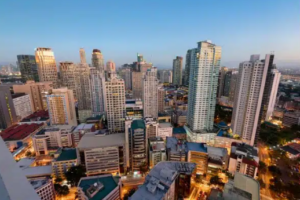
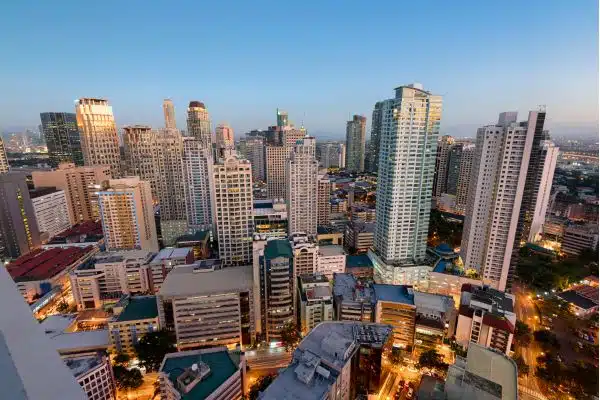
Manila Metropolis is a multi-centered Capital Region of the Philippines.
Did you know that there’s at least 30 central business districts in Metro Manila alone? Yup, more than its interconnected cities, CBDs have been scattered like mushrooms in the metro for years and decades.
A central business district (CBD) is the commercial and business center of a city. In larger cities, it is often synonymous with the city’s “financial district”.
Metro Manila is home to 15 Million people, as well as massive Central Business districts. In 1594, the creation of a Financial District centered in Binondo-Escolta area.
After the devastation of The Battle for the Liberation of Manila in February of 1945, the need of office space began due to reconstruction efforts.
This gave way to the first major CBD in the Philippines, the Makati Business District in 1950’s (from Binondo to Makati), which grew larger in the past 60 years.
As the metropolis expanded, more and more CBD were set up to cater the growing population and economy of the Metropolis. These CBDs include Ortigas Center and Alabang (1980’s), Bonifacio Global City (1995), and Manila Bay Area (2007).
As of now, there are 30 CBDs inside the 600 square kilometers of land within Metropolitan Manila. New CBDs such as Arca South, Bridgtowne, Eastwood City, Greenfield District, Ortigas East, Century City and many more start to shape Manila’s future skyline.
METRO MANILA CBDs
This list includes the Major Districts and secondary CBDs within Metropolitan Manila.
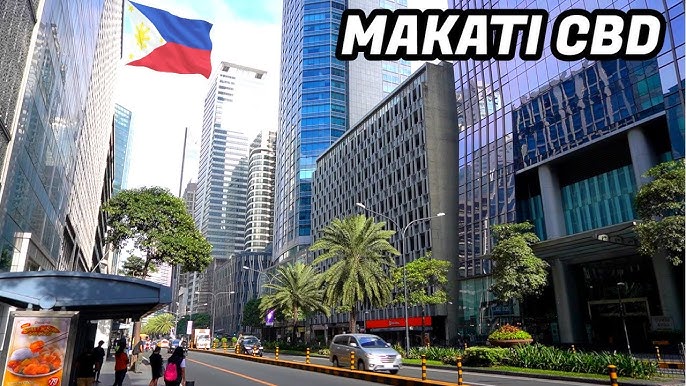
MAKATI CENTRAL
The Makati Central Business District, also known as the Makati CBD, is the leading financial and central business district in the Philippines located at the heart of Makati in Metro Manila. The financial district is managed by two groups—the Makati Commercial Estates Association (MaCEA) and the Ayala Property Management Corporation (APMC).
The Makati CBD is a modern urban landscape that emerged from the vision outlined in Presidential Decree 824, signed in 1975 by then-President Ferdinand Marcos. This decree officially declared Makati as the country’s financial center, paving the way for its remarkable metamorphosis.
It is politically known as “Central Cluster” in the West District of Makati. It is different from the civic center of Makati known as “Makati Poblacion” which is situated at the north-east portion of the district.
It is bounded by EDSA, Gil Puyat Avenue, Arnaiz Avenue, and Chino Roces Avenue. The whole district occupies barangays of San Antonio, San Lorenzo, Bel-Air, and Urdaneta.
At the nucleus of the Makati CBD is Ayala Avenue, an iconic thoroughfare that serves as the district’s financial spine. Lined with towering skyscrapers housing multinational corporations, financial institutions, and embassies, Ayala Avenue is the embodiment of Makati’s economic prowess.
Beyond its corporate identity, the Makati CBD caters to a diverse range of interests. High-end shopping centers like Greenbelt and Glorietta offer a retail haven, while an array of restaurants, bars, and cafes create a lively social scene. Parks and open spaces provide a breath of fresh air amid the urban hustle.
https://youtu.be/_j2PCvlKpf0?si=nXIe2ZYvjFdrxq5-
Bonifacio Global City (Taguig)
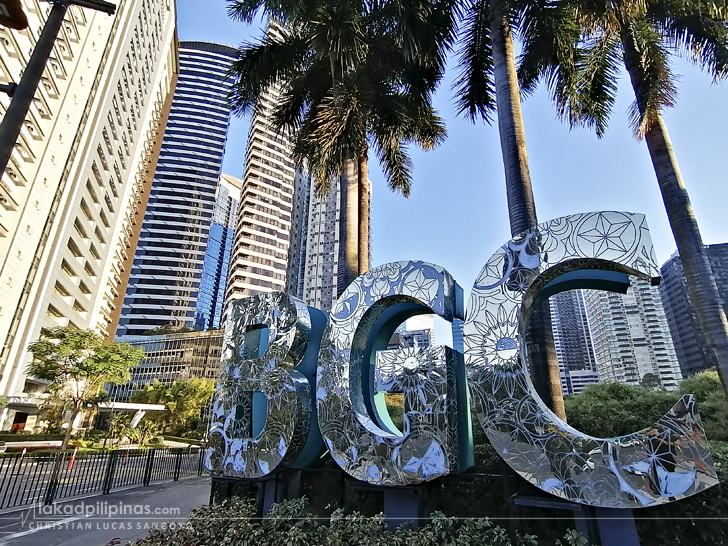
Bonifacio Global City or simply BGC, stands as a testament to urban sophistication and modernity. This burgeoning central business district has swiftly become a powerhouse in the Philippine economic landscape.
What once was a military base has evolved into a dynamic and meticulously planned urban center. Spearheaded by the Bases Conversion and Development Authority (BCDA) and Ayala Corporation, BGC’s development began in the early 2000s, breathing life into a strategic vision.
The skyline of BGC is a mesmerizing symphony of skyscrapers, each telling a tale of corporate success and innovation. Iconic structures like The Finance Centre, Bonifacio High Street Corporate Center, and Uptown Tower contribute to the district’s distinctive profile. BGC’s skyline is a visual testament to its role as a burgeoning economic and financial hub.
What sets BGC apart is its appeal to multinational corporations, technology firms, and start-ups. The district hosts the regional headquarters of various global companies, drawn to its state-of-the-art office spaces, accessibility, and commitment to sustainable urban planning. BGC is more than a CBD; it’s a corporate ecosystem.
BGC also prides itself on pioneering sustainable and green urban living. Parks and green spaces are strategically integrated, providing residents and workers with pockets of nature amidst the bustling cityscape.
While business is at its core, BGC weaves a rich cultural tapestry. The district hosts events, art installations, and cultural festivals that add vibrancy to the urban experience. The Mind Museum offers hands-on science displays, while the Manila American Cemetery and Memorial honors WWII soldiers. Colorful street murals make the area popular for strolling. Definitely, one of my favorite cities in Metro Manila.
https://youtu.be/UC2ADkRyYrw?si=ACrrn5PsZFlIcBee
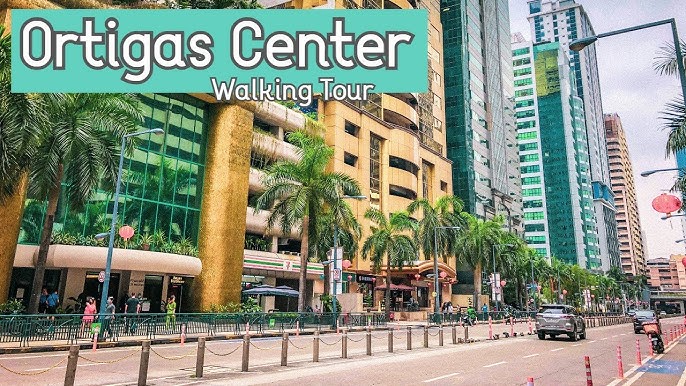
Ortigas Center (Mandaluyong, Pasig & San Juan)
Ortigas Center is a central business district located within the joint boundaries of Pasig, Mandaluyong and Quezon City, within the Metro Manila region in the Philippines. With an area of more than 100 hectares, it is Metro Manila’s second most important business district after the Makati CBD.
Recognized for its skyscrapers, commercial complexes, and vibrant lifestyle, Ortigas Center has evolved into a dynamic hub that seamlessly blends business and leisure. Ortigas Center is a testament to the Philippines’ economic prowess, housing the headquarters of prominent corporations, financial institutions, and multinational companies. The district’s skyline is adorned with towering office buildings, symbolizing the economic vitality pulsating within its boundaries.
World-class shopping malls, including SM Megamall, The Podium, and Shangri-La Plaza, provide a diverse array of retail options, from international brands to local favorites. The malls not only cater to shoppers but also serve as social hubs offering entertainment and dining experiences.
Ortigas Center isn’t just a place of work; it’s a community. The district hosts upscale residential condominiums and apartments, providing a convenient living space for those who prefer to reside close to their workplace. The residential offerings range from luxurious penthouses to stylish, modern units.
Entertainment is ingrained in Ortigas Center’s DNA. Cinemas, theaters, and concert venues host a variety of events, from international performances to local productions. The district’s nightlife is vibrant, with bars and clubs offering diverse experiences for those seeking after-hours entertainment.
Gastronomic delights await in Ortigas Center’s myriad of dining establishments. From upscale restaurants to street food stalls, the district caters to every palate. Food hubs like the Kapitolyo neighborhood have gained fame for their eclectic culinary offerings, making Ortigas a haven for food enthusiasts.
https://youtu.be/GdKZ644BWsc?si=Wr4f-Poy-96RxX3r
Filinvest City (Muntinlupa)
Filinvest City is a premiere garden CBD designed to provide modern conveniences in harmony with nature. It is a residential haven, business central, leisure destination, learning and education zone, and medical and wellness hub amid lush, green landscapes in a modern urban development.
The development of Filinvest City began in 1995, by Filinvest at the site of the former Alabang Stock Farm. Under the administration of President Fidel V. Ramos, the farm was opened for joint development with the private sector and the government-owned property was placed for bidding.
Filinvest City stands as a beacon of economic growth in the southern metro. With its modern skyscrapers housing corporate offices, BPO centers, and multinational companies, the district has become a catalyst for economic progress, drawing both local and international businesses seeking a strategic location.
As a forward-thinking CBD, Filinvest City is also recognized for its commitment to technology and education. The Northgate Cyberzone serves as a hub for information technology and business process outsourcing (IT-BPO) companies, contributing to the district’s economic resilience.
A testament to its dynamism, Filinvest City boasts commercial centers like Festival Mall and Westgate Center, providing a plethora of retail options, dining experiences, and entertainment venues. These destinations not only serve the daily needs of the workforce but also offer leisure activities for residents and visitors.
Accessibility is a key feature of Filinvest City’s allure. Connected to major thoroughfares such as the South Luzon Expressway (SLEX) and the Skyway, the district ensures seamless transportation for commuters. Moreover, the upcoming Skyway Extension further enhances connectivity to and from the central business district.
https://youtu.be/eijlnUZWItg?si=RcqNohEgWyrqQynC
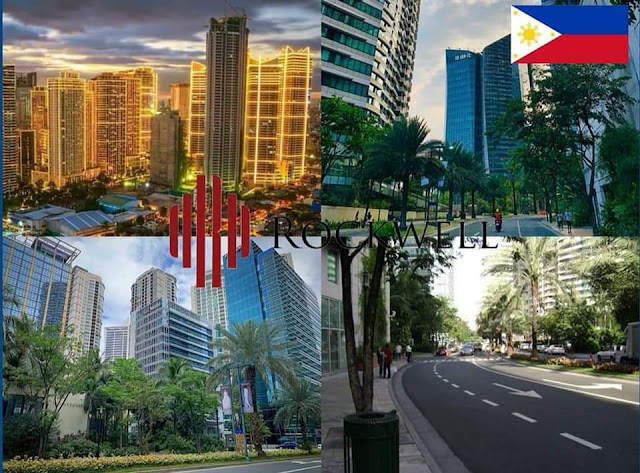
Rockwell Center (Makati)
Rockwell Center is a high-end mixed-use area in Makati. It is a project of Rockwell Land Corporation which is in turn owned by the Lopez Holdings Corporation. Named after James Rockwell, the former President of the Manila Electric Railroad and Light Company (Meralco), this upscale enclave is a testament to luxurious living and urban sophistication. The district was first developed in 1998 and is being expanded since 2012.
The architectural firm Skidmore, Owings & Merrill (SOM) carried out the design under the direction of former design partner Larry Oltmanns, while Felino Palafox and his company, Palafox Associates, became responsible for the master-planning of the complex.
Its centerpiece, the Power Plant Mall, opened on December 26, 2000. The Rockwell Center includes office buildings, condominium towers, a law and business school and a shopping mall
https://youtu.be/mTI8JG73yMg?si=Zf9AFoGdPwN4fPmo
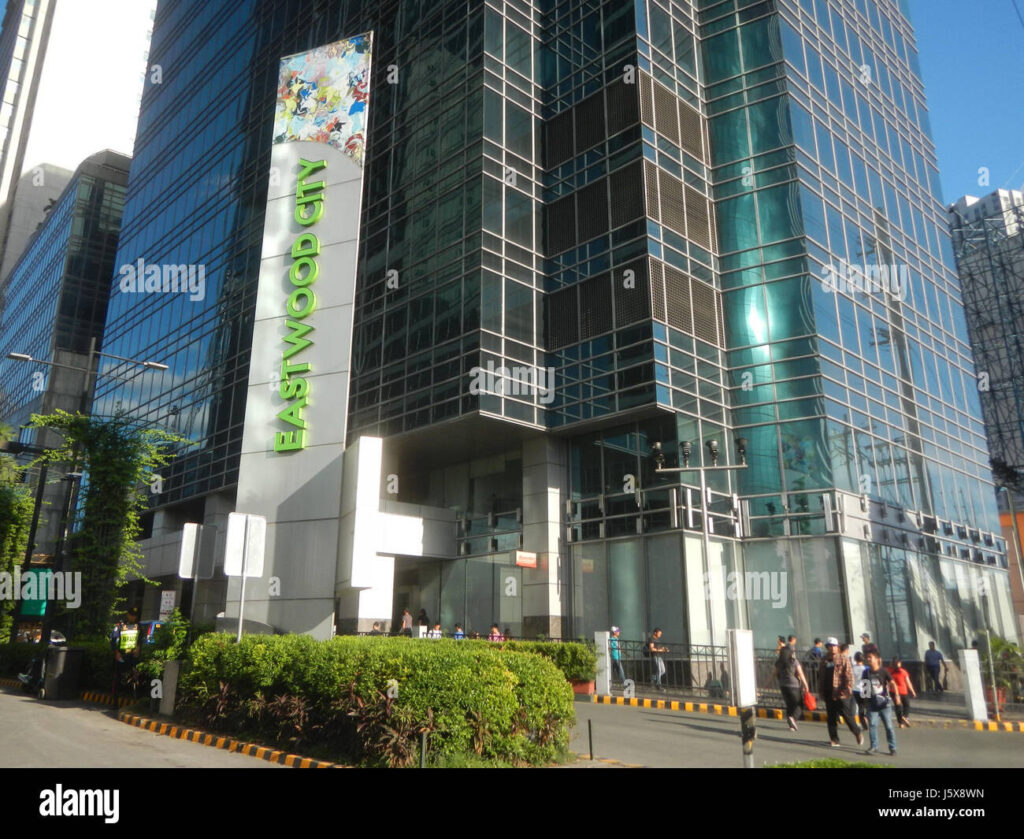
Eastwood City (Quezon City)
Eastwood City is an 18.5 hectares mixed-use development complex located in Barangay Bagumbayan Quezon City. Launched in 1997, it is Megaworld Corporation’s first “live-work-play” community that offers complete facilities, amenities, and establishments for living, working, playing, and shopping.
Home to the largest business process outsourcing (BPO) locators, Eastwood City is the country’s first IT park and the first project to be granted special economic zone status by the Philippine Economic Zone Authority (PEZA). Since its establishment as a premier Cyberpark, it has become a top employer and leading dollar-earner in the Philippines
Apart from being business community, Eastwood City is a residential community with 19 high-rise residential towers.
Eastwood City offers families, professionals and urbanites a variety of shopping, dining and recreation offerings at its three lifestyle malls Eastwood Mall, Eastwood Cyber and Fashion Mall and Eastwood Citywalk, which are managed under the Megaworld Lifestyle Malls brand.
https://youtu.be/aw925lDXL14?si=l9aZoVYcDGZ5WF6j
Greenfield District (Mandaluyong)
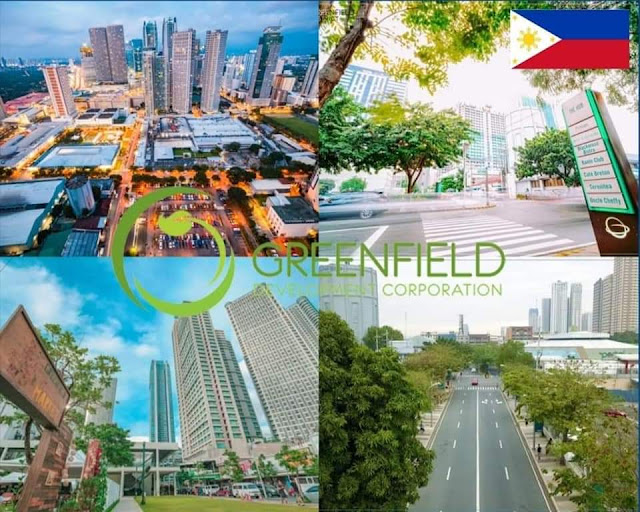
Greenfield District carries the innovative vision of Greenfield Development Corporation by being a remarkable urban development built on two primary foundations: a technologically advanced infrastructure and an eco-efficient master plan.
Bordered by the main thoroughfares EDSA and Shaw Boulevard, and stretching towards Reliance Street and Sheridan Street, the 15-hectare Greenfield District sits at the heart of the new Mandaluyong CBD, making it conveniently located near central business districts, schools, hospitals, malls and lifestyle centers.
Designed to give a truly distinctive brand of city lifestyle, the masterplanned development is known as a “smart and connected” urban center with buildings technologically interconnected with a fiber-optic framework. Along with these ultra-modern high-rise buildings, the community is further redefining the Mandaluyong landscape with sweeping, green open spaces that comprise a generous portion of the development, and further enhanced by a pedestrian-oriented neighborhood.
Urban dwellers will also find ideal, future-ready homes in the development. The Twin Oaks Place is Greenfield District’s flagship condominium project, where every unit is integrated with fiber-optic connectivity that enables features such as smartphone-controlled home automation.
Meanwhile, Zitan, another fiber-to- the-home condominium development, is particularly designed to be transitoriented as it is linked to the Shaw Boulevard station of the MRT along EDSA.
Greenfield District’s retail spaces are being redeveloped into modern, convenient and efficient lifestyle centers such as The Hub and The Portal. Its well-selected variety of restaurants, bars and cafés serve the emerging lunch and after-office crowd of employees and executives from within the vicinity of office buildings.
https://youtu.be/gOyAM0KA94w?si=1lX7PuZu12jxFeJk
Mall of Asia Complex (Pasay)
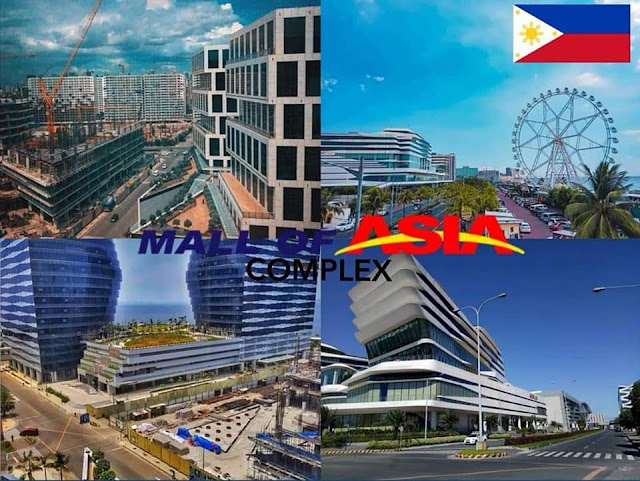
Nestled along the picturesque Manila Bay, the Mall of Asia (MOA) Complexstands as a sprawling testament to modernity, entertainment, and lifestyle in Metro Manila, Philippines. This vibrant and dynamic complex is a multifaceted hub that seamlessly blends retail therapy, entertainment, business, and leisure, creating a one-stop destination for locals and tourists alike.
At the heart of the complex lies SM Mall of Asia, one of the largest shopping malls in the world. Boasting an extensive array of retail outlets, dining establishments, and entertainment options, SM Mall of Asia has become a retail haven that attracts millions of visitors annually. From international fashion brands to local delicacies, the mall offers a diverse shopping experience for every taste and preference.
Adjacent to SM Mall of Asia is the Mall of Asia Arena, a world-class events venue that has hosted international concerts, sporting events, and theatrical productions. With its state-of-the-art facilities and a seating capacity of over 15,000, MOA Arena is a key player in the Philippines’ entertainment scene, drawing both local and international talents to its stage.
For business and corporate gatherings, the SMX Convention Center within the complex serves as a premier venue. With its versatile event spaces and cutting-edge facilities, it has become a top choice for conventions, trade shows, and conferences, contributing to the Philippines’ emergence as a hub for regional and international events.
The Mall of Asia Complex doesn’t just cater to shopping and business; it also provides a range of recreational activities along Manila Bay. The MOA Eye, a giant Ferris wheel, offers breathtaking views of the bay and the cityscape. The nearby SM By the Bay Amusement Park provides family-friendly attractions and fun-filled rides for visitors of all ages.
Seaside Boulevard, stretching along Manila Bay, is an integral part of the complex. This scenic boulevard offers a tranquil escape for joggers, cyclists, or those seeking a leisurely walk by the bay. Lined with palm trees, open spaces, and occasional events, it provides a refreshing contrast to the bustling activities within the complex.
Entertainment City (Parañaque)
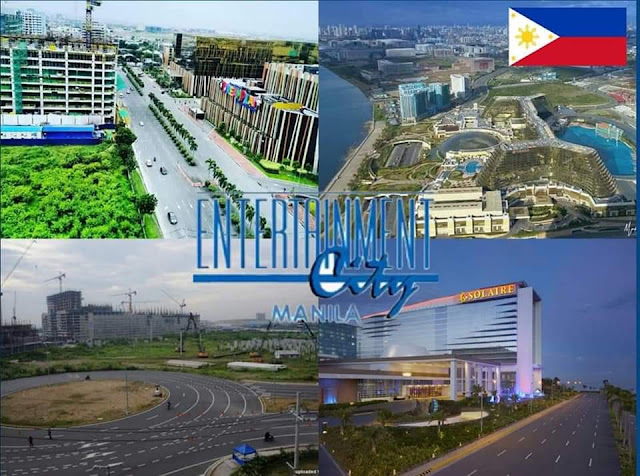
Entertainment City, also known as E-City (formerly PAGCOR City and Manila Bay Tourism City), is a gaming and entertainment complex under development by PAGCOR spanning an area of 8 km2 (3.1 sq mi) in Bay City, Metro Manila, Philippines.
It was first envisioned by PAGCOR in 2002. Alongside the Aseana City business development, it lies at the western side of Roxas Boulevard and south of SM Central Business Park (SM Mall of Asia), part of Parañaque.
The project is officially named as the Bagong Nayong Pilipino-Entertainment City through an executive order by President Gloria Macapagal Arroyo and has been called several other names by the press. The most common name being referenced is “Entertainment City”.
e site has been declared a PEZA-approved economic zone and in 2017, President Rodrigo Duterte named Entertainment City as Expo Pilipino Entertainment City will be named after the exposition for the centennial of the independence of the Philippines in 1998 called Expo Pilipino.
Five Integrated Resort projects have been qualified to date in accordance with the Terms of Reference and are under construction by phases namely, Solaire Resort & Casino, City of Dreams Manila, Okada Manila (formerly Manila Bay Resorts), Westside City Resorts World – (formerly Resorts World Bayshore), and NayonLanding.












:max_bytes(150000):strip_icc():format(webp)/propertytax.asp_edit-4091e7e47aa84fa6b7ea8e49018a08c9.jpg)
:max_bytes(150000):strip_icc():format(webp)/propertytax.asp-Final-768e8c036b94413591376e5baa43dbb9.png)