
All posts by Angelica Llaneta

Understanding Joint Ventures (JVs): Purpose, Benefits, and Examples

Facebooktwitterredditpinterestlinkedinmail

Word cloud teamwork Royalty Free Vector Image - VectorStock


What Is a Joint Venture (JV)?

A joint venture (JV) is a business arrangement in which two or more parties agree to pool their resources to accomplish a specific task, such as launching a new project or entering a new market. Companies often form JVs to share costs, combine expertise, and leverage each other’s resources to reduce risk.

Each participant is responsible for the venture’s profits, losses, and costs, but the JV itself remains a separate entity from the participants’ other business interests, allowing flexibility in choosing its legal and operational structure


Joint Venture

How Joint Ventures Operate

Although a joint venture is a partnership in the colloquial sense of the word, it can be formed using any legal structure—corporations, partnerships, limited liability companies (LLCs), and other business entities can all be employed.

Despite the fact that the purpose of a JV is typically for production or research, one can also be formed for a continuing purpose. JVs can combine large and small companies to take on one or several projects and deals.

Here are the four main reasons why companies form JVs.

1. To Leverage Resources

A joint venture uses the combined resources of both companies to reach their shared goal. One company might have a well-established manufacturing process, while the other company might have superior distribution channels.

2. To Reduce Costs

Economies of scale allow both companies in the joint venture to produce at a lower per-unit cost. This is especially true for expensive technological advances. JVs can also save on advertisingsupplies, or labor costs.

3. To Combine Expertise

Two companies or parties forming a joint venture might each have different backgrounds, skill sets, or expertise. When these are combined through a JV, each company can benefit from the other’s talent.

4. To Enter Foreign Markets

Another common use of joint ventures is to partner with a local business to enter a foreign market. A company that wants to expand its distribution network to new countries can enter into a JV agreement to supply products to a local business, thus benefiting from an already-existing distribution network.

Some countries have restrictions on foreigners entering their market, making a JV with a local entity almost the only way to do business in the country.

Image

Establishing a Joint Venture: Key Steps

Regardless of the joint venture structure, the most important document will be the agreement that sets out all of the rights and obligations of each party to the venture.

The objectives, the initial contributions of the parties, the day-to-day operations, the right to the profits, and the responsibility for losses are all set out in the JV agreement. It is important to draft it with care to avoid risking litigation down the road.

Weighing the Pros and Cons of a Joint Venture

Pros

A joint venture lets each party explore new business opportunities without shouldering all the cost and risk. Joint ventures are riskier than regular business, so sharing risks through cooperation is smart.

If the right participants are involved, the joint venture also starts out with a broader base of knowledge and pool of talent than any one party possesses on its own.

For example, a joint entertainment venture set up by an animation studio and a streaming content provider can get off the ground quicker—and probably with a better chance of success—than either participant could alone.

Cons

Entering a joint venture means giving up some control, as key decisions are shared.

Companies must share the same goals and commitment when starting a joint venture.

Extreme differences between the participants’ company cultures and management styles can be a barrier to success. Will the executives of an animation studio be able to communicate in the same language as the executives of a digital streaming giant? They might, or they might line up in opposing camps.

Setting up a joint venture multiplies the number of management teams involved. If one party undergoes a significant change in its business structure or executive team, the joint venture can get lost in the shuffle.

Tax Implications for Joint Ventures

The most common approach when forming a joint venture is to set up a new entity. As the JV itself isn’t recognized by the Internal Revenue Service (IRS), the business form between the two parties helps determine how taxes are paid.

Because the JV is a separate entity, it pays taxes like any other business. However, if it chooses to operate as an LLC, its profits and losses would pass through to the owners’ personal tax returns, as with any other LLC.1

The JV agreement will spell out how profits or losses are taxed. If the agreement is merely a contractual relationship between the two parties, then it will determine how the tax is divided between them.

Comparing Joint Ventures, Partnerships, and Consortiums

A joint venture is not a partnership. That term is reserved for a single business entity that is formed by two or more people. JVs join two or more different entities into a new one, which may or may not be a partnership.

The term “consortium” is sometimes used to describe a JV, and there are similarities. However, a consortium is a more informal agreement than a JV. For example, a consortium of travel agencies can negotiate and give members special rates on hotels and airfares, but it does not create a whole new entity.

The agencies still pursue their own businesses independently. In a JV, they would share ownership of the created entity, jointly responsible for its risks, profits, losses, and governance.

A Real-world Example of a Joint Venture

In 2022, two large Japanese companies, Sony and Honda, announced a joint venture to create an electric vehicle. Sony is one of the world’s most prominent electronics companies and Honda is one of the most prominent automobile companies.2

The established joint venture seeks to bring an electric vehicle to market by 2026 by combining Honda’s skills in mobility development, technology, and sales, with that of Sony’s expertise in imaging, telecommunication, networks, and entertainment.23

The joint venture is called “Afeela.” The company will be taking pre-orders in 2025 with expected delivery in the U.S. in 2026.43

Why Would a Firm Enter Into a Joint Venture?

There are many reasons to join forces with another company on a temporary basis, including for purposes of expansion, development of new products, and entering new markets (particularly overseas).

Joint ventures are a common method of combining the business prowess, industry expertise, and personnel of two otherwise unrelated companies. This type of partnership allows each participating company an opportunity to scale its resources to complete a specific project or goal while reducing total cost and spreading out the risks and liabilities inherent to the task.

What Are the Primary Advantages of Forming a Joint Venture?

A joint venture affords each party access to the resources of the other participant(s) without having to spend excessive amounts of capital. Each company is able to maintain its own identity and can easily return to normal business operations once the JV is complete. JVs also provide the benefit of shared risk.

What Are Some Disadvantages of Forming a Joint Venture?

Joint venture contracts commonly limit the outside activities of participant companies while the project is in progress. Each company involved in a JV may be required to sign exclusivity agreements or a non-compete agreement that affects current relationships with vendors or other business contacts.

The contract under which a JV is created may also expose each company to liability inherent to a partnership unless a separate business entity is established for the JV. Furthermore, while companies participating in a JV share control, work activities and use of resources are not always divided equally.

Does a Joint Venture Need an Exit Strategy?

A joint venture is intended to meet a particular project with specific goals, so it ends when the project is complete. An exit strategy is important, as it provides a clear path on how to dissolve the joint business, avoiding drawn-out discussions, costly legal battles, unfair practices, negative impacts on customers, and controlling for any possible financial loss.

In most JVs, an exit strategy can come in three different forms: sale of the new business, a spinoff of operations, or employee ownership. Each exit strategy offers different advantages to partners in the JV, as well as the potential for conflict.

The Bottom Line

A joint venture lets companies pool resources and expertise to reach specific goals while sharing costs and risks. It can be a strategic way to enter new markets or leverage local partnerships at a lower cost. However, success depends on a shared vision, strong commitment, and a well-structured agreement to address potential challenges like cultural differences and management conflicts.

Get in on the Prediction Markets

Events-driven traders who prefer to strategize based on geopolitical events, policy decisions, and public sentiment may find an edge with Interactive Brokers’ ForecastTrader. A straightforward way to participate in the futures markets and trade contracts based on the outcome of future events. No commission fees, and eligible account users receive $3 which can be used to trade forecast contracts. Become a more strategic trader by opening an account.

Leave a comment

WHAT IS SOCIALIZED HOUSING UNDER REPUBLIC ACT NO. 7279 OR THE URBAN DEVELOPMENT AND HOUSING ACT OF 1992

Facebooktwitterredditpinterestlinkedinmail

After reading, What Is Socialized Housing Under Republic Act No. 7279 Or The Urban Development And Housing Act Of 1992, read also What Is Republic Act No. 7279 or The “Urban Development Housing Act Of 1992”?

  • Incentives are extended to the private sectors in participating in socialized housing
  • Socialized housing refers to housing programs and projects covering houses and lots or homelots
  • There are eligibility criteria for Socialized Housing Program Beneficiaries

Socialized housing refers to housing program and projects covering houses and lots and homelots only undertaken by the government or the private sector for the underprivileged and homeless citizens which shall include sites and services development, long-term financing, liberalized terms on interest payments, and such other benefits in accordance with the provisions of the “Urban Development and Housing Act of 1992”.

Who are eligible to become Socialized Housing Program Beneficiaries?

The law says:

To qualify for the socialized housing program, a beneficiary:

  1. Must be a Filipino citizen;
  2. Must be an underprivileged and homeless citizen;

Underprivileged and homeless citizens refer to the beneficiaries of the law on socialized housing and individuals or families residing in urban and urbanizable areas whose income or combined household income falls within the poverty threshold and who do not own housing facilities. Underprivileged and homeless citizens include those who live in makeshift dwelling units and do not enjoy security of tenure.

c. Must not own any real property whether in the urban or rural areas; and

d. Must not be a professional squatter or a member of squatting syndicates.

Is there an incentive for private sector participating in Socialized Housing?

The law says:

Yes.

To encourage greater private sector participation in socialized housing and further reduce the cost of housing units for the benefit of the underprivileged and homeless, the following incentives shall be extended to the private sector:

  1. Reduction and simplification of qualification and accreditation requirements for participating private developers;
  2. Creation of one-stop offices in the different regions of the country for the processing, approval and issuance of clearances, permits and licenses. The clearances, permits and licenses shall be issued within ninety (90) days from the date of submission of all requirements by the participating private developers;
  3. Simplification of financing procedures; and
  4. Exemption from the payment of the following:
  1. Project-related income taxes;
  2. Capital gains tax on raw land used for the project;
  3. Value-added tax for the project contractor concerned;
  4. Transfer tax for both raw completed projects; and
  5. Donor’s tax for lands certified by the local government units to have been donated for socialized housing purposes on the condition that the application for exemption, a lien on the title of the land shall be annotated by the Register of Deeds. The socialized housing development plan has already been approved by the appropriate government agencies concerned.

As for following basic services in socialized housing or resettlement areas, the same shall be provided by the Local Government Unit (LGU) or the National Housing Authority in cooperation with private developers and concerned agencies:

  1. Potable water;
  2. Power and electricity and an adequate power distribution system;
  3. Sewerage facilities and an efficient and adequate solid waste disposal system; and
  4. Access to primary roads and transportation facilities.

The provisions of other basic services and facilities such as health, education, communications, security, recreation, relief and welfare shall be planned and shall be given priority for implementation by the local government unit concerned agencies in cooperation with the private sector and the beneficiaries themselves.

Leave a comment

Property Ownership and its Modifications

Facebooktwitterredditpinterestlinkedinmail

CIVIL LAW: PROPERTY, OWNERSHIP, AND ITS MODIFICATIONS

A. Property

I. Definition of Property

Under the Civil Code of the Philippines, property refers to all things that are or may be the object of appropriation. Property is classified based on ownership, use, and characteristics, as described below.


II. Classification of Property

  1. According to Ownership:
    • Public Property:
      • Owned by the State or its political subdivisions.
      • For public use (e.g., roads, bridges, plazas).
      • For government service (e.g., government buildings, military installations).
    • Private Property:
      • Owned by private individuals or entities.
      • Includes personal and real property not designated for public use.
  2. According to Nature:
    • Real Property (Immovable):
      • Defined under Article 415 of the Civil Code.
      • Includes land, buildings, roads, trees, and other immovable structures attached to the land.
    • Personal Property (Movable):
      • Defined under Article 416.
      • Includes all things that can be transported from one place to another without altering their substance.
  3. According to Purpose:
    • Consumable Property:
      • Goods that are consumed or extinguished upon use (e.g., food, fuel).
    • Non-Consumable Property:
      • Goods that can be used repeatedly without being consumed (e.g., furniture, tools).
  4. According to Susceptibility of Appropriation:
    • Common Property:
      • Things owned by all, such as air, the high seas, and sunlight.
    • Res Nullius:
      • Things that have no owner but can be appropriated, such as wild animals or abandoned property.

III. Ownership (Articles 427–440, Civil Code)

  1. Definition and Attributes:
    • Ownership is the right to enjoy, dispose, and exclude others from property.
    • It includes the right to the fruits and accessories of the property (Article 428).
  2. Limitations on Ownership:
    • Must respect the rights of others (Article 429).
    • Subject to laws, such as zoning laws, taxation, and public welfare regulations.
  3. Modes of Acquiring Ownership:
    • Original Modes:
      • Occupation.
      • Intellectual creation.
    • Derivative Modes:
      • Through contracts, succession, donation, prescription, and accession.
  4. Rights and Obligations:
    • The owner has the right to recover property from any unlawful possessor (Article 428).
    • Must use property responsibly and prevent damage to others.

IV. Modifications of Ownership

  1. Co-ownership (Articles 484–501):
    • Arises when ownership is shared by two or more persons.
    • Each co-owner holds an undivided interest in the property.
    • Partition may be demanded unless prohibited by agreement or law.
  2. Usufruct (Articles 562–612):
    • The right to enjoy the use and fruits of property owned by another.
    • Usufructuary must preserve the property and return it upon termination of the usufruct.
  3. Easements (Articles 613–651):
    • Encumbrances imposed on a property for the benefit of another (e.g., right of way).
    • Created by law, contract, or prescription.
  4. Lease (Articles 1642–1676):
    • Temporary use of property by another under agreed conditions.
    • Lessors retain ownership but transfer possession and use.
  5. Trusts:
    • Legal arrangement wherein ownership is separated from benefit.
    • Governed by special laws.

V. Public Property (Articles 420–425)

  1. Definition and Scope:
    • Public property is for public use or service and cannot generally be alienated.
  2. Disposition and Use:
    • State property can only be alienated under conditions provided by law (e.g., public bidding).
    • Property of public dominion cannot be acquired through prescription.
  3. Reclassification of Public Property:
    • Public property may become patrimonial if explicitly declared by the government (Article 422).

VI. Private Property

  1. Acquisition:
    • Through modes such as sale, donation, inheritance, or prescription.
  2. Loss of Ownership:
    • By abandonment, prescription, or destruction of the property.
  3. Protection of Rights:
    • Remedies include replevin, action for damages, and recovery of possession.

VII. Accession (Articles 440–465)

  1. Definition:
    • Accession refers to the right of the owner to all that is produced by, incorporated, or attached to their property.
  2. Types:
    • Accession Discreta: Refers to natural or industrial fruits.
    • Accession Continua: Refers to improvements or additions to immovable property (e.g., buildings, plants).
  3. Rules:
    • Ownership of improvements belongs to the owner of the principal property unless otherwise agreed upon.

VIII. Possession (Articles 523–561)

  1. Definition:
    • Possession is the holding or control of property with the intention of ownership.
  2. Kinds:
    • In Good Faith: Belief in lawful ownership.
    • In Bad Faith: Awareness of lack of ownership.
  3. Acquisition and Loss:
    • Possession may be acquired by material holding or intention.
    • Lost through abandonment, destruction, or transfer to another.
  4. Legal Effects:
    • Possessors in good faith are entitled to fruits and improvements.
    • Possessors in bad faith must return the property and pay damages.

IX. Prescription (Articles 1106–1155)

  1. Definition:
    • Prescription is a mode of acquiring or losing property through the passage of time.
  2. Kinds:
    • Acquisitive Prescription:
      • Ordinary: Possession in good faith and with just title for ten years.
      • Extraordinary: Continuous possession for 30 years.
    • Extinctive Prescription:
      • Bars claims to property after the lapse of the statutory period.
Leave a comment

THE INTERPRETATION OF CONTRACTS

Facebooktwitterredditpinterestlinkedinmail


Wildy & Sons Ltd — The World's Legal Bookshop Search Results for isbn:  '9781847033550'

Interpretation of contracts is the legal process of determining the true intent of parties when terms are ambiguous or disputed, prioritizing evident intention over literal words. Key kinds of interpretation include literal (plain meaning), contextual (reading as a whole), intentional (giving effect to intent), and contra proferentem.
Key Kinds and Rules of Contract Interpretation
Leave a comment

requisite in order to be entitled

Facebooktwitterredditpinterestlinkedinmail


Willful Disobedience - Labor Law PH

Entitlement to rights, benefits, or legal standing requires meeting specific, often codified, requisites. These vary based on the context, such as labor law, civil law, or legal standing to sue.
General Requisites for Entitlement (Legal Context)
  • Legal Standing (Locus Standi): To be entitled to sue or seek relief, a person must have a personal, direct stake in the outcome, having sustained or being in imminent danger of sustaining a direct injury.
  • Valid Claim or Right: The person must show they are about to be denied a specific right or privilege to which they are lawfully entitled.
Specific Examples of Entitlement Requisites
  • Labor Benefits (Non-diminution): To be entitled to a benefit that cannot be reduced by an employer, it must be founded on policy, ripened into a long-term practice, be consistent/deliberate, and not be due to an error in law.
  • Rest Day/Holiday Pay: An employee is entitled to additional compensation for work on a Sunday only if it is their established rest day.
  • Government Program (e.g., NHA Grant): Entitlement to land titles requires complying with contractual conditions, such as full payment of installments and personal use of the land.
  • Naturalization (Philippine Citizenship): Entitlement to reduced residency requirements (5 years instead of 10) requires specific qualifications, such as holding office, establishing a new industry, or marrying a Filipino citizen.
  • Valid Waiver: Entitlement to a right is waived only if the person possesses the right, has the capacity to dispose of it, and the waiver is clear, unequivocal, and not contrary to law or public policy.
Leave a comment

Real Property Tax Non-Payment Consequences Phillippines

Facebooktwitterredditpinterestlinkedinmail

A practitioner-oriented overview based on the Local Government Code of 1991 (LGC) and leading jurisprudence

1. Statutory Framework

Source Key Provisions
Constitution (Art. X, §5) LGUs may create their own sources of revenue.
LGC 1991 (R.A. 7160), Book II, Title II §§197-283 govern the levy, collection, and enforcement of local taxes, including RPT.
Implementing Rules & Regulations (IRR) of the LGC Part IV, Rule XXX
Supreme Court cases FELS Energy v. Province of Batangas (G.R. F-729), City of Makati v. Tagaytay Highlands (G.R. 222263, 2021) etc., interpret LGU powers and taxpayer defenses.

2. When and How the Tax Becomes Due

Event Timing Notes
Accrual 1 January every year (LGC §232) Tax attaches to the land, building, and machinery that exist on that date.
Basic tax & SEF tax Payable on or before 31 January or in four equal quarterly installments (31 Mar, 30 Jun, 30 Sep) (§250) Some provinces/cities adopt incentives for advance payment.
Special levies (e.g., idle land, benefit assessments) Billed and collected together with the basic tax unless an ordinance fixes another schedule.

3. Administrative Penalties for Late or Non-Payment

  1. Interest (LGC §255)
    • 2 % of the unpaid amount per month of delay.
    • Capped at 36 months (i.e., maximum 72 %).
    • Interest runs separately for each installment.
  2. Tax Delinquency (§256)
    • Occurs the day immediately after a quarterly due date lapses.
    • Entire year’s balance may be declared delinquent once any installment is missed.
  3. Notice of Delinquency (§258)
    • Local treasurer must:
      • Post at the main LGU building and in the barangay, and
      • Publish once a week for two consecutive weeks in a newspaper of general circulation.
    • Notice must state the date of auction sale (not less than 30 days after posting).
  4. Warrant of Levy (§260)
    • May be issued 30 days after delinquency.
    • Annotated on the title at the Registry of Deeds; constitutes a statutory lien that is superior to mortgages and other encumbrances (except constitutional tax-exemptions).
  5. Advertisement and Public Auction (§§261-263)
    • Sale advertised for 30 days.
    • Highest bidder wins; if no bidder, LGU may purchase the property ipso jure (§264).
    • Certificate of Sale is issued and annotated on the title.
  6. Redemption Period (§262)
    • Owner or any interested party may redeem within one (1) year from the date of sale by paying:
      • The delinquent tax,
      • Interest up to the date of sale, plus
      • Interest on the purchase price at up to 2 % per month.
    • Upon redemption, the certificate of sale is cancelled and a certificate of redemption is issued.
  7. Final Deed Conveying Title (§263)
    • If not redeemed within one year, the treasurer executes a Final Deed to the Purchaser, free from the lien of taxes and earlier encumbrances.
    • The owner forfeits all rights to the property except a share in any surplus of the sale proceeds (rare, since taxes and costs usually consume the price).
  8. Possessory Rights & Ejectment
    • The purchaser may take possession after the redemption period.
    • Courts have upheld ejectment suits anchored on a final deed executed under §263.

4. Ancillary Civil and Commercial Consequences

Consequence Practical Effect
Blocking of Land Registration Transactions Registry of Deeds requires a Real-Property Tax Clearance Certificate for transfers, mortgages, subdivision/consolidation plans, and issuance of condominium CCTs.
Cloud on Title / Lower Market Value The levy and certificate of sale are annotated, discouraging buyers and lenders.
Difficulty Renewing Business Permits Cities and municipalities require RPT clearance for an establishment’s annual business-permit renewal.
Ineligibility for Government Incentives Some BOI/PEZA or tourism incentives require proof of local-tax compliance.
Impact on Estate Settlement Heirs cannot obtain an electronic Certificate Authorizing Registration (e-CAR) from the BIR without RPT clearance.

5. Criminal Liability?

Non-payment per se is a civil breach, not a criminal offense.

  • However, §274 punishes local officials who fail to perform collection duties.
  • Tax evasion under the NIRC does not apply to local taxes.
  • A taxpayer who knowingly falsifies documents to secure a tax clearance may incur liability under the Revised Penal Code (falsification/estafa).

6. Taxpayer Remedies and Mitigating Measures

Remedy Statutory Basis Key Points
Installment/Partial Payments §250 Interest computed only on the unpaid portion.
Protest (Before payment) §252 Must be filed within 30 days from notice of assessment; decision due 60 days; appealable to the LBAA.
Appeal to LBAA, CBAA, CTA, SC §§226-231 Can question legality of assessment, but not the collection procedure once tax is delinquent.
Amnesty/Condonation §276; special laws (e.g., R.A. 11213, the 2019 estate-tax amnesty) Sangguniang Panlalawigan/Panglungsod may condone interest in cases of calamity, crop failure, or special public interest.
Compromise/Abatement Similar to BIR compromise; LGU may accept partial settlement subject to sanggunian approval.
Judicial Injunction Rare; courts generally require payment under protest before entertaining suits (tax-collection is the lifeblood of government doctrine).

7. Enforcement Hierarchy vis-à-vis Personal Property

For local business taxes and fees the treasurer may distrain personal property before levying realty (§175).
For RPT, levy on realty is the primary—and exclusive—administrative remedy. Personal property cannot be distrained to satisfy RPT.

8. Priority of Liens

  1. National Taxes (e.g., estate or donor’s tax)
  2. Real-Property Tax Lien – “superior to all liens, charges, or encumbrances” (§257)
  3. Mortgage Liens / Usufruct / Easements
  4. Subsequent Attachments / Judgments

Thus, a mortgagee’s foreclosure sale is subordinate to prior RPT liens; the buyer at foreclosure must settle delinquent RPT or risk levy.

9. Special Rules for Special Classes of Property

Property Notes on Enforcement
Government-owned but patrimonial property Subject to levy; doctrine in City of Lapu-Lapu v. PEA (2017).
Tax-exempt entities (charities, non-stock / non-profit schools) Exempt from basic RPT but the SEF and other special levies may still apply (C.B. Garayblas v. SSS, 2016).
Machinery May be a separate subject of levy; if machinery is removed or dismantled, the tax lien follows the parts unless paid (IRR Rule IV).

10. Effect of LGU Non-Compliance with Due-Process Steps

Failure to strictly comply with §258 posting + publication or §260 warrant formalities voids the levy and subsequent sale (Heirs of Malate v. Gamboa, G.R. 181409, 2013).

  • Nonetheless, the underlying tax remains due; the treasurer may re-levy within the 5-year prescriptive period (§270) or 10 years if fraud is involved.

11. Prescription

Action Period Interruption
Assessment/Collection by LGU 5 years from date tax became due; fraud/falsity extends to 10 years (§270). Running is tolled by: (a) service of warrant, (b) taxpayer request for reinvestigation, (c) any court action.
Refund by Taxpayer 2 years from date of payment (§253).

12. Comparative Glance at Condonation Programs (Past Decade)

Year Issuing Authority Coverage Highlights
2013 R.A. 10158 Abolished RPT on machineries of independent power producers (IPPs) in energy privatization; national govt assumes liability.
2022 Various LGUs post-Typhoon Odette Provincial boards (Bohol, Southern Leyte, etc.) condoned surcharges and interest for affected barangays.
2023 Quezon City Ord. SP-3180 100 % condonation of interest for delinquencies paid in full within the amnesty window.

13. Practical Tips for Owners, Buyers, and Lenders

  1. Always secure an updated “Statement of Account” (SOA) from the city/municipal treasurer before closing any real-estate deal.
  2. Pay in January if cash flow allows—many cities grant a 10 %-20 % discount for advance/full-year payment.
  3. Monitor quarterly dues using the LGU’s online portal or mobile pay apps (GCash, PayMaya) now accepted in most highly urbanized cities.
  4. For developers, allocate sufficient escrow for RPT during the project’s pre-selling phase; unpaid RPT can derail subdivision/condo registration.
  5. For lenders, routinely check Tax Declaration and Real-Property Tax Clearance before loan releases and during annual credit review.
  6. If already delinquent, explore LGU settlement plans or amnesties—interest condonation can save up to 72 % of the outstanding balance.

14. Key Take-Aways

  • The RPT lien is automatic, paramount, and difficult to defeat; ignoring it can literally cost you land.
  • Interest alone can double the liability in three years.
  • Due-process defects can nullify the levy but not the tax—the LGU can start the process anew.
  • Redemption is a strict one-year period; after that, title and possession pass irrevocably.
  • Awareness of local amnesty ordinances and timely installment payments are the taxpayer’s best defenses.

Disclaimer: This article synthesizes statutory text, administrative regulations, and Supreme Court decisions current to 26 April 2025. It is not a substitute for formal legal advice. Always confirm any LGU-specific ordinance or amnesty in force at the time of inquiry.


Leave a comment

Transferability of awarded land

Facebooktwitterredditpinterestlinkedinmail


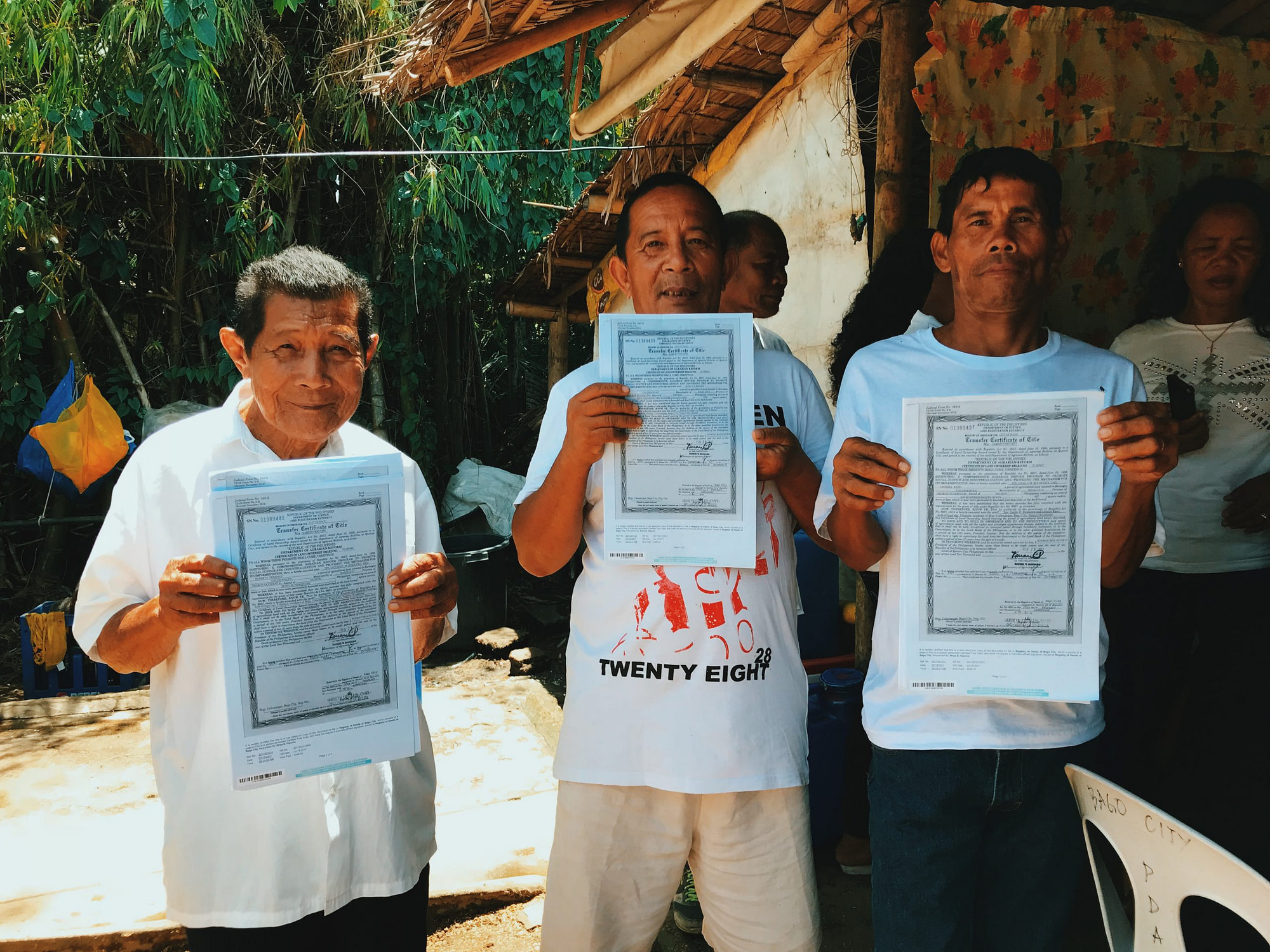
DAR Negros distributes Yusay land to Bago farmers despite resistance

Lands awarded under Philippine agrarian reform programs (RA 6657, PD 27) generally cannot be sold, transferred, or conveyed for ten (10) years from the date of award. Exceptions include transfers through hereditary succession (to heirs), or to the government, Land Bank of the Philippines (LBP), or other qualified beneficiaries. 
Key Aspects of Transferability
  • 10-Year Restriction (RA 6657): During this period, land acquired under a Certificate of Land Ownership Award (CLOA) cannot be transferred, with violations rendering the transaction void.
  • Exceptions to the 10-Year Rule:
    • Hereditary Succession: Ownership passes to legal heirs upon the death of the beneficiary.
    • Government/LBP: Land may be transferred to the government or Land Bank.
    • Qualified Beneficiaries: Transfer allowed to other beneficiaries authorized by the Department of Agrarian Reform (DAR).
  • Unpaid Land (PD 27): If the land has not been fully paid for by the beneficiary, rights may only be transferred with prior approval from the DAR.
  • Post-10 Year Period: After 10 years, transfer is generally allowed, but may still require DAR clearance or be subject to restrictions on the maximum landholding size (5 hectares).
  • Validity of Transfers: Any transfer made in violation of these rules is null and void, and the land can be forfeited. 
Leave a comment

MODES OF ACQUIRING TITLE

Facebooktwitterredditpinterestlinkedinmail


Steps in Acquiring Land – KCJ LAW OFFICE

Leave a comment

subdivision and condominium buyers protective decree

Facebooktwitterredditpinterestlinkedinmail


Presidential Decree 957: Know Your Rights as a Property Buyer | Lamudi

This Decree shall be known as THE SUBDIVISION AND CONDOMINIUM BUYERS’ PROTECTIVE DECREE.
Presidential Decree No. 957

(PD 957), or the Subdivision and Condominium Buyers’ Protective Decree, is a 1976 Philippine law enacted to protect buyers from fraudulent, unscrupulous developers and sellers. It regulates the sale of, and requires licenses for, subdivision projects and condominiums, ensuring developers meet obligations regarding, for instance, infrastructure, amenities, and timely delivery of clean titles. 

Key Aspects of PD 957
    • Purpose: To protect buyers from fraudulent practices, such as selling mortgaged, incomplete, or misrepresented projects.
    • License to Sell: Developers must secure a “License to Sell” from the Department of Human Settlements and Urban Development (DHSUD, formerly NHA) before selling any lot or unit
      .
  • Performance Bond: A bond is required to guarantee completion of promised infrastructure like roads, drainage, water systems, and amenities.
  • Delivery of Title: Developers must deliver the title of the lot or unit to the buyer upon full payment. If a property is mortgaged, it must be cleared within 6 months.
  • Open Space Requirement: Developers must reserve 30% of the gross area for open spaces (parks, playgrounds).
  • Penalties: The law provides for penalties, including fines or suspension/revocation of the license to sell for non-compliance. 
Leave a comment

Rent control act of 2009 republic act no.

Facebooktwitterredditpinterestlinkedinmail


Rental Control Act of 2009 (RA 9653) for Landlords & Tenants

The Rent Control Act of 2009 (Republic Act No. 9653) regulates rent increases for low-income tenants in the Philippines, limiting annual hikes to 7% for residential units with monthly rents of P10,000 or less in Metro Manila/urban areas and P5,000 or less elsewhere, provided the same lessee occupies the unit. 
Key provisions of the Rent Control Act of 2009 include:
    • Coverage & Limits: Covers apartments, houses, and boarding houses/rooms with monthly rentals of PHP 1.00 to PHP 10,000.00 in Metro Manila and other highly urbanized cities, and PHP 1.00 to PHP 5,000.00 in other areas.
    • Rent Increases: Annual increases for existing tenants are capped at 7%. When a unit becomes vacant, the landlord may set a new, higher rate for the next tenant
      .
  • Deposits & Payment: Security deposits are limited to a maximum of two (2) months’ rent, and advanced rent cannot exceed one (1) month.
  • Eviction Grounds: Landlords can only evict for specific reasons: owner needing the unit for personal use, unit needing repairs, or non-payment of rent for three months.
  • Validity: The law is subject to review every three years to adjust to economic conditions.
  • Penalties: Violations of this Act are punishable by fines of ₱25,000 to ₱50,000 or imprisonment of one month and one day to six months. 
The law aims to prevent unreasonable rent increases and protect, in particular, tenants in the lower-income brackets. 
Leave a comment
Style Selector
Select the layout
Choose the theme
Preset colors
No Preset
Select the pattern