




How to Transfer Land Title in the Philippines 2025
In the Philippines, a land title is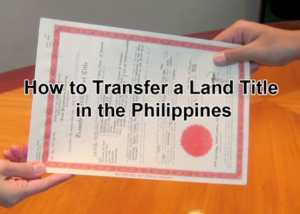 the ultimate proof of property ownership under the Torrens Title System, which records the transfer of ownership from one owner to the next. You may not usually need to know the process unless you are a real estate professional, a seller, or a buyer—but once you buy or sell property, understanding how to transfer a land title becomes essential. During a property transaction, all parties—the seller, listing broker, buyer, and buyer’s broker—should clearly agree from the beginning on who will handle the title transfer. If you are the buyer, it’s in your best interest to understand the steps for transferring the land title to your name. You can do the process yourself if you have the time and patience, or you may hire a lawyer, licensed real estate broker, or a title transfer company for a service fee, which varies depending on the property location. For your reference and guidance, here are the:
4 Steps on How to Transfer Land Title in the Philippines Note that we refer to it as a land title transfer procedure but the same goes when transferring title for a condominium or other properties.
Transfer of Title Requirements Philippines.
1. Deed of Conveyance – whether it is a Deed of Absolute Sale (DOAS), Extrajudicial Settlement of Estate with Sale (EJS with Sale), Deed of Donation, etc. Prepare 8 copies.
– For sales transactions, prepare an Acknowledgement Receipt of the amount received by the seller. If the seller is a real estate developer or a real estate dealer who is habitually engaged in real estate, the seller can issue an Official Receipt.
– Make sure the deed indicates the unique Tax Identification Number (TIN) numbers of the parties involved. Important: the spelling of the names on the deed of conveyance, the name on the Bureau of Internal Revenue (BIR) TIN, and on the identification documents should be the same; the signature on the deed of conveyance and on the IDs should be the same.
– Both the Deed of Conveyance and the Acknowledgement Receipt must be notarized.
– Why prepare 8 copies? Here’s the distribution breakdown:
– Notary Public – Seller – Seller’s Licensed Real Estate Broker
– Buyer
– Buyer’s Licensed Real Estate Broker
– Copy for submission to the various government agencies (Bureau of Internal Revenue, LGU Treasurer’s Office, Registry of Deeds, LGU Assessor’s Office) – Copy for the Condominium Corporation or Homeowner’s Association
2. Photocopies of IDs of all signatories in the deed; all photocopies must have 3 signatures of the owner of the ID; IDs are called “competent evidence of identity” and are defined as a “current identification document issued by an official agency bearing the photograph and signature of the individual”. Examples: Valid Passport, Valid Driver’s License, Valid license cards issued by the Professional Regulations Commission, etc. Important: Do not use expired IDs.Official Receipt of the Notary Public for the notarization of the deed.
3. Official Receipt of the Notary Public for the notarization of the deed.
4. Certified True Copy of the Title (Get 3 copies.) You will get this from the Registry of Deeds that has jurisdiction over the property.
5. Certified True copy of the latest Tax Declaration. When you request for the certified true copies of the latest Tax Declaration indicate that the request for the copies are for “BIR Purposes”. Please take note that there are separate tax declarations for the land and for the improvement (ex. house, building). The Tax Declaration is issued by the Assessor’s Office of the city or municipality where the property is located.
6. Tax Clearance – Issued by the Office of the Treasurer of the city or municipality. This certifies that the Real Property Taxes for the property, both the land and improvements, have been paid. Requirements to get a Tax Clearance: – Latest Tax Declaration – Latest Official Receipts of Real Property Tax payments – Previous Tax Clearance (if any) – Notarized or Apostilled SPA and valid ID if the requesting party is not the registered owner. Some LGUs allow just a simple authorization letter from the owner.
7. Clearance from the Homeowners Association (HOA) if the property, whether lot only, house and lot, lot with building, is located inside a subdivision or Management Certificate if the property is a condominium unit. Both the HOA Clearance and Management Certificate prove that the seller has settled all HOA/condo dues for the year. The certificate also indicates if the property has been leased. Note: Have this certificate notarized.
8. Marriage certificate (for married sellers and buyers)
9. Birth certificate (only when applicable). This is needed in cases of Deed of Donation to prove the relationship between donor and donee or Extra-Judicial Settlements to prove the relationship between decedent and heirs.
10. Certificate of No Marriage (Cenomar) (only when applicable). Needed if seller or buyer is single. Please take note that the Cenomar is valid only for six (6) months from its issuance by the Philippine Statistics Authority (PSA)
11. For lots-only sale: Certificate of No Improvement. Secure this from the Assessor’s Office of the city or municipality
12. 3” x 5” color photos of the property frontage or facade – Land and House – Photo showing the front outside of the house including the house number. – Condominium – Photo showing the building with the building name visible. Photo of the unit door with the door number visible.
13. Location map – just print a Google Map pertaining to the property.
14. Owner’s Duplicate Copy of the Title – Transfer Certificate of Title (TCT) – for land-only or house and lot or lot with improvement – Condominium Certificate of Title (CCT) – for a residential condominium, office condominium, or parking unit 15. Special Power of Attorney to Process the Title Transfer – if someone else shall process your title transfer. This SPA shall be required by the BIR, LGU Treasurer’s Office, Registry of Deeds, and LGU Assessor’s Office. Important: It should be signed by the SELLER.
Leave a Reply