
All posts by Angelica Llaneta

MODES OF ACQUIRING TITLE

Facebooktwitterredditpinterestlinkedinmail


Steps in Acquiring Land – KCJ LAW OFFICE

Leave a comment

subdivision and condominium buyers protective decree

Facebooktwitterredditpinterestlinkedinmail


Presidential Decree 957: Know Your Rights as a Property Buyer | Lamudi

This Decree shall be known as THE SUBDIVISION AND CONDOMINIUM BUYERS’ PROTECTIVE DECREE.
Presidential Decree No. 957

(PD 957), or the Subdivision and Condominium Buyers’ Protective Decree, is a 1976 Philippine law enacted to protect buyers from fraudulent, unscrupulous developers and sellers. It regulates the sale of, and requires licenses for, subdivision projects and condominiums, ensuring developers meet obligations regarding, for instance, infrastructure, amenities, and timely delivery of clean titles. 

Key Aspects of PD 957
    • Purpose: To protect buyers from fraudulent practices, such as selling mortgaged, incomplete, or misrepresented projects.
    • License to Sell: Developers must secure a “License to Sell” from the Department of Human Settlements and Urban Development (DHSUD, formerly NHA) before selling any lot or unit
      .
  • Performance Bond: A bond is required to guarantee completion of promised infrastructure like roads, drainage, water systems, and amenities.
  • Delivery of Title: Developers must deliver the title of the lot or unit to the buyer upon full payment. If a property is mortgaged, it must be cleared within 6 months.
  • Open Space Requirement: Developers must reserve 30% of the gross area for open spaces (parks, playgrounds).
  • Penalties: The law provides for penalties, including fines or suspension/revocation of the license to sell for non-compliance. 
Leave a comment

Rent control act of 2009 republic act no.

Facebooktwitterredditpinterestlinkedinmail


Rental Control Act of 2009 (RA 9653) for Landlords & Tenants

The Rent Control Act of 2009 (Republic Act No. 9653) regulates rent increases for low-income tenants in the Philippines, limiting annual hikes to 7% for residential units with monthly rents of P10,000 or less in Metro Manila/urban areas and P5,000 or less elsewhere, provided the same lessee occupies the unit. 
Key provisions of the Rent Control Act of 2009 include:
    • Coverage & Limits: Covers apartments, houses, and boarding houses/rooms with monthly rentals of PHP 1.00 to PHP 10,000.00 in Metro Manila and other highly urbanized cities, and PHP 1.00 to PHP 5,000.00 in other areas.
    • Rent Increases: Annual increases for existing tenants are capped at 7%. When a unit becomes vacant, the landlord may set a new, higher rate for the next tenant
      .
  • Deposits & Payment: Security deposits are limited to a maximum of two (2) months’ rent, and advanced rent cannot exceed one (1) month.
  • Eviction Grounds: Landlords can only evict for specific reasons: owner needing the unit for personal use, unit needing repairs, or non-payment of rent for three months.
  • Validity: The law is subject to review every three years to adjust to economic conditions.
  • Penalties: Violations of this Act are punishable by fines of ₱25,000 to ₱50,000 or imprisonment of one month and one day to six months. 
The law aims to prevent unreasonable rent increases and protect, in particular, tenants in the lower-income brackets. 
Leave a comment

Grounds for foclosure of real estate mortgage

Facebooktwitterredditpinterestlinkedinmail


What You Need to Know Before Buying a Foreclosed Home

Foreclosure of real estate in the Philippines primarily occurs due to a borrower’s default on loan payments, allowing lenders to seize and sell mortgaged property under Act No. 3135 (for extrajudicial) or the Rules of Court (for judicial). Key grounds include failure to settle debts, violation of mortgage terms, and non-compliance with loan obligations. 
Primary Grounds for Foreclosure
  • Default on Payment: The most common ground is failure to pay the principal amount or interest on a loan, often defined as missing a specific number of payments.
  • Breach of Mortgage Contract: Violation of any terms, such as failure to pay real estate taxes, failure to maintain insurance, or selling the property without the lender’s consent.
  • Unpaid Interest and Principal: Even if part of the loan was paid, significant unpaid, legitimate, and agreed-upon interest and principal can trigger foreclosure. 
Consequences
  • If a sale is conducted, the proceeds pay for costs and the debt; any remaining funds go to the debtor, but if there is a deficiency, the lender may sue for it, depending on the type of foreclosure. 
Leave a comment

consent in deed of sale

Facebooktwitterredditpinterestlinkedinmail


Best Sale Deed Drafting Service by Best Legal Professionals

Sent
Write to
Leave a comment

Right of way or easement

Facebooktwitterredditpinterestlinkedinmail


Right of Way & Easements - City of Lenexa, KS

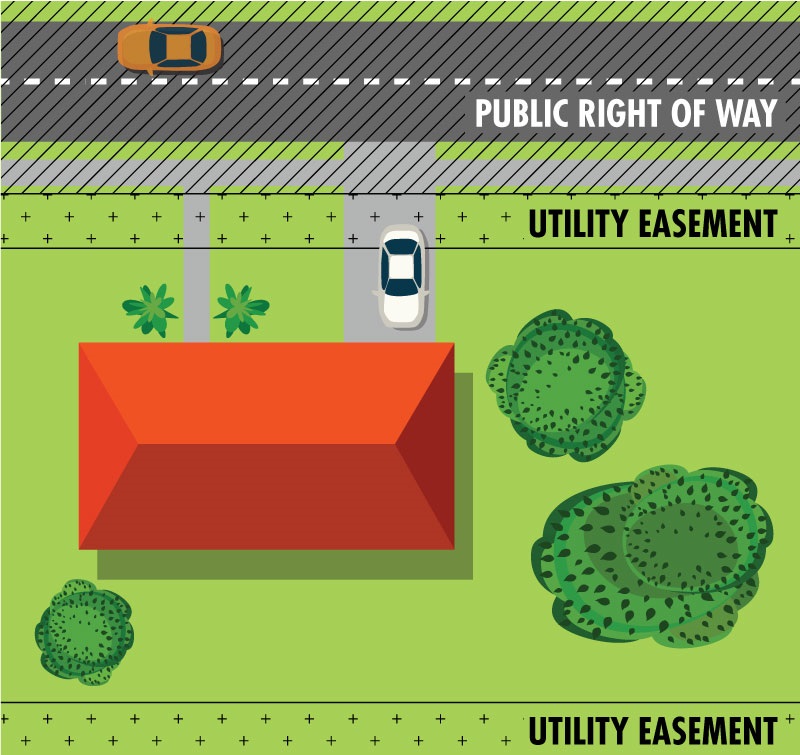
An easement is a broad right to use someone else’s land for a specific purpose (like utilities or drainage), while a right-of-way (ROW) is a type of easement specifically granting the right to pass over another’s property for access, often to a public road, forming a pathThink of it as: all ROWs are easements, but not all easements are ROWs; an ROW is about passage, while other easements might be for things like power lines or water pipes. Key conditions for a compulsory ROW often involve a landlocked property needing access, with the path chosen to cause the least harm to the neighbor’s land and requiring fair compensation.  

Easement
  • Definition: 
    A legal right to use a portion of another person’s land for a specific, defined purpose. 

  • Examples: 
    Utility easements (power lines, sewer pipes), drainage easements, or even light/view easements. 

  • Scope: 
    Can be for continuous use (like drainage) or intermittent (like an inspection). 

Right of Way (ROW)

Definition: A specific easement for passage or travel over another’s property. 

Purpose: To provide access to a public highway for a landlocked property (dominant estate). 


Key Requirements (Compulsory):
  • Property is surrounded by other immovable properties. 
  • No adequate access to a public highway. 
  • Isolation isn’t the owner’s fault. 
  • The path chosen is the least prejudicial (damaging) to the neighbor’s land (servient estate). 
  • Proper indemnity (payment) must be made for the ROW. 
Leave a comment

SQUATTING SYNDICATES

Facebooktwitterredditpinterestlinkedinmail


Land squatting syndicate sa CdeO,gusto ipataral ni Moreno sa husgado -  Bombo Radyo CDOLand squatting syndicate sa CdeO,gusto ipataral ni Moreno sa husgado -  Bombo Radyo CDO

Leave a comment

COMPULSORY HEIRS

Facebooktwitterredditpinterestlinkedinmail


To Give or Not to Give | DivinaLaw

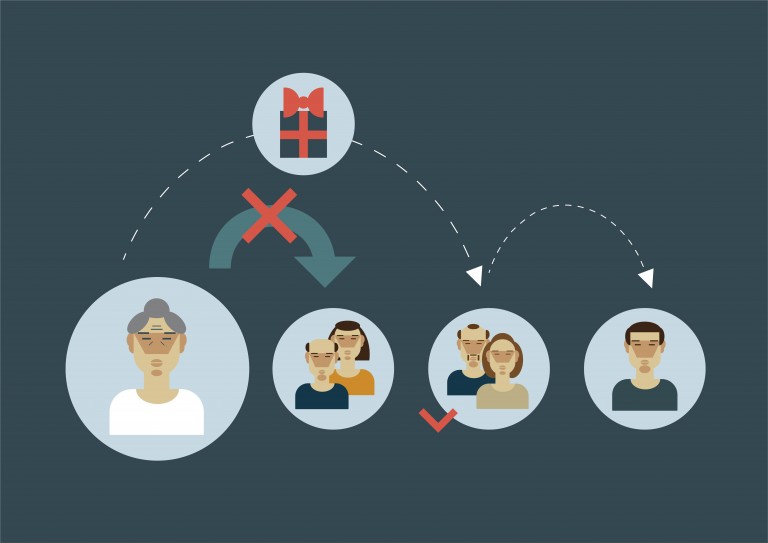
Under Philippine law (Civil Code), compulsory heirs are specific family members who are legally entitled to receive a portion of a deceased person’s estate, known as the legitime, regardless of whether a will exists or not. They are often called “forced heirs” because the decedent cannot freely dispose of their entire estate if these heirs are alive. 
Who Are the Compulsory Heirs?
According to Article 887 of the Civil Code of the Philippines, the following are considered compulsory heirs: 
  1. Primary Heirs: Legitimate children and their direct descendants.
  2. Secondary Heirs: Legitimate parents and direct ascendants (only in default of legitimate children/descendants).
  3. Concurring Heirs:
    • The surviving spouse (widow or widower).
    • Illegitimate children (both acknowledged natural children and other illegitimate children). 
Leave a comment

MORTGAGE CONTRACT

Facebooktwitterredditpinterestlinkedinmail


Mortgage contract: Everything you need to know - AZ Big Media

A mortgage contract is a legally binding document between a lender (mortgagee) and a borrower (mortgagor) that pledges a specific property as collateral to secure a loan. It creates a lien on the property, granting the lender the right to take possession and sell the property through foreclosure if the borrower fails to repay the debt. 
  • Purpose: To secure a real estate loan, acting as the security document for a promissory note.
  • Parties: Identifies the borrower(s) and the lender(s), including any guarantors.
  • Property Description: Provides a detailed legal description of the real property being used as collateral.
  • Loan Terms: Outlines the loan amount (principal), interest rate (fixed or adjustable), repayment schedule (monthly installments), and maturity date.
  • Covenants & Obligations: Requires the borrower to maintain the property, pay property taxes, and maintain insurance.
  • Default & Remedies: Defines what constitutes a breach of contract (e.g., missed payments) and the lender’s rights to accelerate the loan (make the full balance due) and initiate foreclosure.
  • Discharge: States that the mortgage becomes null and void once the debt is fully repaid. 
Leave a comment

Exclusive Property

Facebooktwitterredditpinterestlinkedinmail


Luxury Real Estate Marketing - 15 Innovative Tips for Success

An exclusively marketed property is a real estate asset assigned to a single authorized broker or agent for promotion and sale. The property is promoted through planned and coordinated marketing strategies such as advertisements, client outreach, and scheduled site viewings. Because only one representative manages the inquiries and negotiations, information given to buyers is consistent, accurate, and professionally handled.

This arrangement is carried out in accordance with Republic Act No. 9646 (Real Estate Service Act of the Philippines), which requires that only licensed real estate brokers and salespersons conduct real estate transactions and marketing activities. It ensures that the property is represented ethically and competently under the supervision of a registered broker.


Leave a comment