




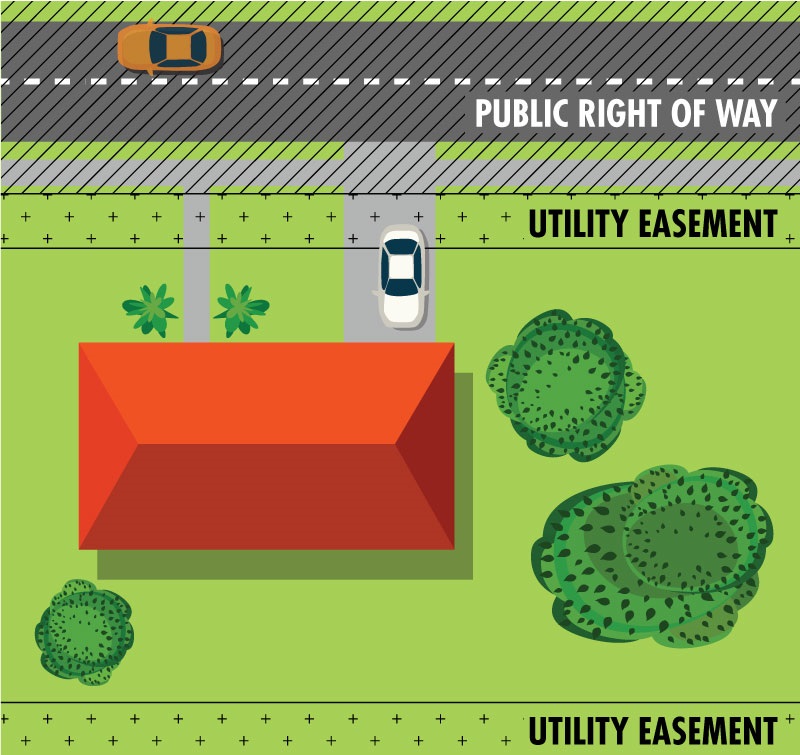
An easement is a broad right to use someone else’s land for a specific purpose (like utilities or drainage), while a right-of-way (ROW) is a type of easement specifically granting the right to pass over another’s property for access, often to a public road, forming a path. Think of it as: all ROWs are easements, but not all easements are ROWs; an ROW is about passage, while other easements might be for things like power lines or water pipes. Key conditions for a compulsory ROW often involve a landlocked property needing access, with the path chosen to cause the least harm to the neighbor’s land and requiring fair compensation.
Easement
-
Definition:A legal right to use a portion of another person’s land for a specific, defined purpose.
-
Examples:Utility easements (power lines, sewer pipes), drainage easements, or even light/view easements.
-
Scope:Can be for continuous use (like drainage) or intermittent (like an inspection).
Right of Way (ROW)
Definition: A specific easement for passage or travel over another’s property.
Purpose: To provide access to a public highway for a landlocked property (dominant estate).
Key Requirements (Compulsory):
- Property is surrounded by other immovable properties.
- No adequate access to a public highway.
- Isolation isn’t the owner’s fault.
- The path chosen is the least prejudicial (damaging) to the neighbor’s land (servient estate).
- Proper indemnity (payment) must be made for the ROW.
Leave a Reply